Case study · Industrial & Commercial HVAC
Tidyco Climate Control: a UK HVAC business that doesn't look like a UK HVAC business
Replacing the default 'commercial HVAC website' template with something that earns trust at the procurement table — and ships with its own client asset portal.
- Client
- Tidyco Climate Control
- Industry
- Industrial & Commercial HVAC
- Project type
- Website + brand system + client portal
- Completed
- 2026
4
Top-level service categories properly architected
16
Service & sub-service pages built
6
Sectors served (FM, public, industrial, etc.)
9
Case studies live at launch
Before & after
The drag-slider below compares the previous Tidyco site (still archived on the Wayback Machine from March 2026) with the new build. Same business, same domain, same engineers — different positioning entirely.

Previous site (early 2026)
WordPress + Kubio page builder · stock photography · generic positioning
New site (May 2026)
WordPress + Oxygen 6 · industrial photography · positioned for procurement audiences
The numbers behind the look
The visual change is half the story. The other half is what a procurement reader's phone actually does when it hits the site. We ran Lighthouse mobile audits — Slow 4G throttling — against the new Tidyco build and against five typical UK commercial HVAC competitors. The averaged competitor scores form the 'industry baseline' below.
Performance
91
+40vs baseline
Industry average dragged down by heavy WordPress page builders, unoptimised hero images and third-party scripts. Oxygen 6 ships clean HTML.
Accessibility
100
+12vs baseline
Real ARIA labels, semantic heading order, properly-sized tap targets, focus-visible states throughout.
Best Practices
96
+21vs baseline
HTTPS-only resources, modern image formats, no console errors, no deprecated APIs.
SEO
100
+3vs baseline
Schema markup, canonical tags, proper meta, sitemap, descriptive link text, mobile-friendly. (Score measured at production URL — staging artificially lower.)
What this means for a mobile user
UK HVAC competitor average (5 sites)
12.8s
New Tidyco site
3.1s
Largest Contentful Paint on Slow 4G — the moment a phone user actually sees the main page content. The competitor average is well past the point where most users have already hit the back button. Tidyco's is comfortably inside the 'feels fast' threshold.
Lighthouse v12 mobile audits run May 2026 with Slow 4G throttling. Industry baseline averaged across drmechanical.co.uk, midlandaircon.co.uk, abi-fe.co.uk, newsome.ltd.uk and inergygroup.co.uk — five UK commercial HVAC contractor sites of comparable scope to Tidyco. Competitor names not displayed within the comparison.
If you Google “commercial HVAC contractor” in the UK, you’ll see roughly the same website forty times in a row.
Stock photo of a smiling engineer in a hi-vis. Royal blue gradient hero with a wrench icon. A bullet list of services in a slightly tortured order (“Heating, Cooling, Air Conditioning, Ventilation, HVAC, Climate Control”). A booking form titled “Get In Touch” that submits into the void. A “Why Choose Us” section listing experience, reliability, professionalism, integrity in four boxes with the wrong icons. Footer with a phone number nobody answers after 4pm.
Tidyco came to me with a brief that was, in their own words, “we don’t want to look like every other UK HVAC website”. They were a serious commercial and industrial contractor — factories, warehouses, multi-site facilities management work — and they were tired of being judged at the procurement table by a website built for a residential boiler trade.
This is the case study of that build.
The starting point
Tidyco’s existing presence was the standard UK HVAC template — competent, generic, indistinguishable from twenty competitors a procurement manager would have open in adjacent tabs.
The new business they wanted to win was the work that gets specified by facilities management teams, M&E consultants, and the people who write tender documents for multi-million-pound logistics developments. Different audience. Different expectations. The same website that converts a homeowner Googling “boiler repair” actively damages trust with the procurement manager comparing three contractors for a 50,000 sq ft warehouse fit-out.
The brief, distilled:
- Stop looking like a trade business. Start looking like a contractor. Industrial photography, considered typography, real density of information — not stock photos and platitudes.
- Architect the services properly. Heating, cooling, electrical and maintenance — each with real sub-services, each ranking for its own specific terms.
- Ship the client portal. Tidyco’s actual operational differentiator is that every client gets a portal showing the live status of every asset Tidyco manages. Most HVAC contractors leave clients guessing about service history. Tidyco doesn’t. The website had to make this real, not bury it.
- Be ready for case studies from day one. A serious commercial contractor without published case studies is harder to take seriously than one with a credible portfolio. The site had to support a real case-studies library — not a “coming soon” page.
Tidyco wasn’t a freelance client. It’s part of a group of companies I worked across at the time, so the project came together through internal planning sessions rather than an external quote. Scope and approach were worked through over a few weeks of discussions, we agreed the direction, and got started.
What we built

The site is built on WordPress + Oxygen Builder 6. WordPress because Tidyco’s team needed to be able to maintain and add case studies themselves long-term. Oxygen 6 because — in 2026 — it’s the only WordPress page-building approach that doesn’t compromise performance, and it gives a developer full control over the rendered HTML rather than burying you in framework opinions.
The build covers:
- Home page with a confident dark-mode hero, a clear service-card matrix, the Why Tidyco proposition, a working preview of the Client Portal, a sectors block, and a 3-step process.
- Four service line pillar pages (Heating, Cooling, Electrical, Maintenance) — each one its own properly-architected page, not just a paragraph and a contact form.
- Twelve sub-service pages — Radiant Heating, Warm Air Heating, Electric Heating, Boilers, Destratification Fans, Air Conditioning, Evaporative Cooling, Process Chillers, EICR, EV Charging, LED Lighting, Fire & Emergency Lighting. Each one targeting the specific SEO terms Tidyco wants to rank for.
- A sectors section addressing the six buyer personas explicitly — facilities management, public sector, developers, M&E consultants, commercial property, industrial & manufacturing.
- A 9-strong case-studies library at launch, with category filtering, a counter strip, and clean cards.
- A Client Portal entry point that previews the actual asset-management product Tidyco ships to clients post-contract.
- A Book a Free Site Survey flow that captures qualified enquiries and routes them to the commercial team, not a generic info inbox.
The visual approach
The biggest single decision was rejecting the “blue gradient + stock photo + sans-serif” UK HVAC template and committing to a dark, typography-led visual system that takes the contractor seriously.
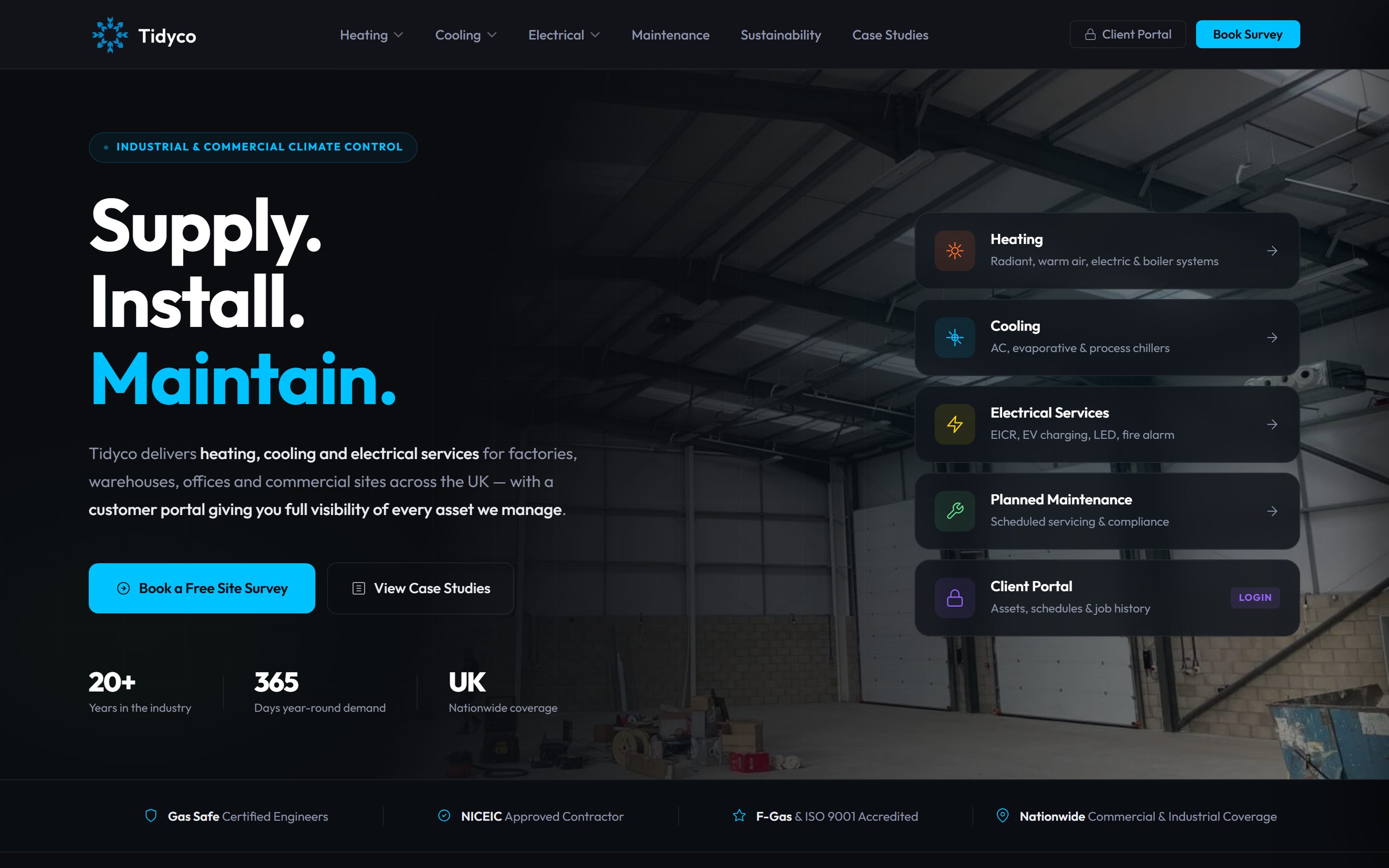
The display headline — Supply. Install. Maintain. — is set in a heavy display sans, with the third word in cyan to break the rhythm. It’s not subtle. It’s also not trying to be. Procurement audiences respond to confidence, not modesty. The headline does the work of telling a busy facilities manager, in five words, the entire offer.
The hero photograph is a real industrial warehouse interior — exposed steel, HVAC infrastructure, the actual environment Tidyco’s engineers spend their working life in. No stock photo of an engineer holding a wrench. No royal blue gradient.
The service cards on the right of the hero solve the “what do you actually do” question without making the user scroll for it. Each card has a coloured icon set on a tinted background — orange for heating, cyan for cooling, yellow for electrical, green for maintenance — and a one-line description that includes the actual sub-services. A procurement reader can establish in 4 seconds whether Tidyco is a fit for the specification they’re working from.
The Client Portal — the real differentiator

Most of the website is better than the UK HVAC baseline. The Client Portal is different from it.
Tidyco built — and ships to every client — a portal where the client can see, in real time:
- The lifecycle status of every asset Tidyco manages on their site
- The most recent service visit and the next scheduled one
- Job sheets, gas certificates, and compliance records, all in one place
- Live updates from engineers as work is completed
Most HVAC clients don’t get any of this. They get a phone call, maybe an emailed PDF, maybe nothing. The client portal isn’t a marketing claim — it’s the actual operational product Tidyco delivers, and the marketing site had to make it tangible to a prospect on a 7-minute discovery visit.
The site achieves this with a hand-built preview of the portal UI on the home page, showing a sample asset table (Rooftop AC Unit, Warehouse Heater, Process Chiller, Office Split Unit, Emergency Lighting) with their statuses (Operational / Due Soon / Action Needed) and next service dates. It’s the closest a marketing site can get to handing a prospect a working software demo without actually doing it. The conversation it creates with a facilities manager on a site visit is the conversation Tidyco wanted: not “what makes you different from the next contractor”, but “how does this work for our portfolio specifically”.
Architecting the services properly
A pattern I see in almost every underperforming UK HVAC website is the “everything on one page” problem. A single Services page lists heating, cooling, electrical, AC, ventilation, controls — usually with a paragraph each, occasionally with a “find out more” link that just scrolls a few hundred pixels down the same page.
This is an SEO disaster and a buyer’s nightmare in equal measure. Google can’t tell what the business actually specialises in. The buyer can’t tell either.
Tidyco’s site separates the four core service lines and gives each one a proper page:
- Heating — its own pillar page, plus dedicated sub-pages for Radiant, Warm Air, Electric, Boilers, and Destratification Fans
- Cooling — pillar plus Air Conditioning, Evaporative, Process Chillers
- Electrical — pillar plus EICR, Commercial & Industrial, EV Charging, LED, Fire & Emergency Lighting
- Maintenance — pillar covering planned preventative maintenance contracts

Each pillar page has a real hero, real copy, a sticky-feeling Book a Free Site Survey card on the right, accreditation reassurances, and below the fold (not pictured here for brevity) a sub-services list, a Why Tidyco block, a relevant case study slot, and FAQs. Every sub-service has its own dedicated page underneath — not stub content, but a properly-written 600-800 word page that targets the specific search term.
The cumulative SEO surface is the meaningful win. A competitor with a single “Services” page is targeting roughly 3 search terms. Tidyco is targeting more than 50.
Case studies as a first-class citizen

A serious commercial HVAC business needs published case studies. Most don’t have any.
Tidyco launched with nine — covering air conditioning, cooling, destratification fans, electric heating, maintenance, process chillers, radiant heating, and warm air heating. Each case study has its own page with a real project description, client industry, project location, and the system installed.
The case studies index page filters by category, counts completed projects (9), service areas (8), and reinforces the nationwide UK coverage claim with a third counter tile. The filter chips at the bottom let a prospect quickly find a project relevant to their own specification (“show me only Air Conditioning case studies”, “show me only Process Chillers”).
This is the kind of thing the buyer-side reader notices without consciously registering. This contractor publishes their work in public. They’re confident enough to be specific about what they’ve installed where. That’s a trust signal you can’t buy with a logo or a testimonial.
What’s under the bonnet
For the developer-curious — and for prospective clients who care about whether their site is built well:
- WordPress 6.x on Hostinger hosting, behind Cloudflare
- Oxygen Builder 6 for the page composition (deliberately not Elementor or Divi — Oxygen 6 outputs clean HTML and CSS without the framework bloat that’s made WordPress synonymous with slow sites)
- Custom PHP for the client portal entry-point, asset preview component, and the case-studies filtering
- Custom typography stack with a heavy display sans for headlines and a clean body face — no Google Fonts default
- Dark mode by default — the entire site is built on a dark palette, which both differentiates from competitors and reduces visual fatigue for procurement audiences scrolling many sites in a session
- Real images throughout — no stock photography, every image is an actual Tidyco install or environment
The choice of WordPress + Oxygen 6 over a more modern stack (Astro, Next.js) was deliberate. Tidyco’s team need to maintain the site themselves long-term — adding case studies, updating service copy, posting news. WordPress is the right tool for that ongoing relationship. Oxygen 6 was the bit that allowed the visual outcome to land properly without the WordPress speed penalty most page builders impose.
What this case study is really about
The visible deliverable is a website. The actual deliverable is a positioning shift.
Tidyco isn’t competing for residential boiler work anymore. The new site is built for a different conversation — one with a facilities manager who needs a credible contractor for a multi-site portfolio, an M&E consultant who’s spec’ing a process cooling system, or a developer building a new logistics warehouse and needing climate control specified, installed, and maintained through year three. Those conversations require a different visual register, a different information architecture, and a different proof structure than the typical UK HVAC website provides.
Five years from now, the website will probably need refreshing. The positioning, the IA, the proof structure, the client portal — those should still be doing their job. That’s the layer this case study is really about. The pixels are the artefact. The thinking is the deliverable.
If you’re a UK service business that’s outgrown the template version of your industry’s website, this is the kind of work I do. Whether or not we end up working together, the conversation is usually useful — I’ll tell you straight whether your situation needs a tactical refresh or a full re-platform.
Most HVAC websites look like they were built for the trade. Tidyco's looks like it was built for whoever signs off the budget.
— Project brief, paraphrased
Built with
- WordPress
- Oxygen Builder 6
- Custom PHP
- Hostinger
- Cloudflare
- Custom asset portal
Tags
- HVAC
- commercial
- industrial
- UK
- asset management
- dark mode
- typography-led
More case studies
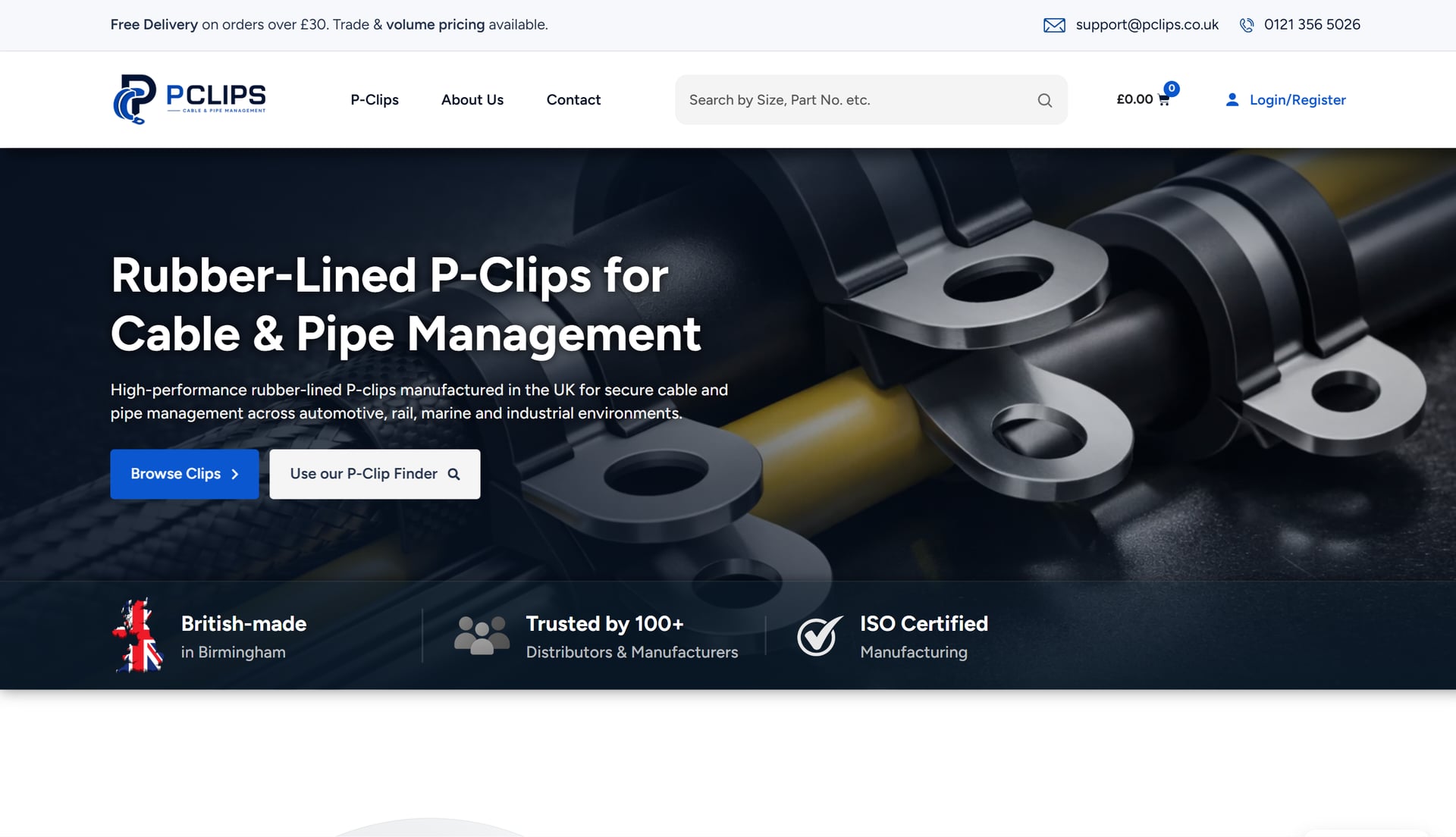
Industrial fastener manufacturing
P-Clips: a British B2B manufacturer that doesn't look like a British B2B manufacturer
A new B2B e-commerce site for Birmingham Specialities — built so a procurement buyer sees the engineering and certifications before the cookie banner loads.
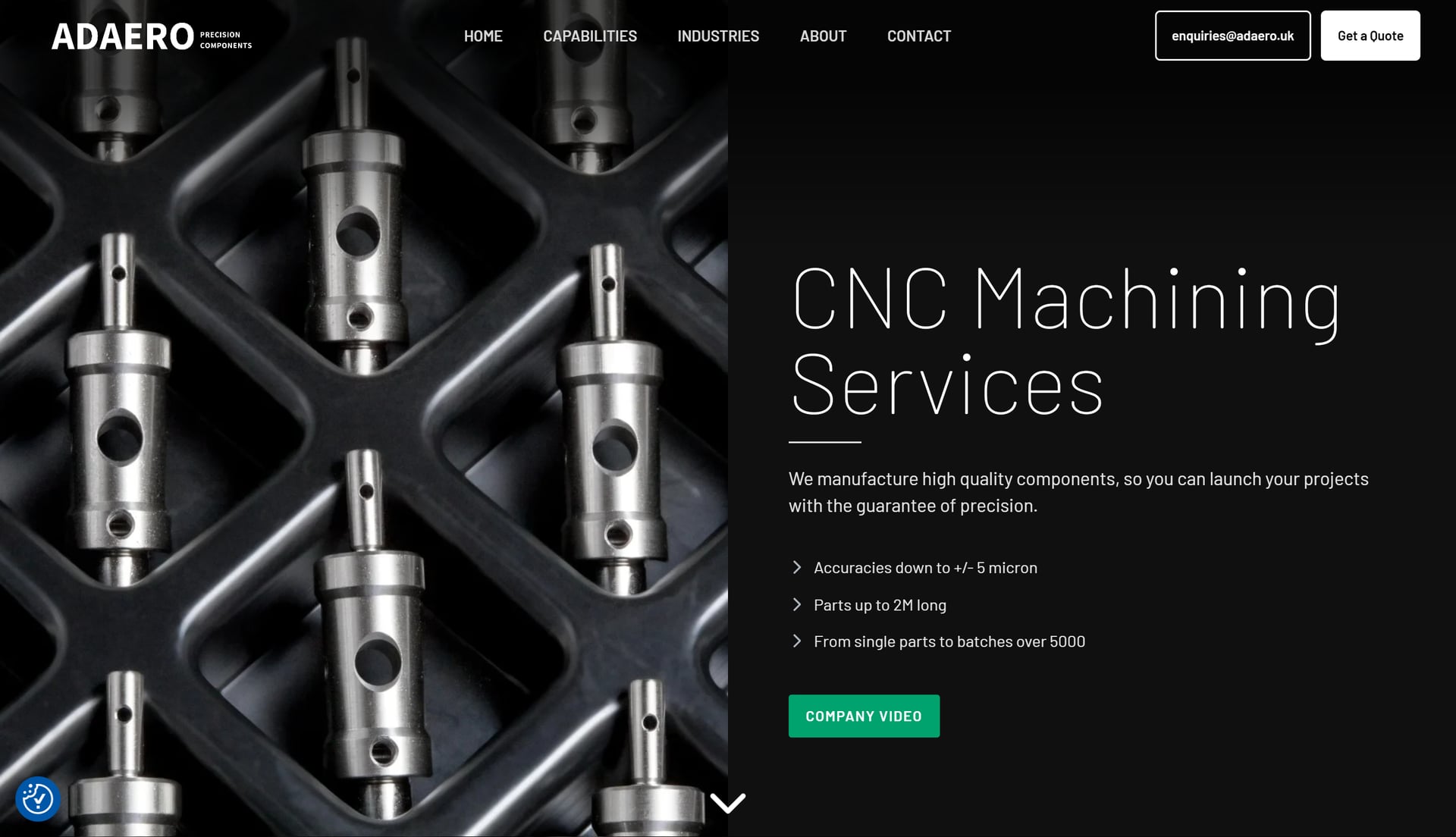
Precision CNC machining
Adaero Precision Components: a website as precise as the engineering
A new website for Adaero Precision Components, replacing a one-page brochure with a CNC machining presence that earns credibility at the procurement table.
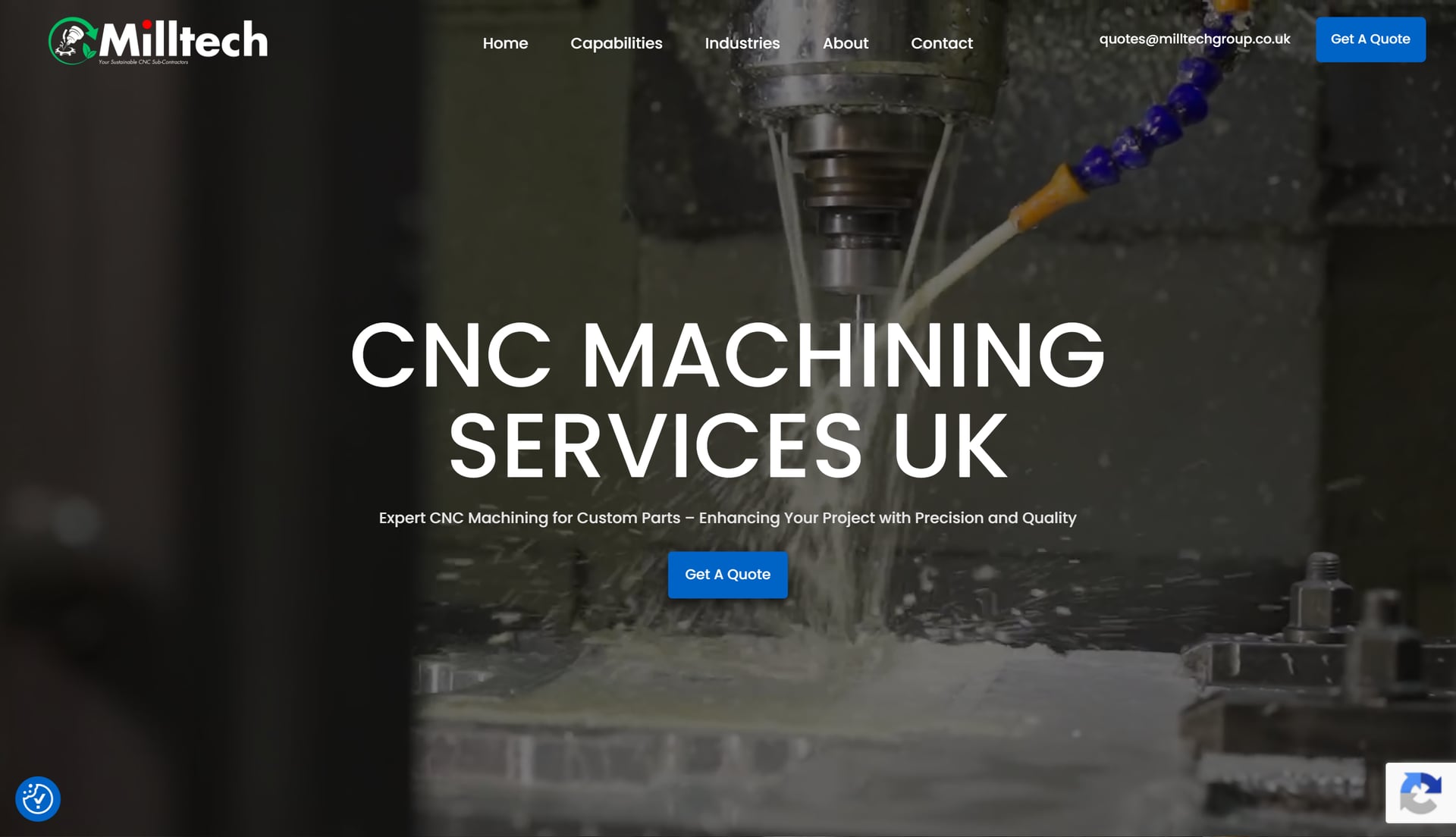
Precision CNC machining
Milltech: a Norwich CNC sub-contractor with the depth finally visible online
A new website for Milltech Precision Engineering — surfacing the industry verticals and operational depth the old brochure site was hiding.
Want results like this?
Let's talk about your site.
Fifteen minutes, no pressure. I'll walk through your current digital setup, where the leverage is, and whether what I do is the right fit for your business.