The build
A site written for a technical buyer
Specs, materials, tolerances and capacity laid out in the terms a buyer already searches with — so they can qualify you without an enquiry, and enquire already half-scoped.
A transport-equipment buyer is either a programme buyer sourcing to an OEM approval, or an aftermarket buyer sourcing a part that has to fit and get certified — and the two are almost never the same person.
Most web people build one ‘products’ page and hope both find it, which loses you the higher-value programme work and confuses the aftermarket buyer who just wants the right part. I build separate, structured journeys for OEM and aftermarket, and put your approvals, traceability and sector fit where a tier-1 buyer — and the AI assistant they now ask first — can actually read them. That’s what gets you onto a shortlist you never used to reach.
What I'd build you
The build
Specs, materials, tolerances and capacity laid out in the terms a buyer already searches with — so they can qualify you without an enquiry, and enquire already half-scoped.
Found
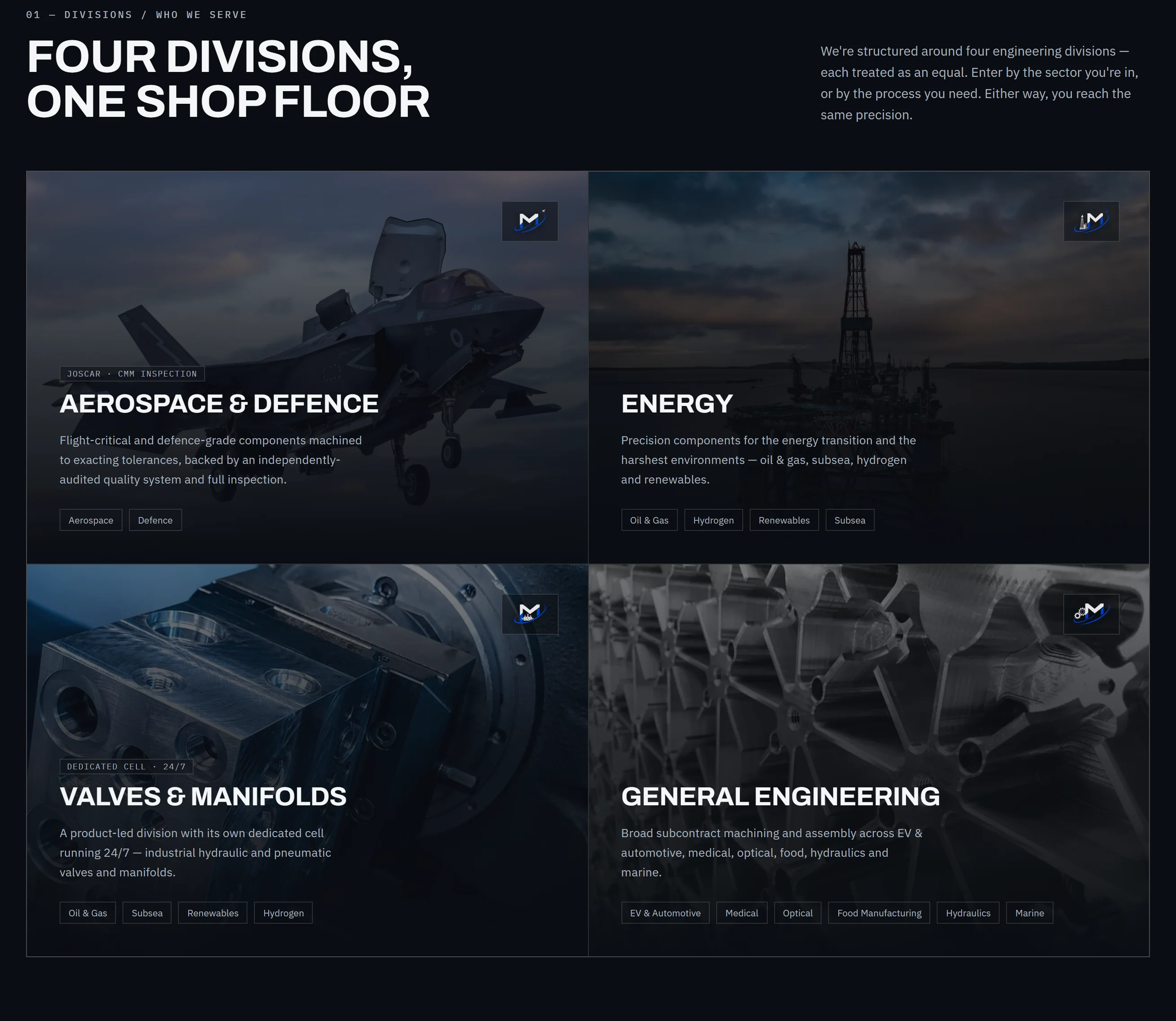
A page per process, material and sector instead of one “Services” page — every one its own door into the site, matched to how buyers search rather than how the business is organised.
Asked for
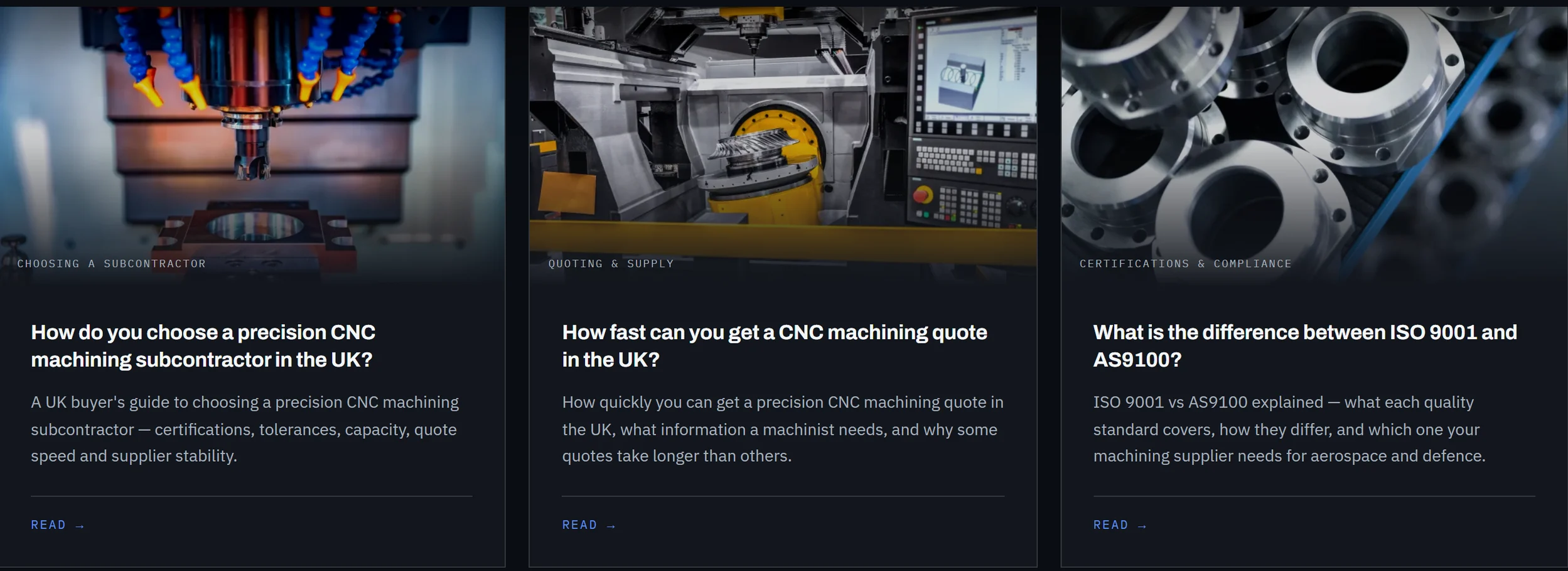
Buyers ask an assistant before they ask a supplier, and it quotes whoever actually answered. Question-led content and structured data put your words in that answer.
Measured, not claimed
2.9s.
Time to main content on a phone, against 6.9s for the median of 5 comparable firms.
Reported
Speed, search visibility and enquiry volume measured on a regular cycle and reported back — so the site is answerable for something rather than just existing.
What I build for transport equipment
Separate OEM-programme and aftermarket journeys, each with its own enquiry path
Approval, traceability and quality pages built for the procurement gate (IATF 16949, AS9100, IRIS where apt)
Capability and product pages structured by vehicle / vessel type and application
A programme RFQ flow capturing drawing / spec, volumes, standard and target date
AI visibility for "OEM [component] supplier" and specific aftermarket part searches
Your exact sector
Not “manufacturing” in general — the specific process and product, written the way buyers and AI assistants actually search for it.
What manufacturers ask before they hire me. If yours is not here, ask it — the answer is usually short.
I build a separate journey for each — an OEM route aimed at programme buyers and quality gates, and an aftermarket route aimed at fitment and reorder — so the right buyer lands on the right page instead of a single compromise that serves neither.
I give your accreditations their own structured, schema-marked pages, so IATF 16949, AS9100 or IRIS surface in search and AI answers at the point a buyer is screening suppliers, not hidden as a footer logo.
Product and application pages target the exact terms buyers and AI use, so a specific component reaches the buyer looking for it rather than sitting inside a generic ‘products’ page that ranks for nothing.
A programme RFQ flow captures the drawing or spec, volumes, standard and target date up front, so a long enquiry arrives scoped and you quote from complete information.
At the shortlist stage a tier-1 buyer is judging competence and compliance, not headcount. A credible capability and quality presence, with real proof, lets you compete for programme work above your apparent size.
Yes — I demonstrate your traceability and quality system in general terms with no confidential customer or programme detail published, so you build trust without exposing anything under NDA.
That’s the point of the structured approval and capability content — and with my tool Periscope I measure how often ChatGPT, Gemini and Perplexity name you for real buyer questions, then work the pages that move it.
If you carry a stocked catalogue of aftermarket lines, a store with live stock and fitment lookup is worth it; for OEM or bespoke supply an RFQ flow is the right journey. I build to your actual mix, not a template.
Proof — recent manufacturer work
All case studies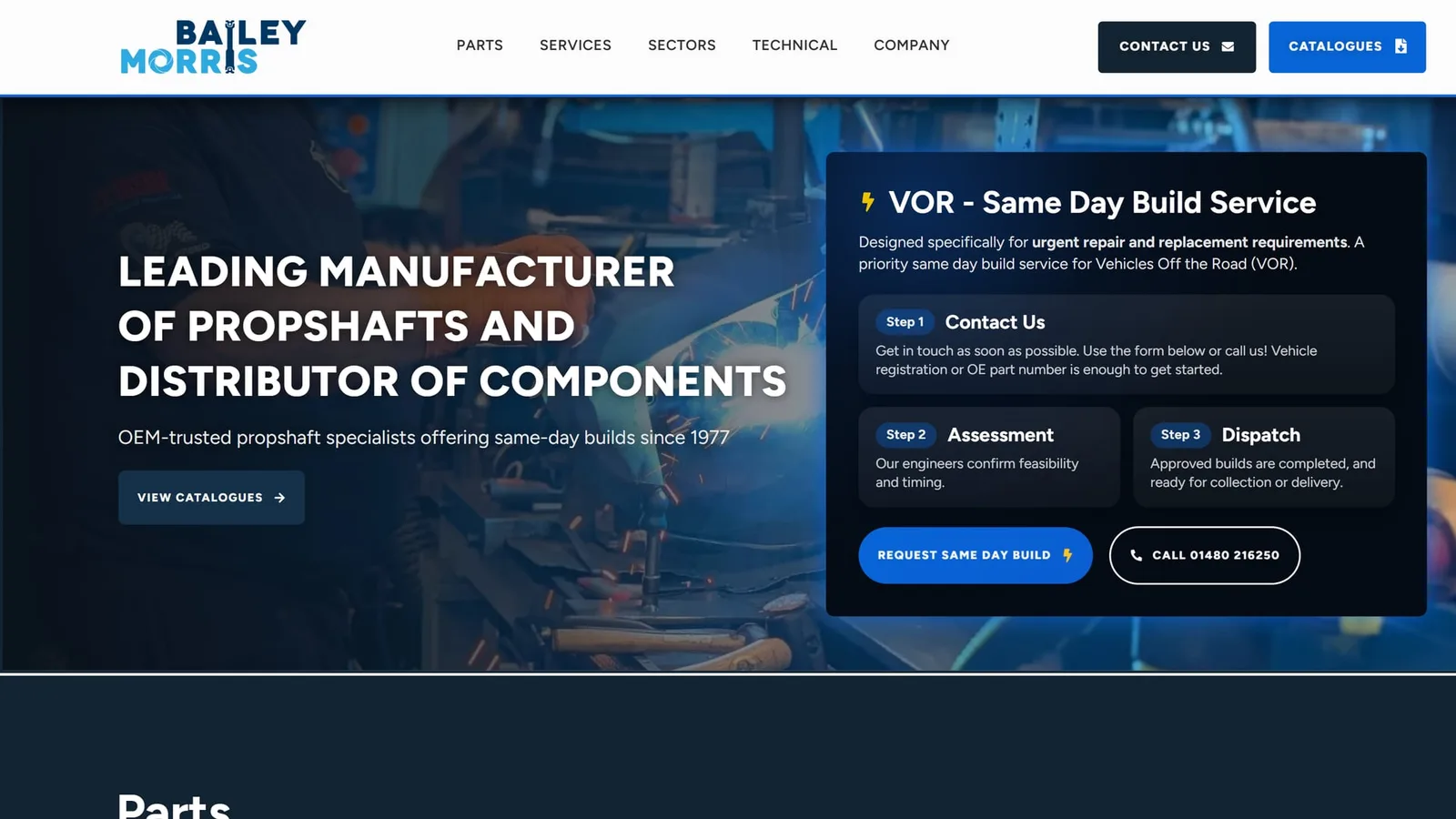
Driveline manufacturing
A new website for Bailey Morris — a propshaft specialist established 1977 — making the same-day VOR service, OEM-trusted positioning and product breadth properly visible.
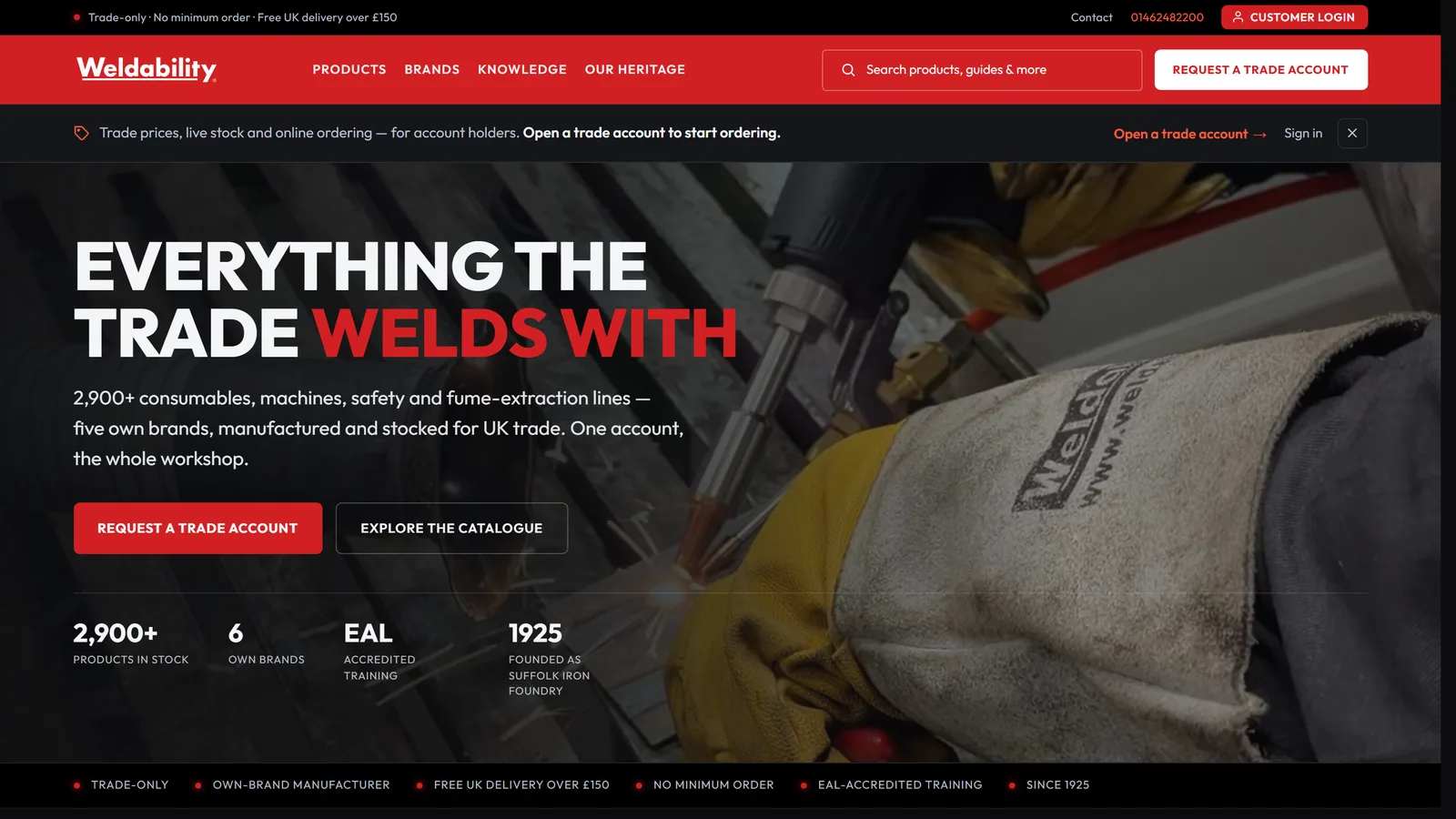
Welding supplies & equipment — trade wholesale
A trade portal for a welding wholesaler founded in 1925 — 3,400 pages, contract pricing, credit and reordering pulled live from the ERP.
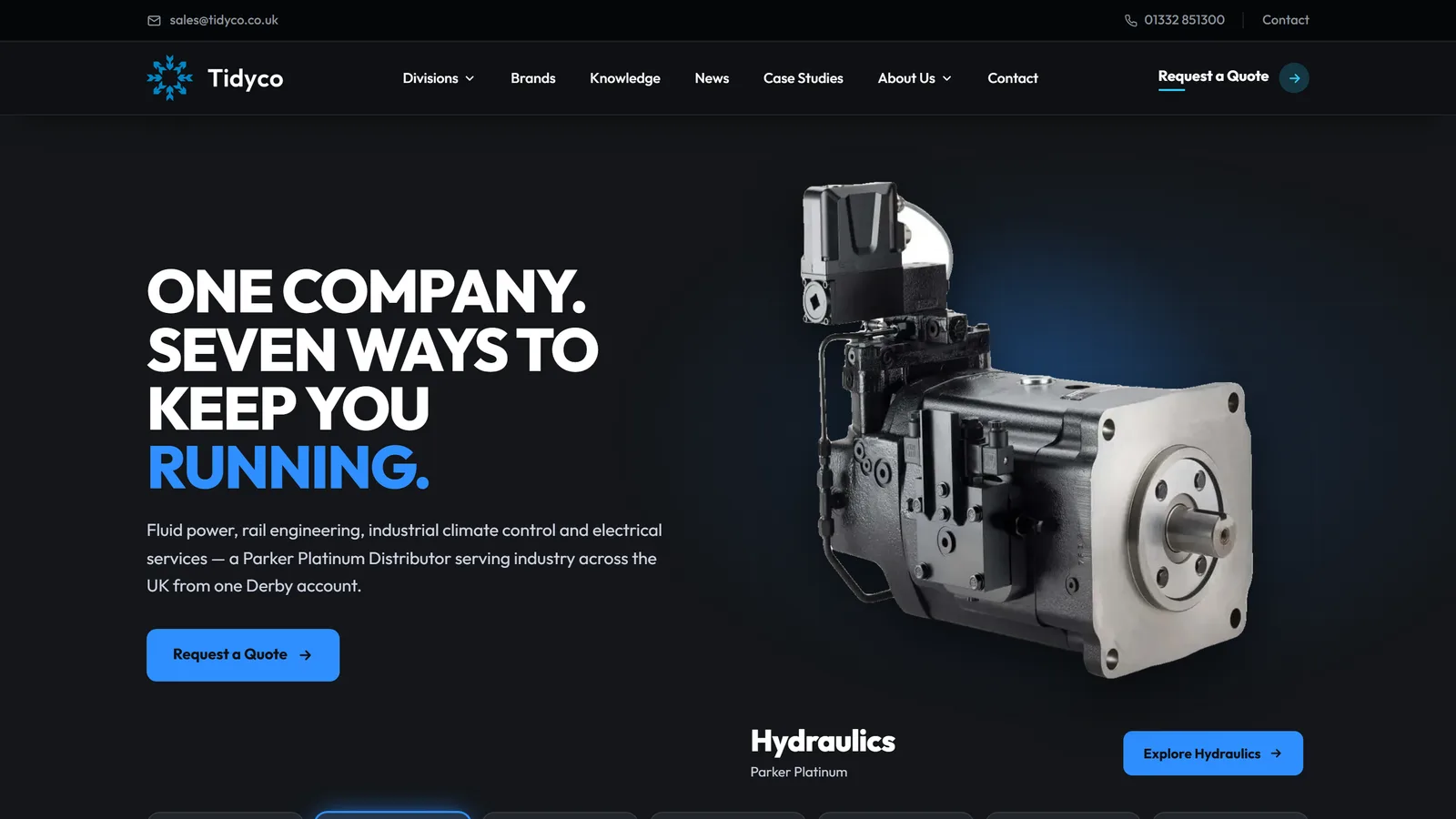
Industrial distribution & engineering services
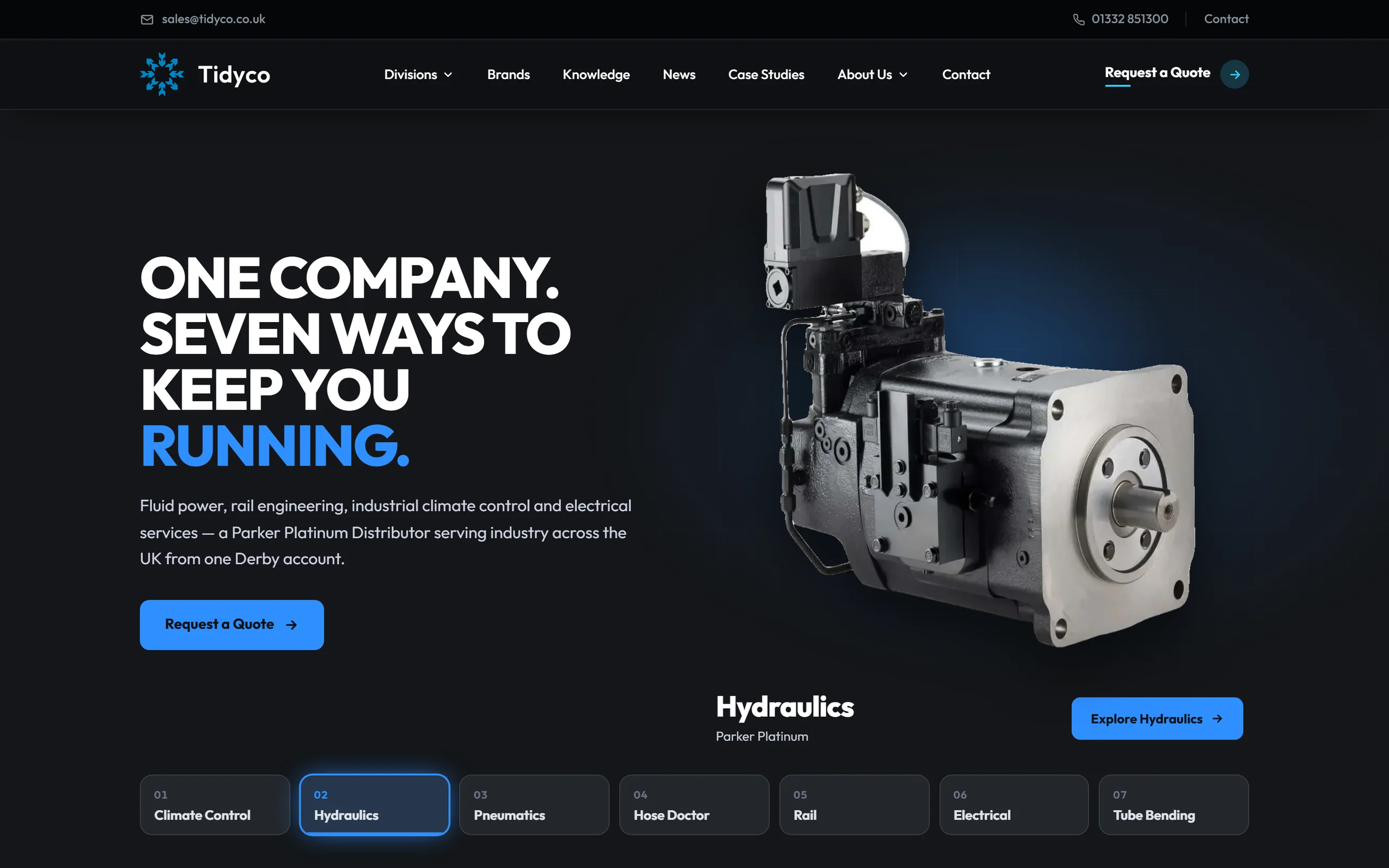
A rebuild for a Derby fluid-power and rail engineering group — seven divisions, one front door, and a 50-guide library that answers buyers before they enquire.
Related reading
All articlesOpinion
Buyers now run a first-pass supplier filter through ChatGPT before a human ever sees your site. Here's what the AI checks — and why most manufacturers get quietly cut.
Opinion
Most manufacturers who aren't getting enquiries assume the site looks dated. Nearly always the real problem is somewhere else entirely. Here's where to actually look.
Opinion
Most industrial B2B websites look interchangeable — and quietly cost their owners credibility with the buyers they most want to win. Standing out isn't about flash.
Next
The snapshot checks what assistants currently say about a business like yours, and where the answer comes from. It takes about a minute.