The build
A site written for a technical buyer
Specs, materials, tolerances and capacity laid out in the terms a buyer already searches with — so they can qualify you without an enquiry, and enquire already half-scoped.
Machinery & Equipment
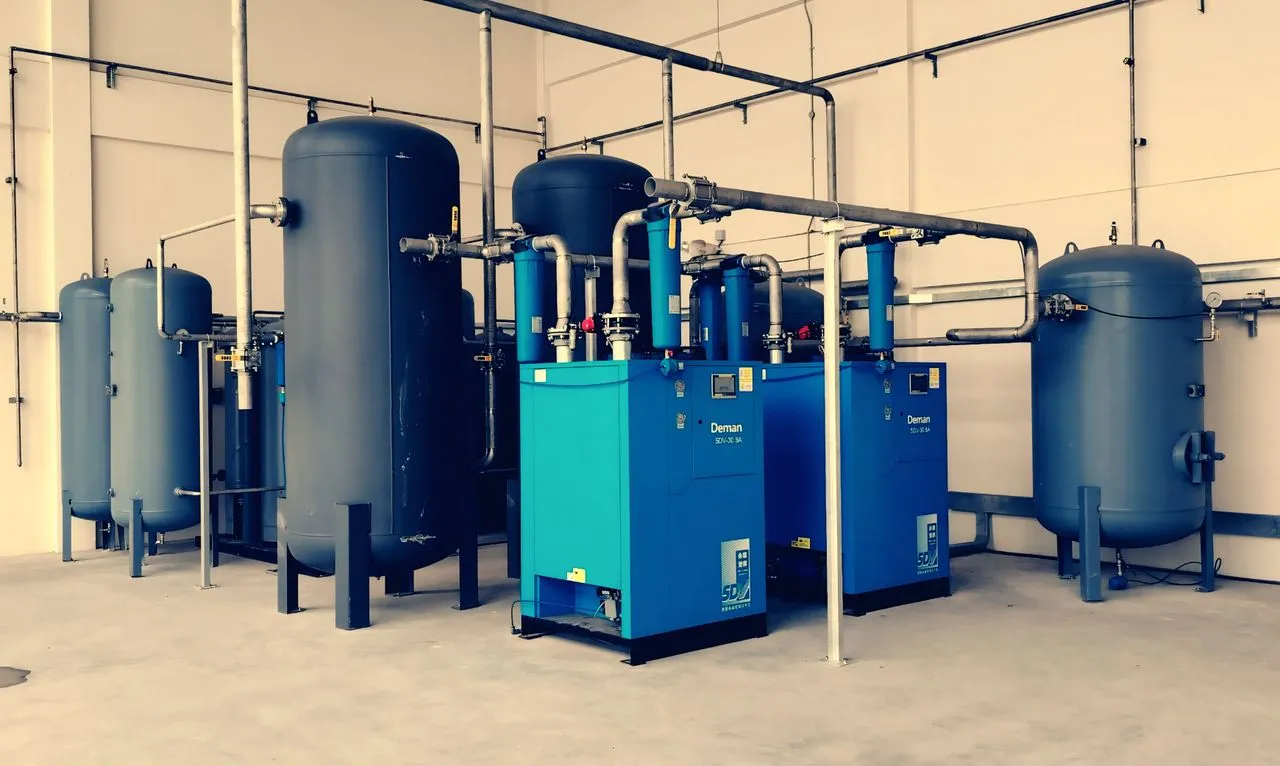
Pump and compressor buyers select on duty — the flow, pressure, media and application the unit has to handle — and they need to size it before they can enquire.
A buyer moving abrasive slurry, a buyer dosing a chemical and a buyer running a plant-air system are three different sales, yet most sites in this space present one flat product grid that helps none of them size a thing. I build sites that make your range legible by duty and application, help a buyer narrow to the right unit, and capture the sizing enquiry with the flow, pressure and media already stated — plus the spares and service that keep the buyer coming back.
What I'd build you
The build
Specs, materials, tolerances and capacity laid out in the terms a buyer already searches with — so they can qualify you without an enquiry, and enquire already half-scoped.
Found
A page per process, material and sector instead of one “Services” page — every one its own door into the site, matched to how buyers search rather than how the business is organised.
Asked for
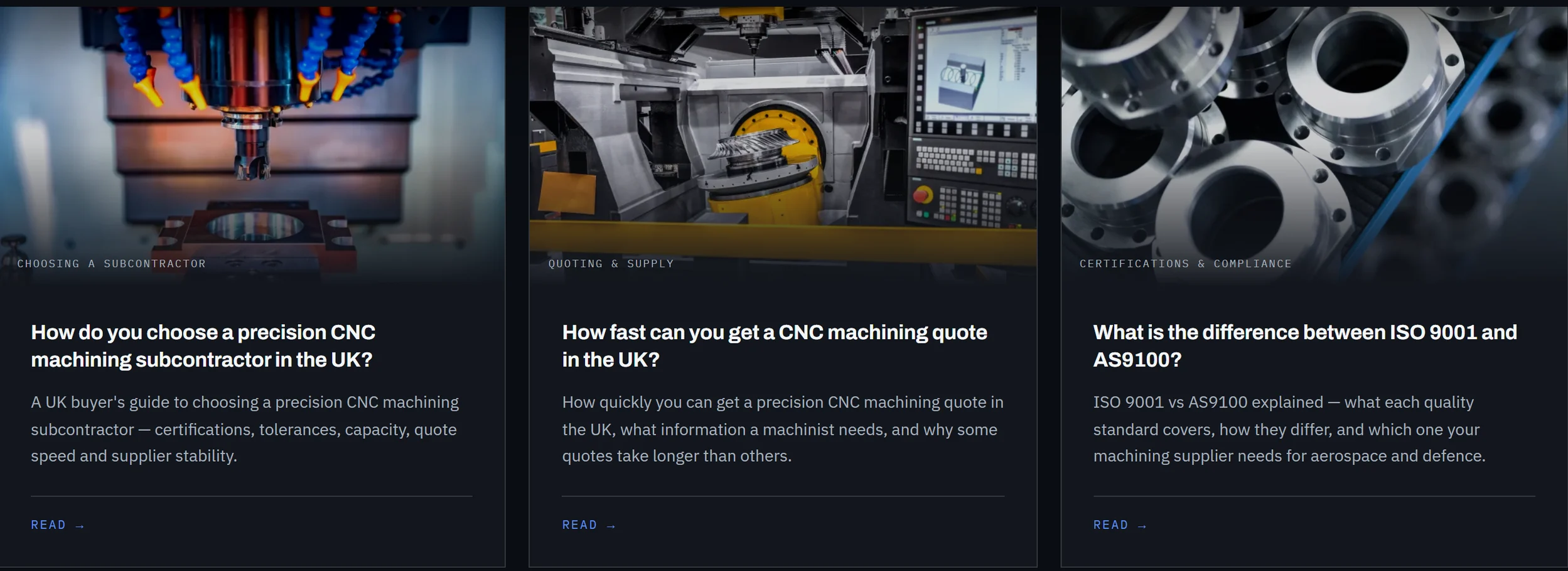
Buyers ask an assistant before they ask a supplier, and it quotes whoever actually answered. Question-led content and structured data put your words in that answer.
Measured, not claimed
2.9s.
Time to main content on a phone, against 6.9s for the median of 5 comparable firms.
Reported
Speed, search visibility and enquiry volume measured on a regular cycle and reported back — so the site is answerable for something rather than just existing.
What I build for pumps & compressors
Range pages by pump/compressor type and duty (centrifugal, positive-displacement, dosing, screw, piston) with performance curves or ranges
Application and media pages (water, chemical, slurry, air, food-grade) matching how buyers search
A sizing-enquiry flow capturing flow, pressure/head, media, temperature and application
Spares, seals and service content — with a serviceable-parts lookup — to secure the aftermarket
What manufacturers ask before they hire me. If yours is not here, ask it — the answer is usually short.
I build content around duty and media — flow, pressure, the fluid being moved — so a buyer pumping abrasive slurry or dosing a chemical matches to the right unit instead of a generic "pumps supplier" page.
Performance ranges or curves and clear application content let a buyer narrow the selection themselves, and the sizing-enquiry flow captures flow, pressure, media and temperature so you confirm the choice quickly.
A structured enquiry flow captures the duty, media, flow, pressure and application up front, so you can recommend and quote from real numbers instead of a dozen clarifying emails.
Yes — I build spares and service content with a parts lookup by model, so the aftermarket that follows every unit you sell becomes easy, repeat revenue rather than a phone queue.
Type-specific pages target those exact terms, so specialist duty reaches you instead of routing a serious buyer to a generalist who happens to list the word "pump".
Application pages target each sector directly, so the buyer in that world finds equipment described for their media, standards and environment rather than a one-size product list.
Proof — recent manufacturer work
All case studies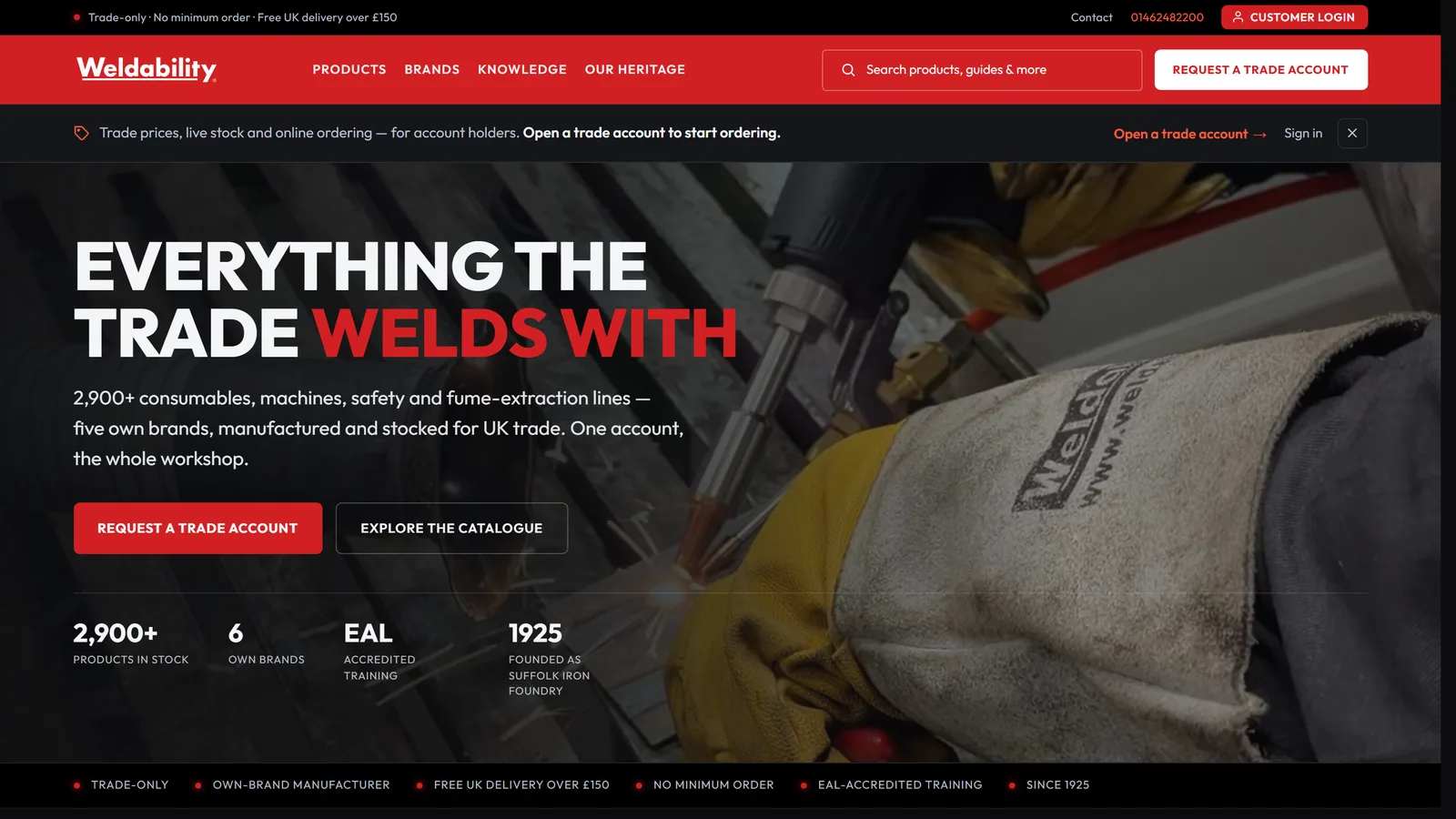
Welding supplies & equipment — trade wholesale
A trade portal for a welding wholesaler founded in 1925 — 3,400 pages, contract pricing, credit and reordering pulled live from the ERP.
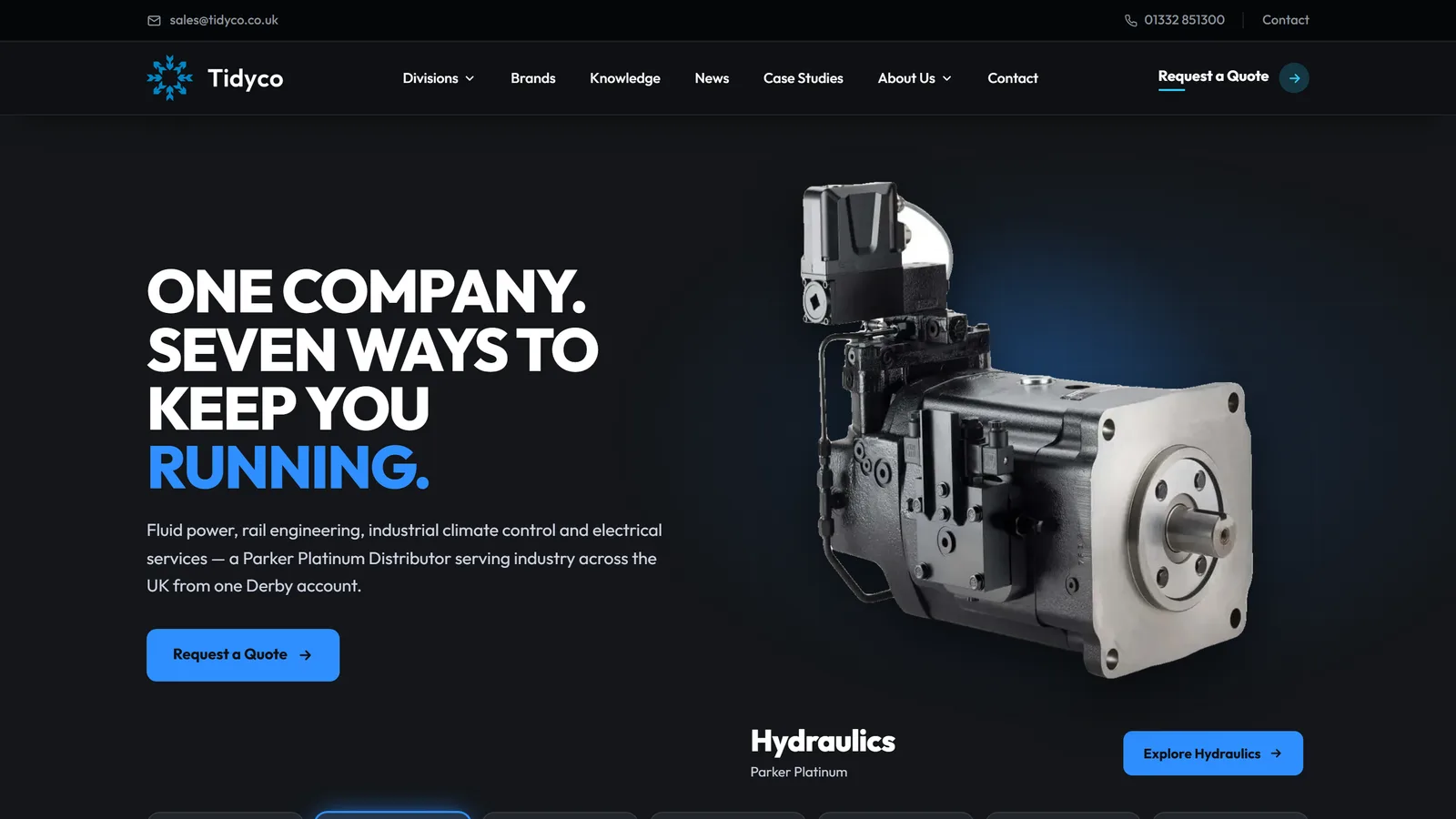
Industrial distribution & engineering services
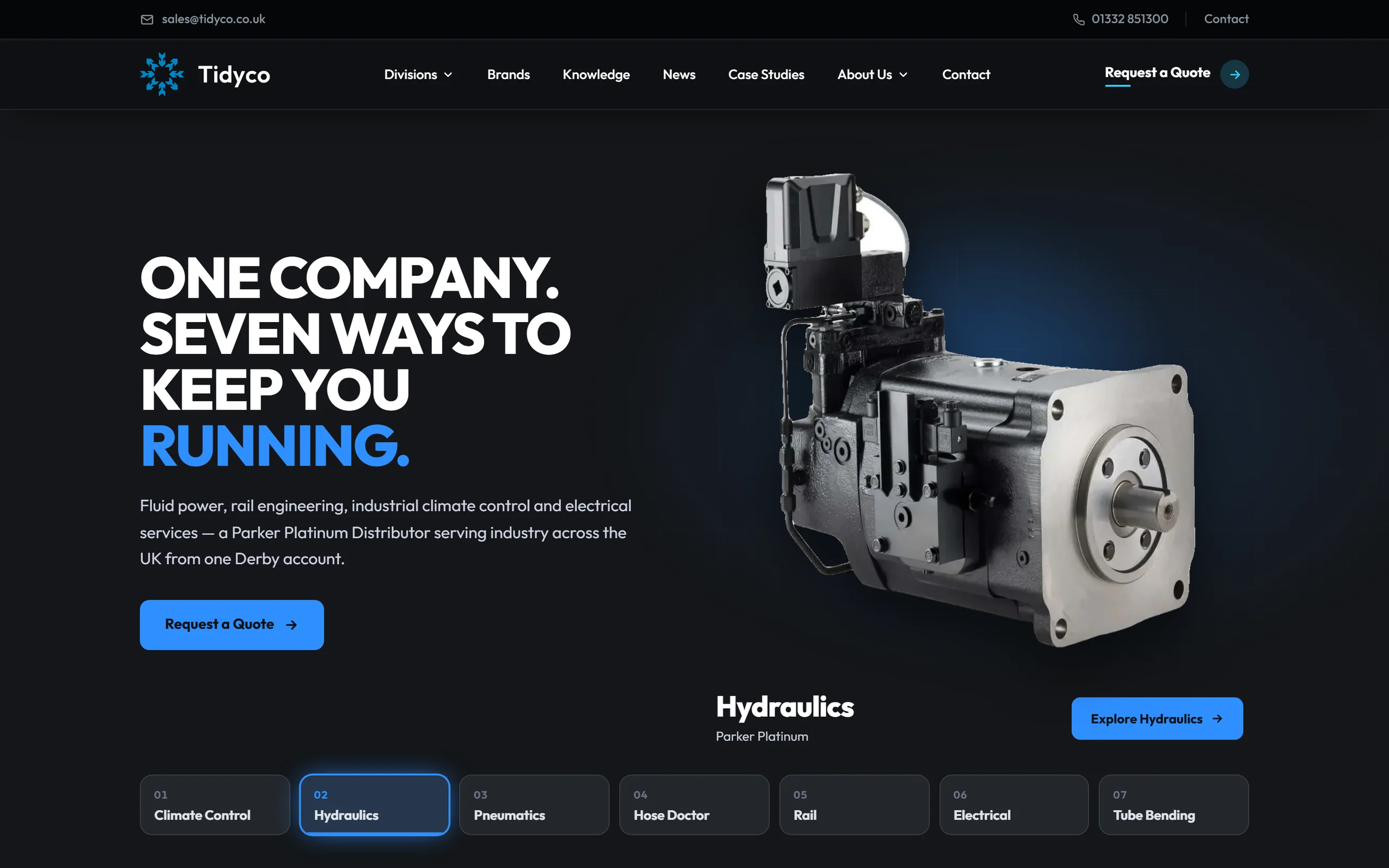
A rebuild for a Derby fluid-power and rail engineering group — seven divisions, one front door, and a 50-guide library that answers buyers before they enquire.
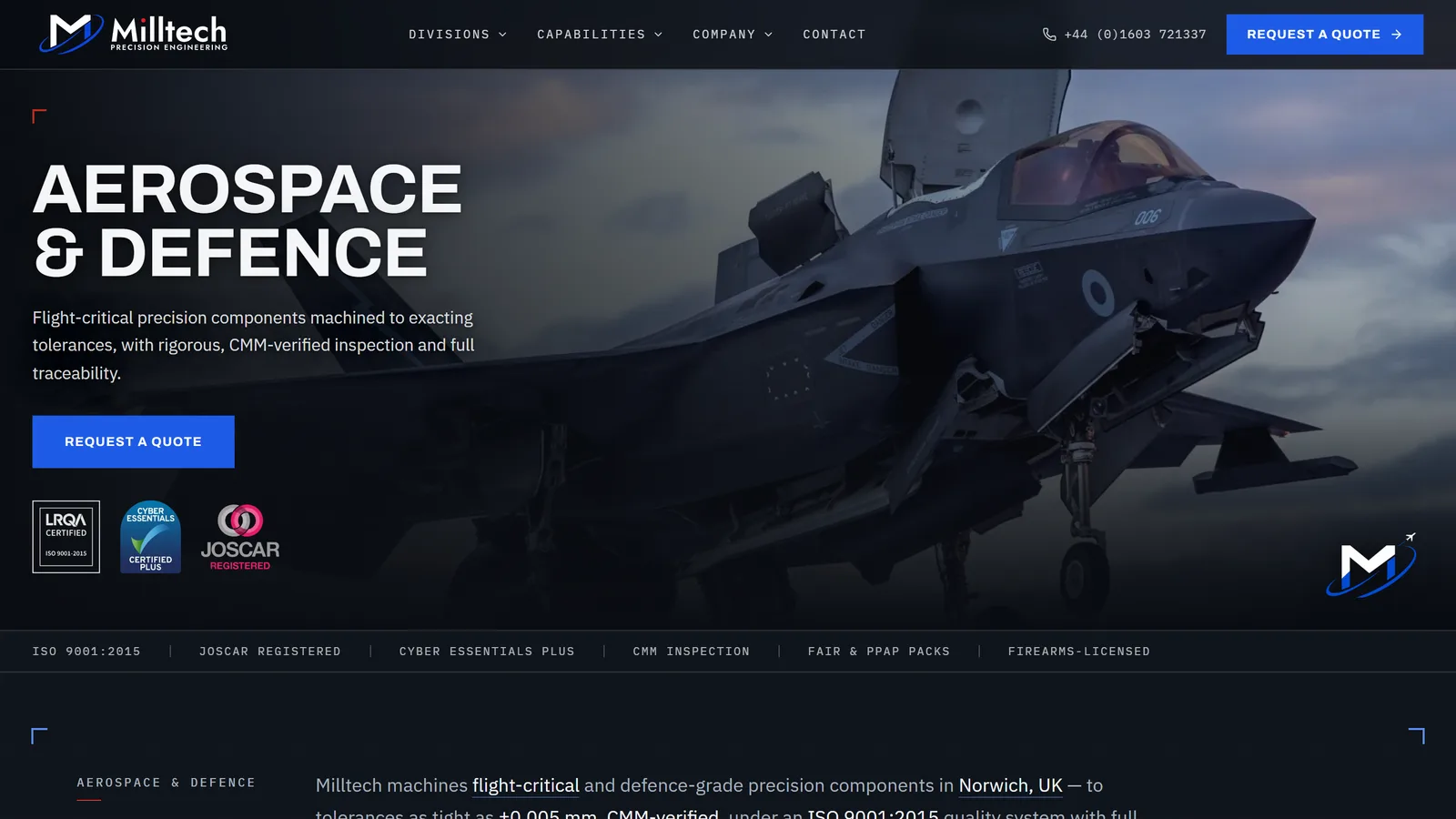
Precision CNC machining
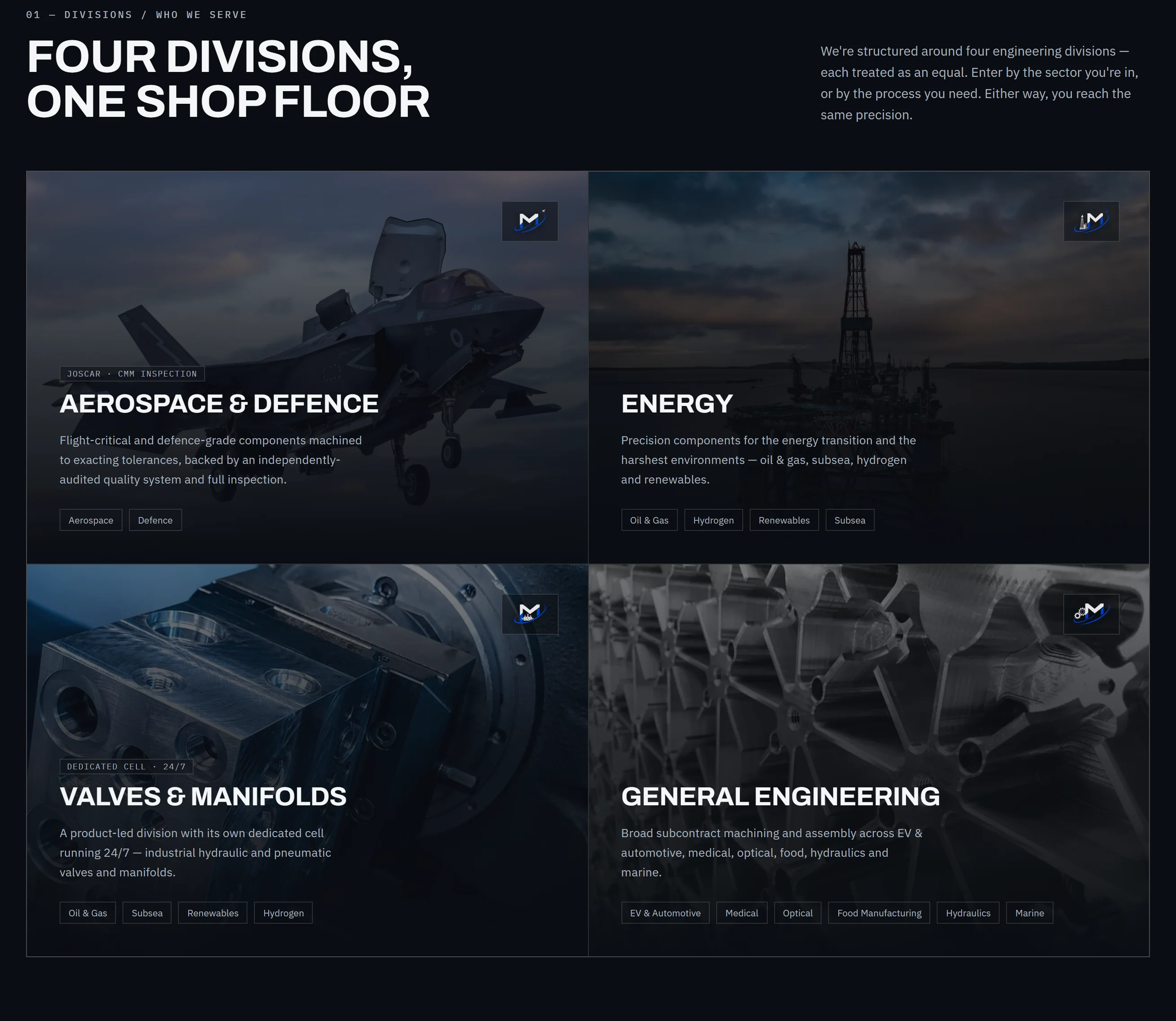
A rebuild for a Norwich CNC subcontractor — four divisions, capability pages that state the tolerance, and a quote path that asks for the drawing.
Related reading
All articlesOpinion
Buyers now run a first-pass supplier filter through ChatGPT before a human ever sees your site. Here's what the AI checks — and why most manufacturers get quietly cut.
How-to
Site speed sounds like a developer's obsession. For a B2B manufacturer it's a commercial signal — one of the few technical things a buyer notices without realising.
Opinion
Most manufacturers who aren't getting enquiries assume the site looks dated. Nearly always the real problem is somewhere else entirely. Here's where to actually look.
Next
The snapshot checks what assistants currently say about a business like yours, and where the answer comes from. It takes about a minute.