The build
A site written for a technical buyer
Specs, materials, tolerances and capacity laid out in the terms a buyer already searches with — so they can qualify you without an enquiry, and enquire already half-scoped.
Food, Beverage & Consumer-goods
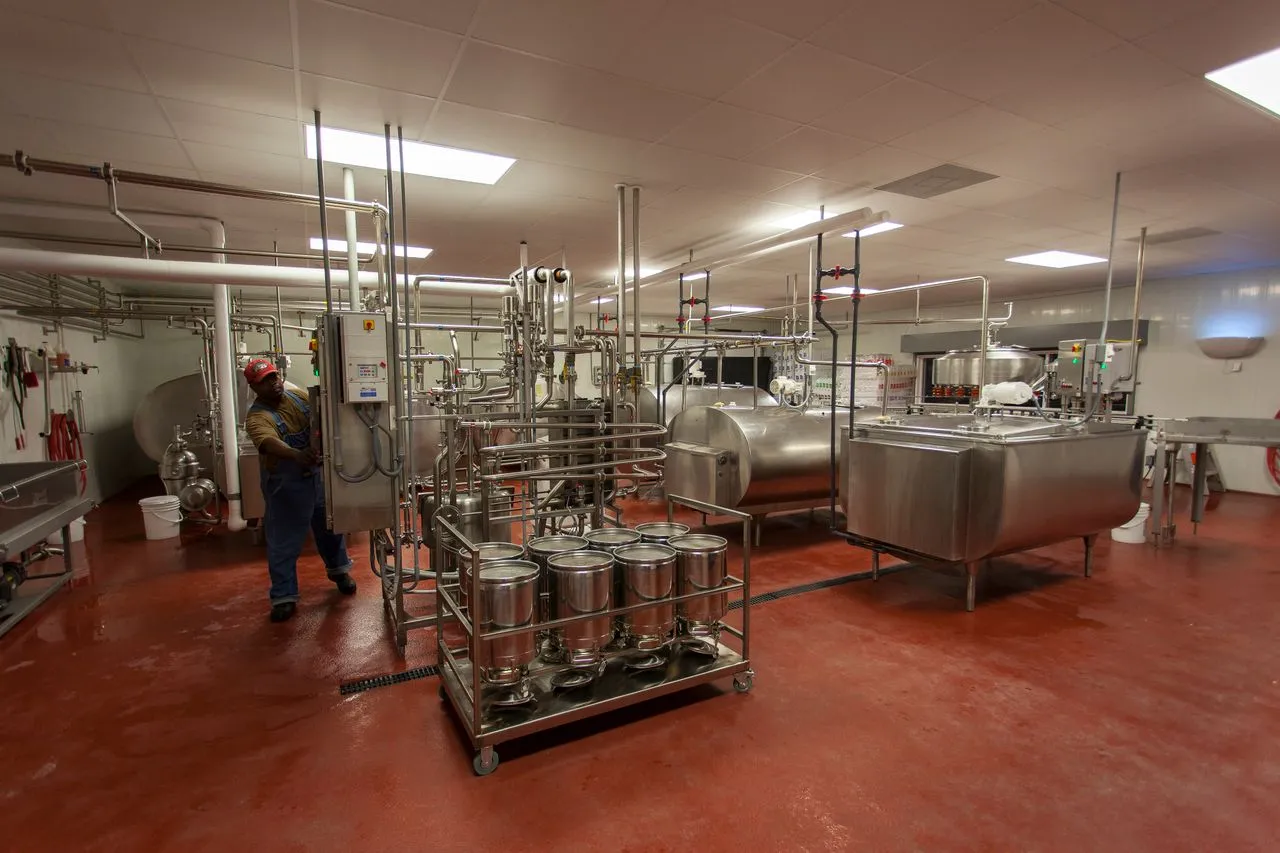
A commercial food manufacturer lives two lives on one website — the retail category buyer deciding whether to list you, and the foodservice distributor deciding whether to stock you.
Both judge you in minutes on food-safety credentials, capacity and whether you can supply reliably at their volume, yet most food sites lead with a hero photo of a field and bury the certification in a PDF. I build the site so a buyer can confirm your BRCGS or SALSA status, your lines and your private-label capability before they ever pick up the phone, and so the co-pack enquiry lands with enough detail to quote.
What I'd build you
The build
Specs, materials, tolerances and capacity laid out in the terms a buyer already searches with — so they can qualify you without an enquiry, and enquire already half-scoped.
Found
A page per process, material and sector instead of one “Services” page — every one its own door into the site, matched to how buyers search rather than how the business is organised.
Asked for
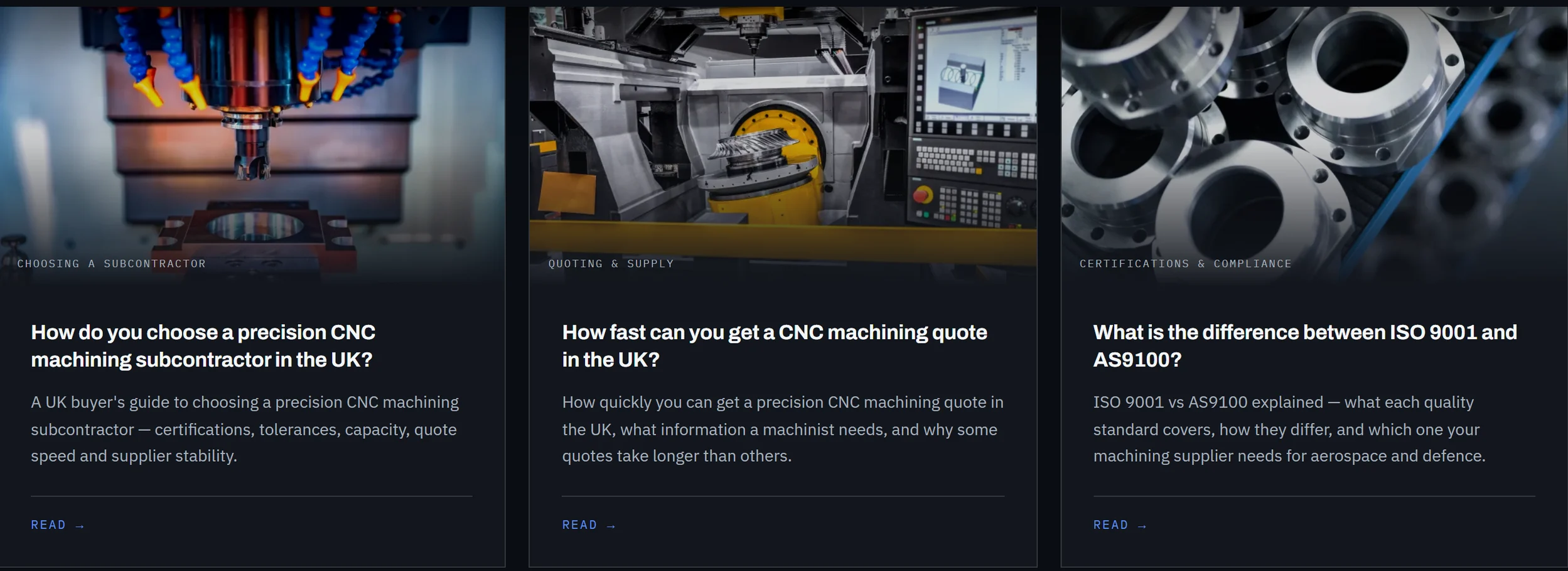
Buyers ask an assistant before they ask a supplier, and it quotes whoever actually answered. Question-led content and structured data put your words in that answer.
Measured, not claimed
2.9s.
Time to main content on a phone, against 6.9s for the median of 5 comparable firms.
Reported
Speed, search visibility and enquiry volume measured on a regular cycle and reported back — so the site is answerable for something rather than just existing.
What I build for commercial food mfg
A retail-and-foodservice capability page — lines, formats, pack sizes, run volumes — a buyer can match a listing to
A private-label / co-pack enquiry flow capturing product type, volumes, format and target launch date
Food-safety credential pages (BRCGS, HACCP, SALSA) structured so buyers and AI can read them, not a footer logo
A stockist / where-to-buy and distributor route so foodservice buyers reach you through the right channel
What manufacturers ask before they hire me. If yours is not here, ask it — the answer is usually short.
I build a capability and credentials page pitched at exactly what a retail buyer checks — formats, pack sizes, run volumes and food-safety accreditation — so you clear their first filter before the meeting instead of sending a deck that answers half their questions.
I give food-safety accreditation its own structured, schema-marked page, so it surfaces in search and in AI answers and reassures a buyer at the point of decision, rather than sitting as a logo they have to squint at in the footer.
Yes — I build a dedicated co-pack enquiry flow that captures product type, volumes, format and timeline, so a brand looking for a manufacturer arrives already scoped and you quote from real information instead of a vague "can you make this?" email.
Usually not a public checkout — a trade-account and reorder journey fits a distributor relationship better. If a retail range also sells direct, I build that alongside; I match the site to your actual channels rather than bolting on a shop for its own sake.
Product and category pages target the exact terms buyers and AI use — a "chilled ready-meal manufacturer" or "ambient sauce co-packer" — so you get found for the work you want, not lost under "food manufacturer".
I structure provenance, sourcing and accreditation as concrete, verifiable content tied to the product, because a retail buyer and an ethically-minded shopper both want the fact, not the adjective.
A sample-request flow captures who they are, the product they want and the volumes they buy, so your sales team spends time on qualified buyers rather than chasing details.
More in food, beverage & consumer-goods
Proof — recent manufacturer work
All case studies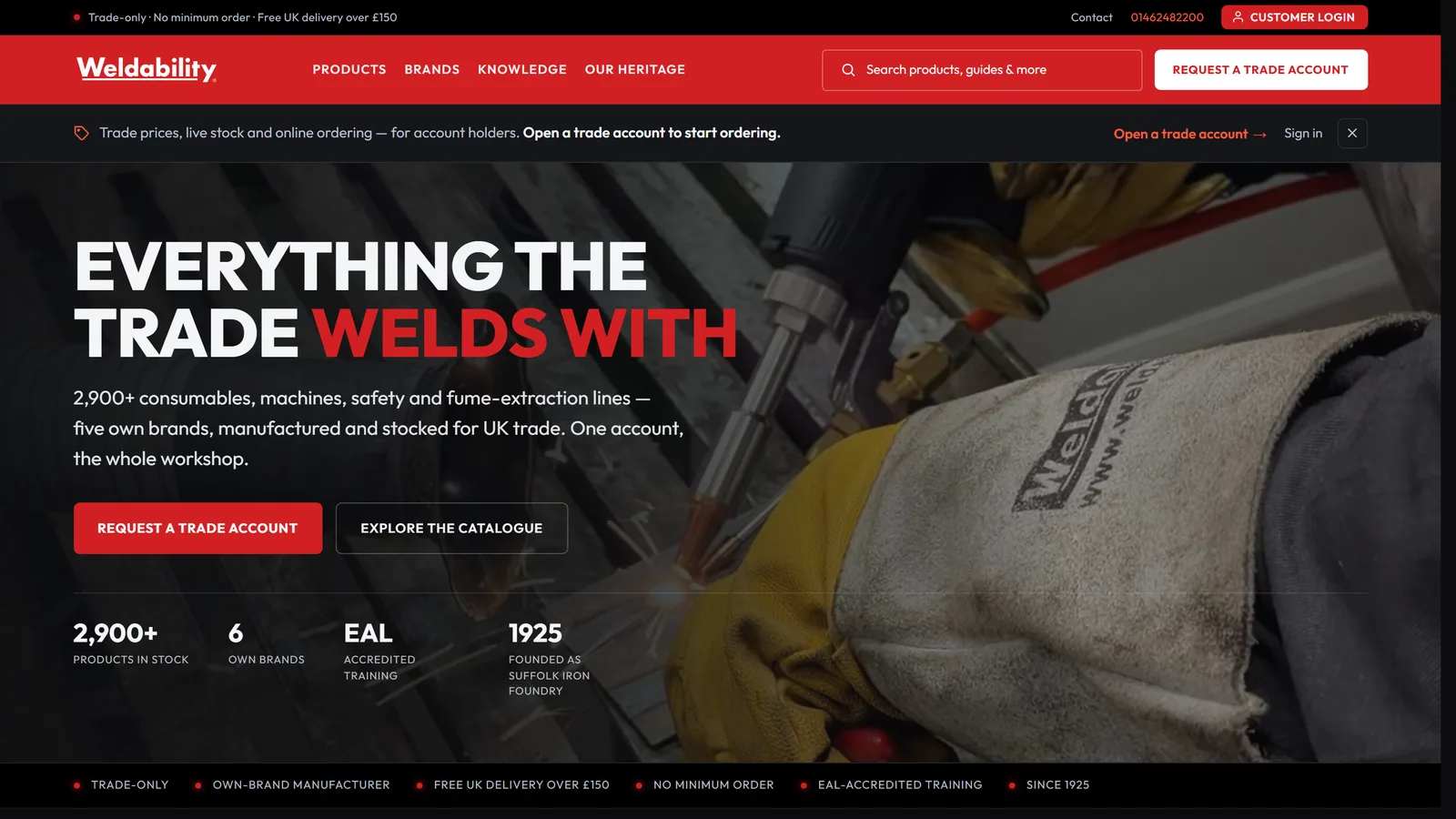
Welding supplies & equipment — trade wholesale
A trade portal for a welding wholesaler founded in 1925 — 3,400 pages, contract pricing, credit and reordering pulled live from the ERP.
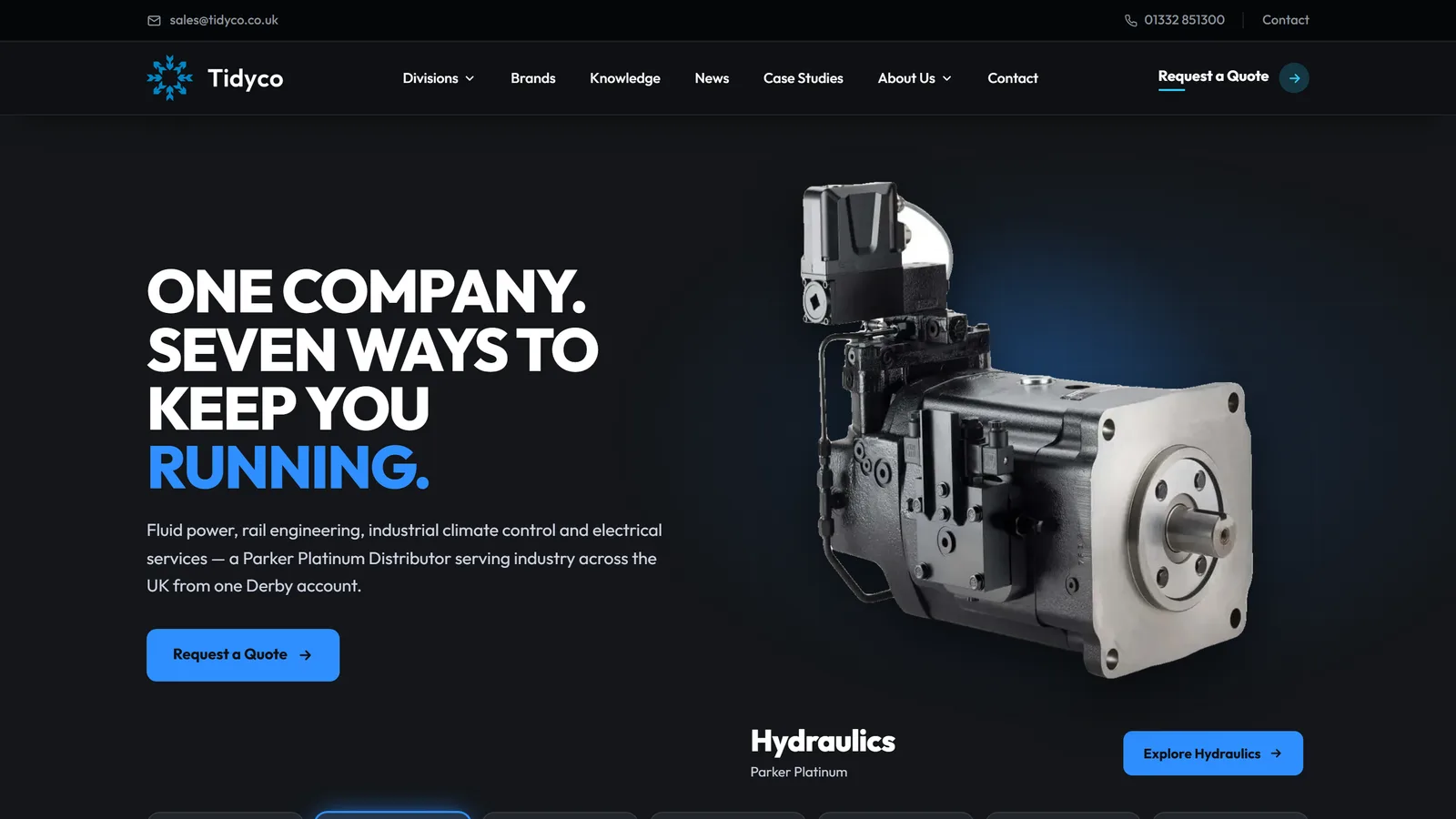
Industrial distribution & engineering services
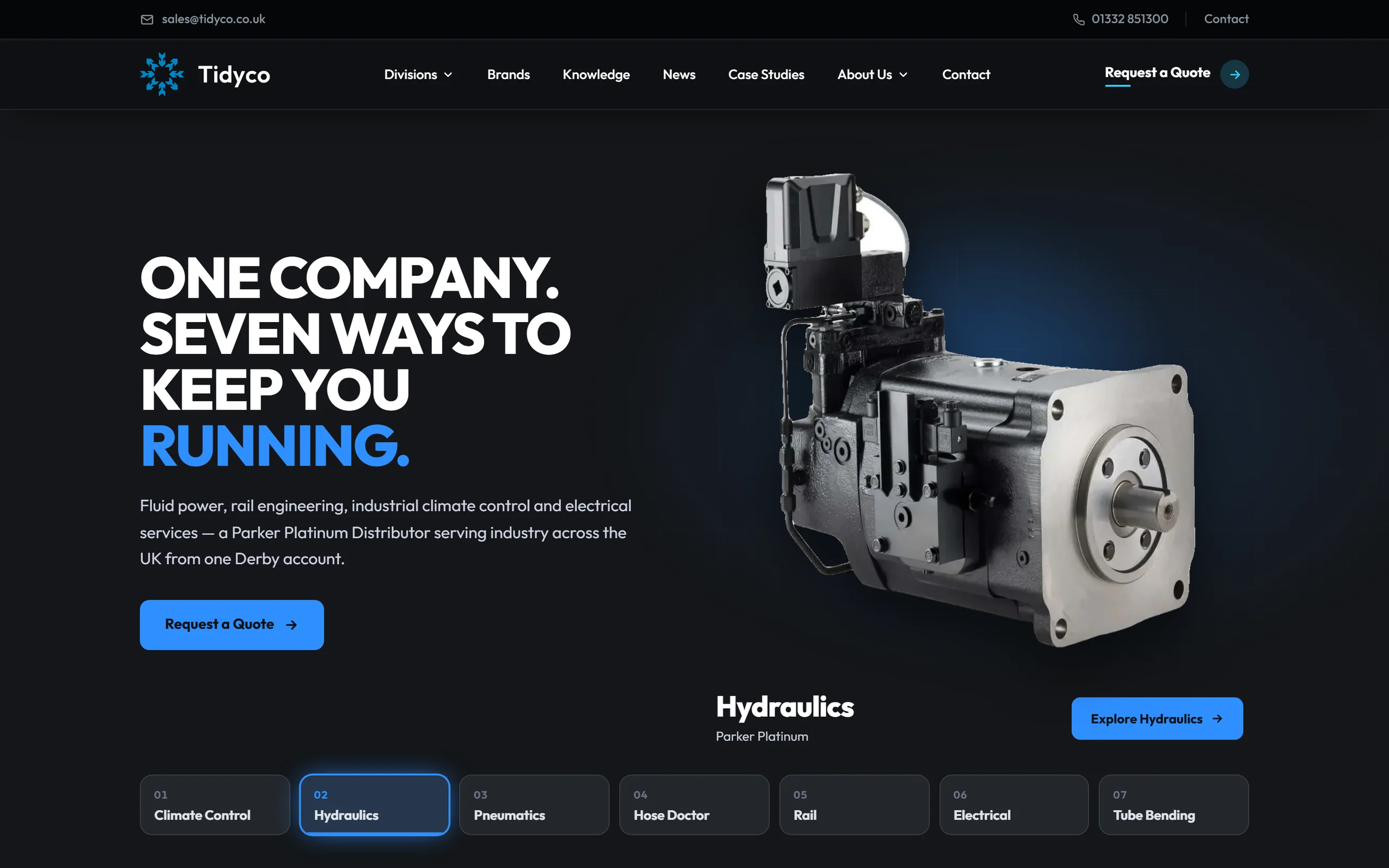
A rebuild for a Derby fluid-power and rail engineering group — seven divisions, one front door, and a 50-guide library that answers buyers before they enquire.
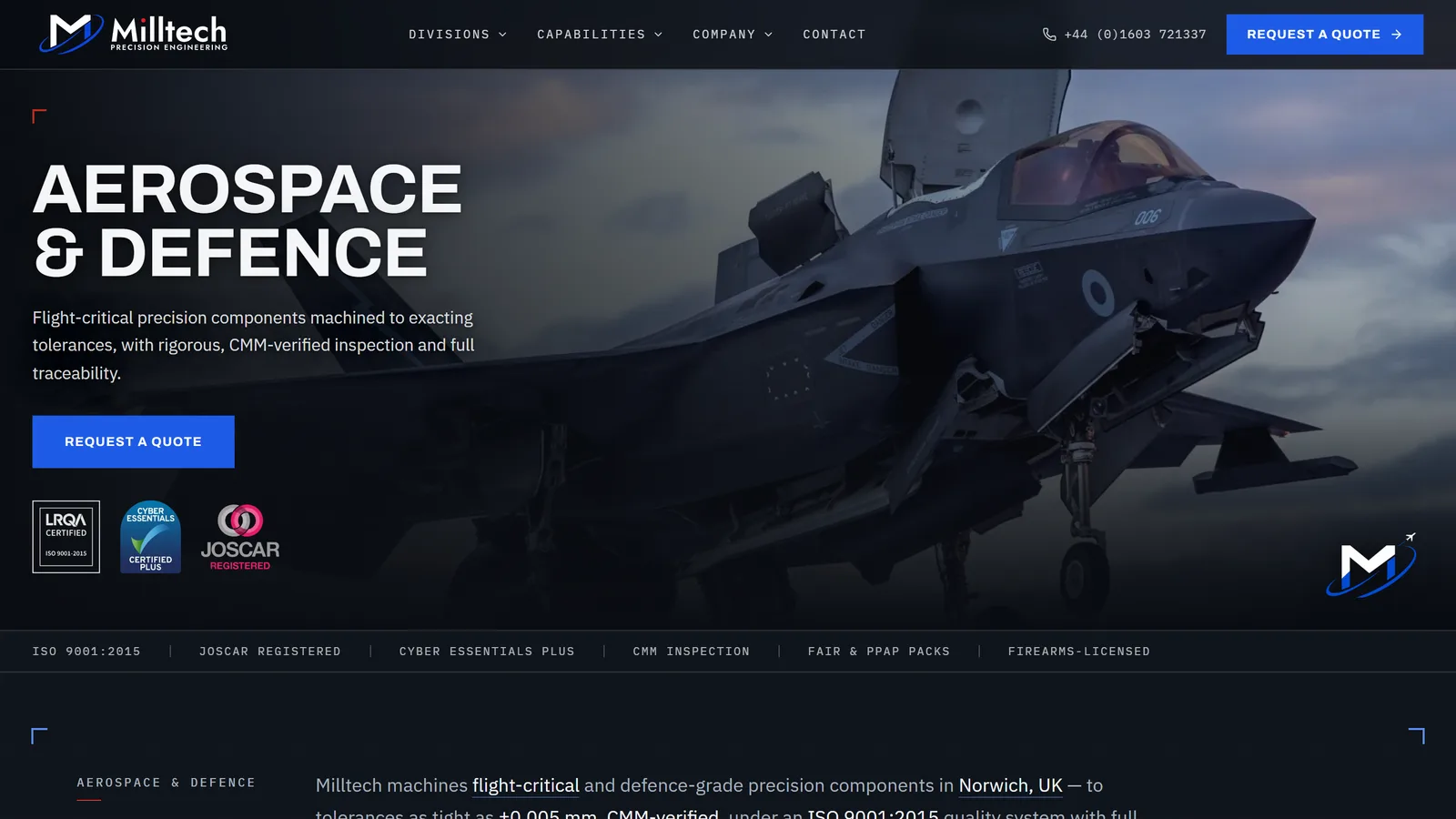
Precision CNC machining
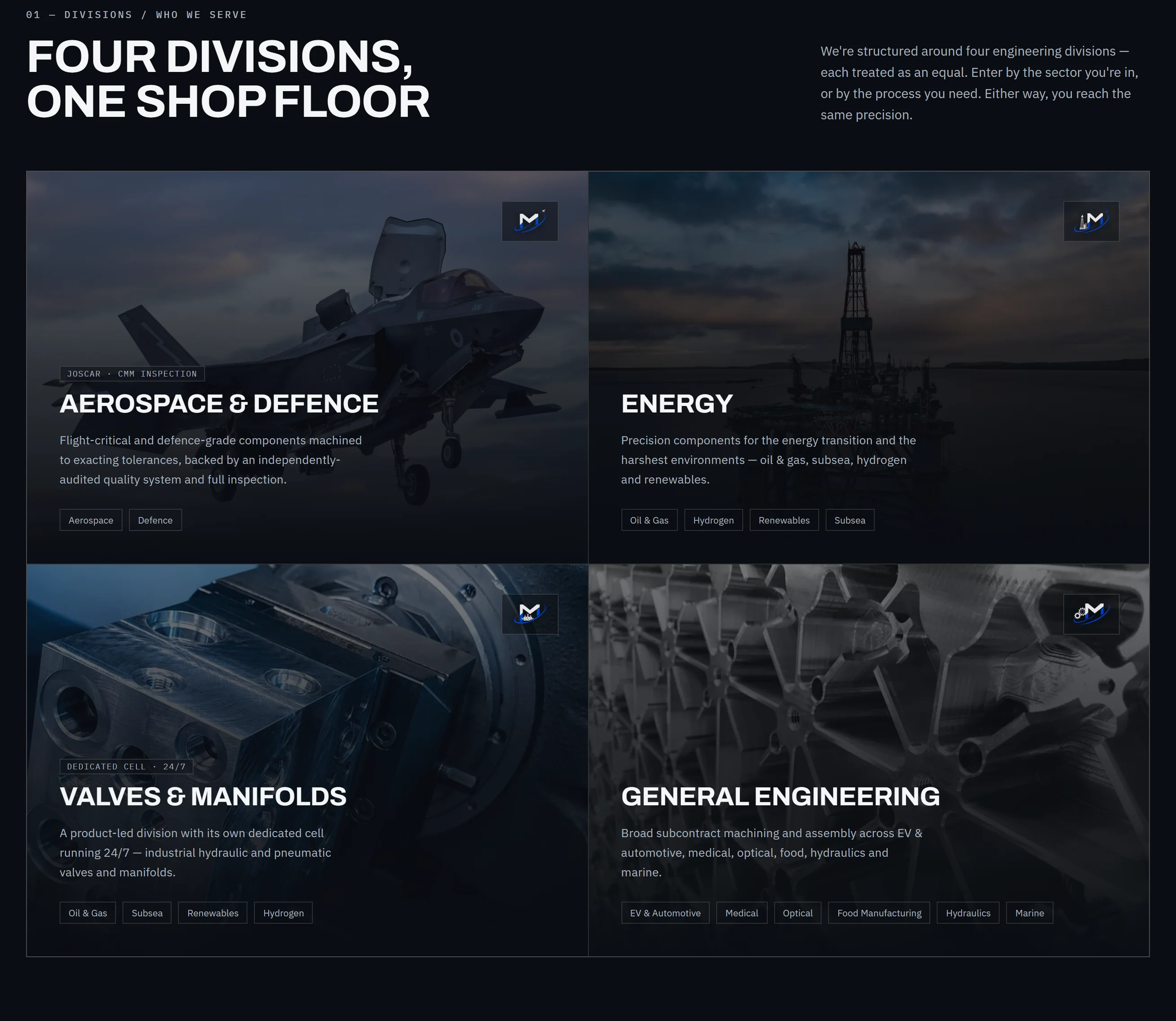
A rebuild for a Norwich CNC subcontractor — four divisions, capability pages that state the tolerance, and a quote path that asks for the drawing.
Next
The snapshot checks what assistants currently say about a business like yours, and where the answer comes from. It takes about a minute.