
The build
A site written for a technical buyer
Specs, materials, tolerances and capacity laid out in the terms a buyer already searches with — so they can qualify you without an enquiry, and enquire already half-scoped.
A moulder, extruder or composites shop is rarely bought on price alone — the buyer is choosing tooling they’ll live with, a material that has to survive the application, and a partner who’ll hold quality across a production run.
Most sites in this sector flatten all of that into “plastic injection moulding” or “composites services” and then wonder why enquiries arrive half-formed. I build a page per process, polymer and application, so the right buyer recognises the right offer, and I capture the new-product enquiry with the tooling, material and volume detail you actually need to quote. Whether you run stock ranges or purely bespoke work, the site is built to your real mix — not a template.
What I'd build you
The build
Specs, materials, tolerances and capacity laid out in the terms a buyer already searches with — so they can qualify you without an enquiry, and enquire already half-scoped.
Found
A page per process, material and sector instead of one “Services” page — every one its own door into the site, matched to how buyers search rather than how the business is organised.
Asked for
Buyers ask an assistant before they ask a supplier, and it quotes whoever actually answered. Question-led content and structured data put your words in that answer.
Measured, not claimed
2.9s.
Time to main content on a phone, against 6.9s for the median of 5 comparable firms.
Reported
Speed, search visibility and enquiry volume measured on a regular cycle and reported back — so the site is answerable for something rather than just existing.
What I build for plastics, rubber & composites
Process pages by capability (injection, extrusion, blow, thermoforming, rotational, rubber, composites) with materials and part types
A concept-to-part / NPI journey that sets tooling and lead-time expectations before the call
Polymer and material landing pages buyers search by (PP, nylon, PEEK, EPDM, silicone, GRP, carbon fibre)
Industry pages where compliance and validation differ (medical, food-contact, water, automotive)
An NPI/RFQ enquiry flow scoped to part, material, tooling status and annual volume
Your exact sector
Not “manufacturing” in general — the specific process and product, written the way buyers and AI assistants actually search for it.
What manufacturers ask before they hire me. If yours is not here, ask it — the answer is usually short.
Yes — a clear concept-to-part journey explains tooling cost, cavitation and lead time up front, so enquiries arrive better qualified and buyers have already accepted the model before they reach you.
Material and process pages match the exact terms buyers and AI use — “PEEK injection moulding”, “rigid PVC extrusion”, “GRP mouldings” — which a single generic services page never ranks or gets quoted for.
An NPI-focused RFQ flow captures the part or concept, the target material, annual volumes and whether tooling already exists, so you quote tooling and piece-price from real information instead of guesswork.
It can, and it should keep them separate: a buyer reordering a stock part and one commissioning bespoke tooling behave differently, so I build a reorder path and an enquiry path rather than forcing both through one form.
Content on material selection, design-for-manufacture and process choice demonstrates that expertise before the call, which is what separates a manufacturing partner from a shop competing only on unit price.
Industry pages speak to those buyers’ real concerns — material traceability, approvals and clean production — so a regulated buyer finds a manufacturer who understands the requirement rather than a generic listing.
That’s the aim of the structured process and material content — and with my tool Periscope I measure how often ChatGPT, Gemini and Perplexity name you for real buyer questions, then work the pages that move it.
Usually not — with tooling, material and volume driving cost, a published price would mislead more than help. The site’s job is to qualify the enquiry so your quote is accurate first time, not to act as a shop counter.
Proof — recent manufacturer work
All case studies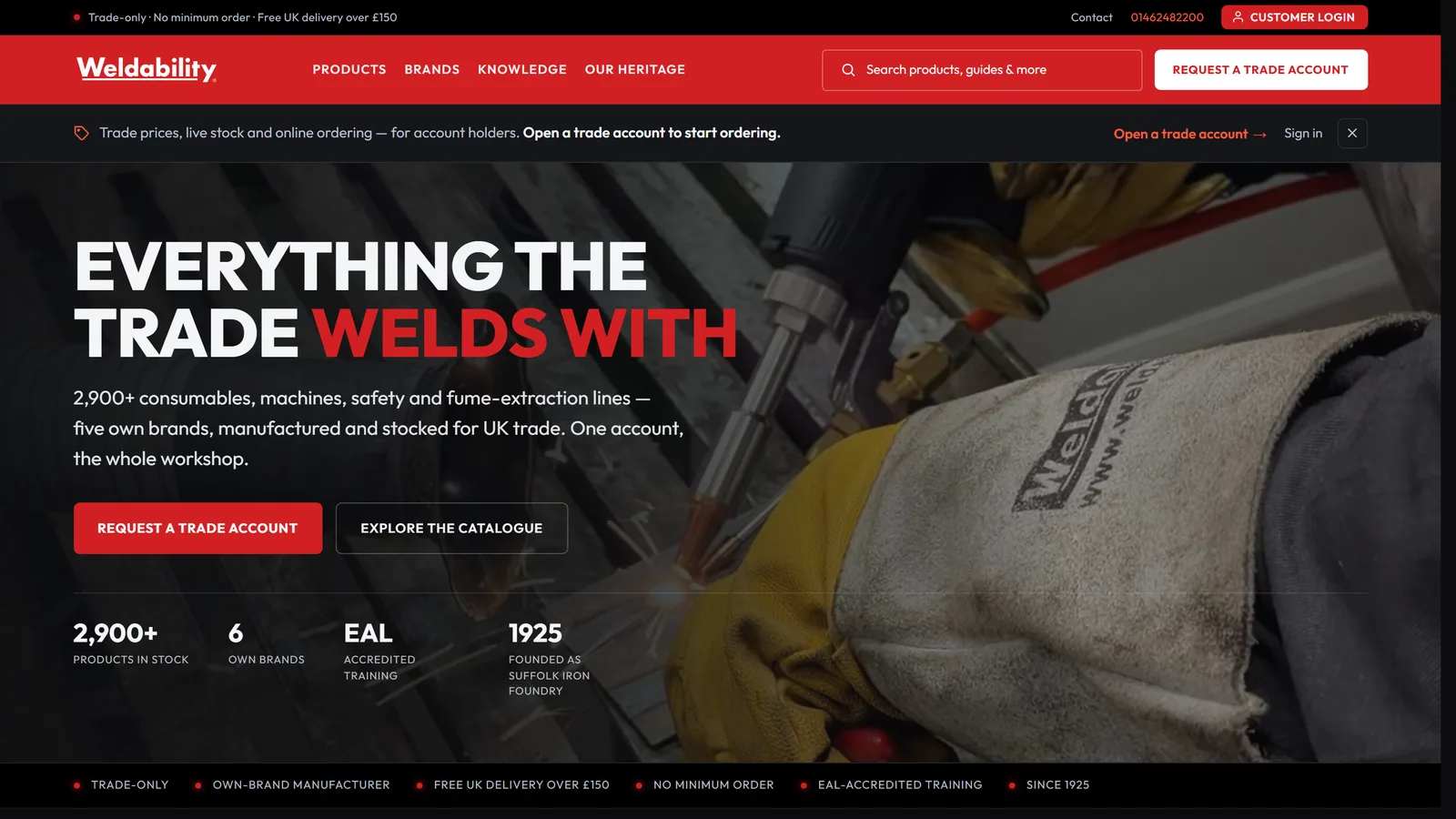
Welding supplies & equipment — trade wholesale
A trade portal for a welding wholesaler founded in 1925 — 3,400 pages, contract pricing, credit and reordering pulled live from the ERP.
Industrial distribution & engineering services
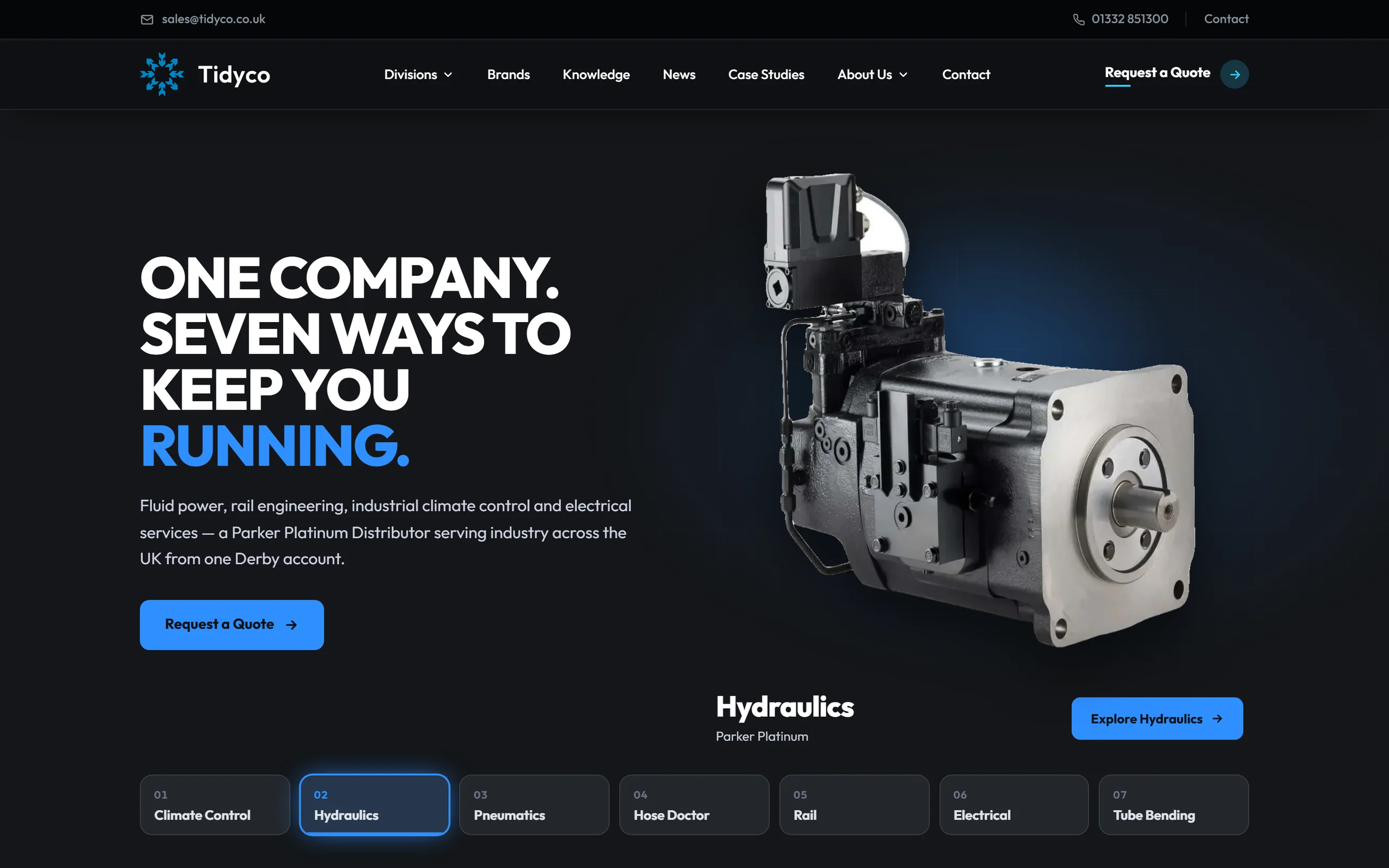
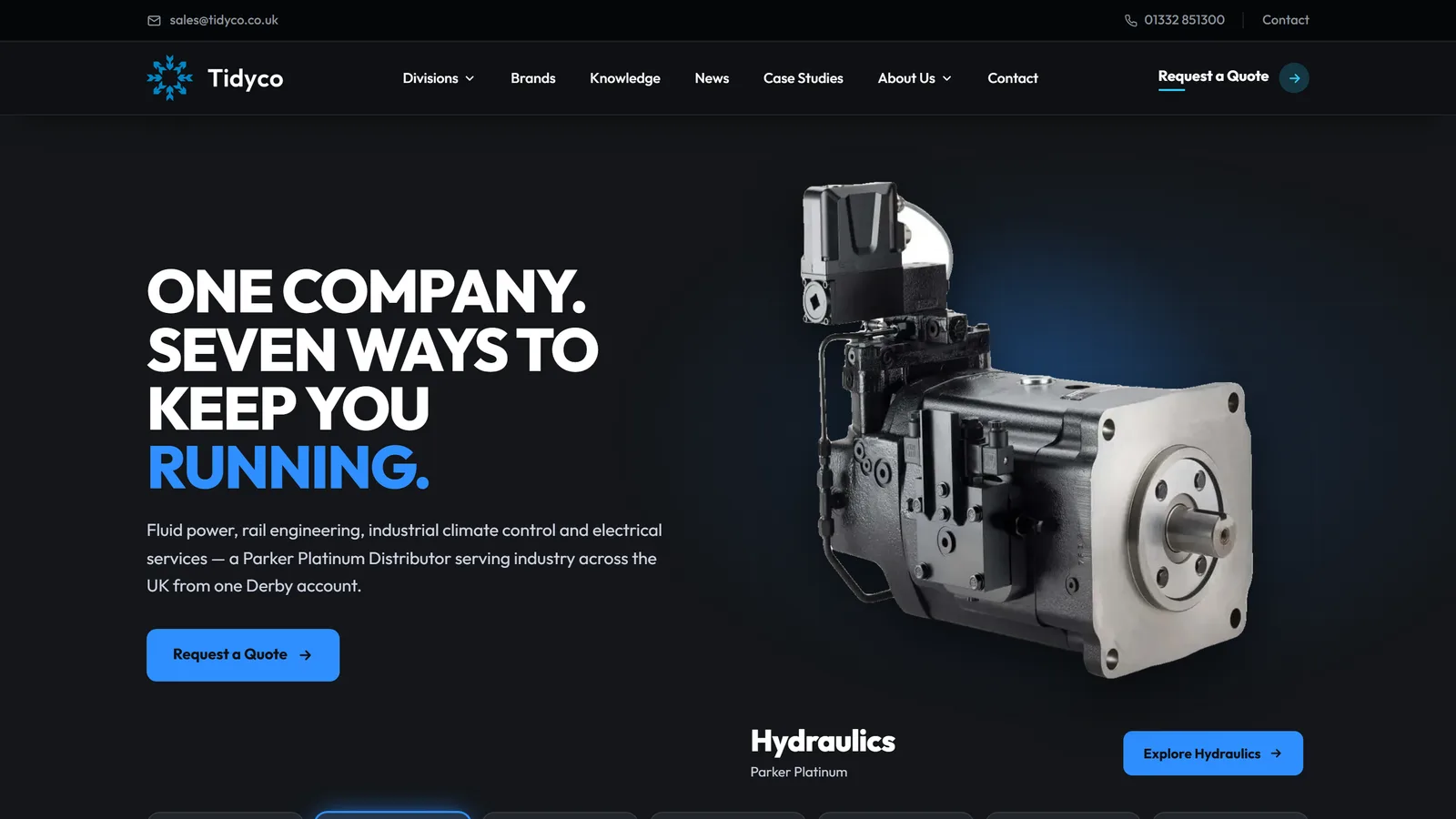
A rebuild for a Derby fluid-power and rail engineering group — seven divisions, one front door, and a 50-guide library that answers buyers before they enquire.
Precision CNC machining
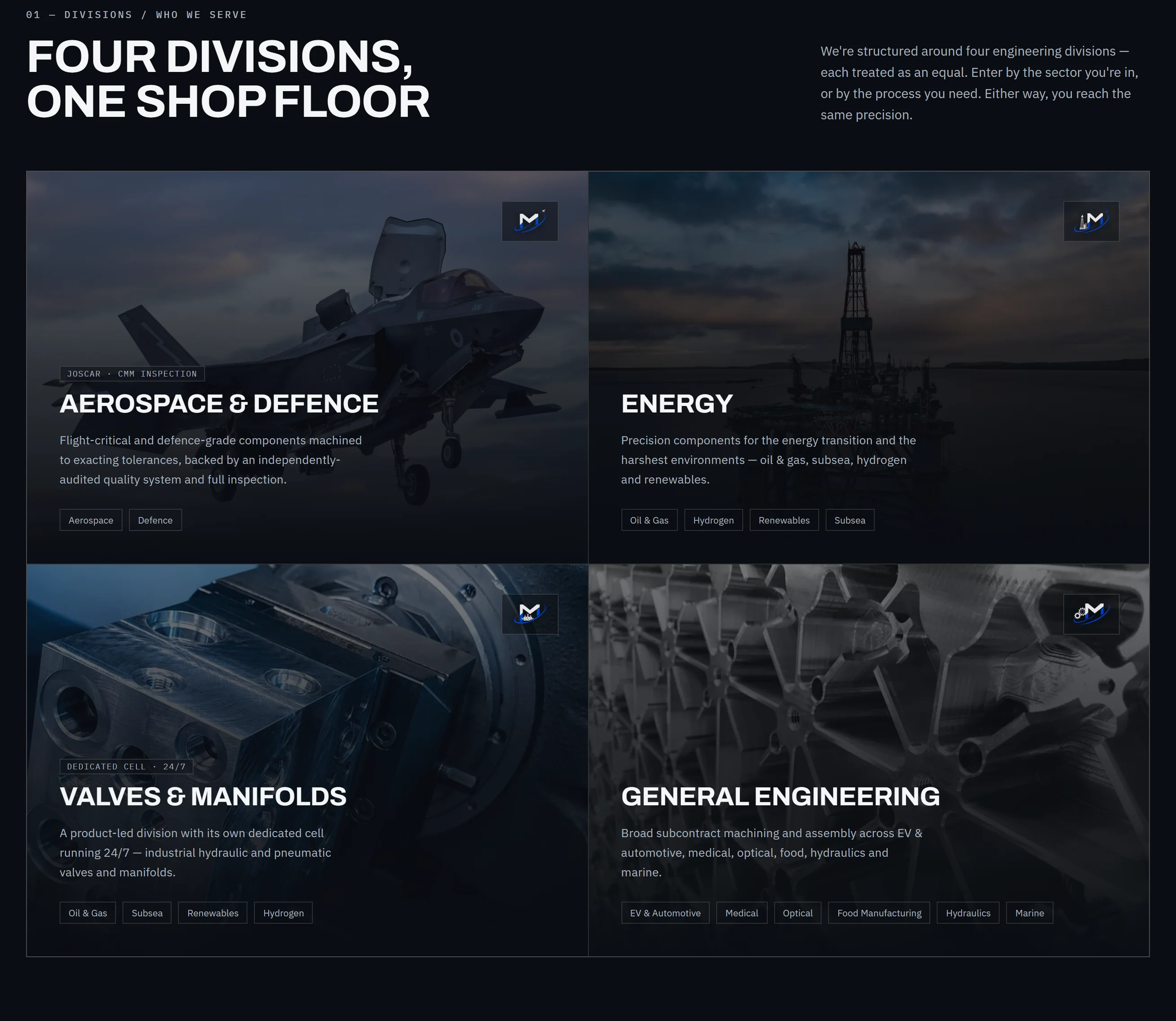
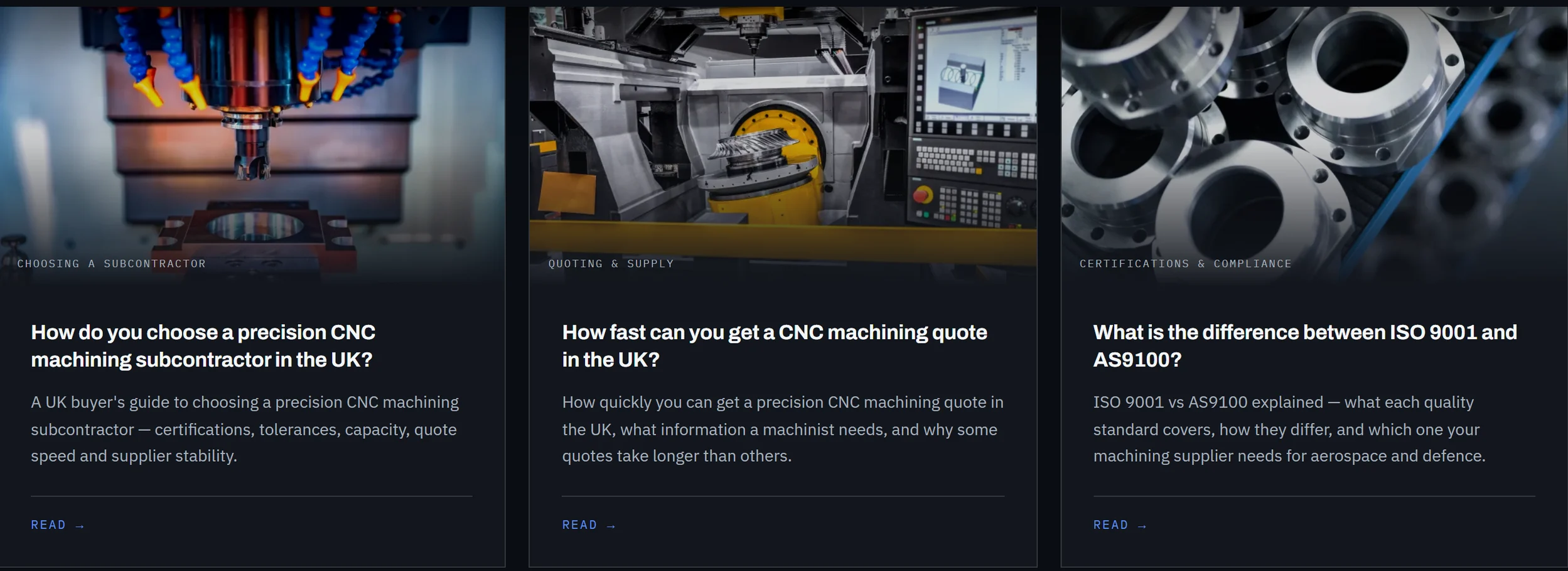
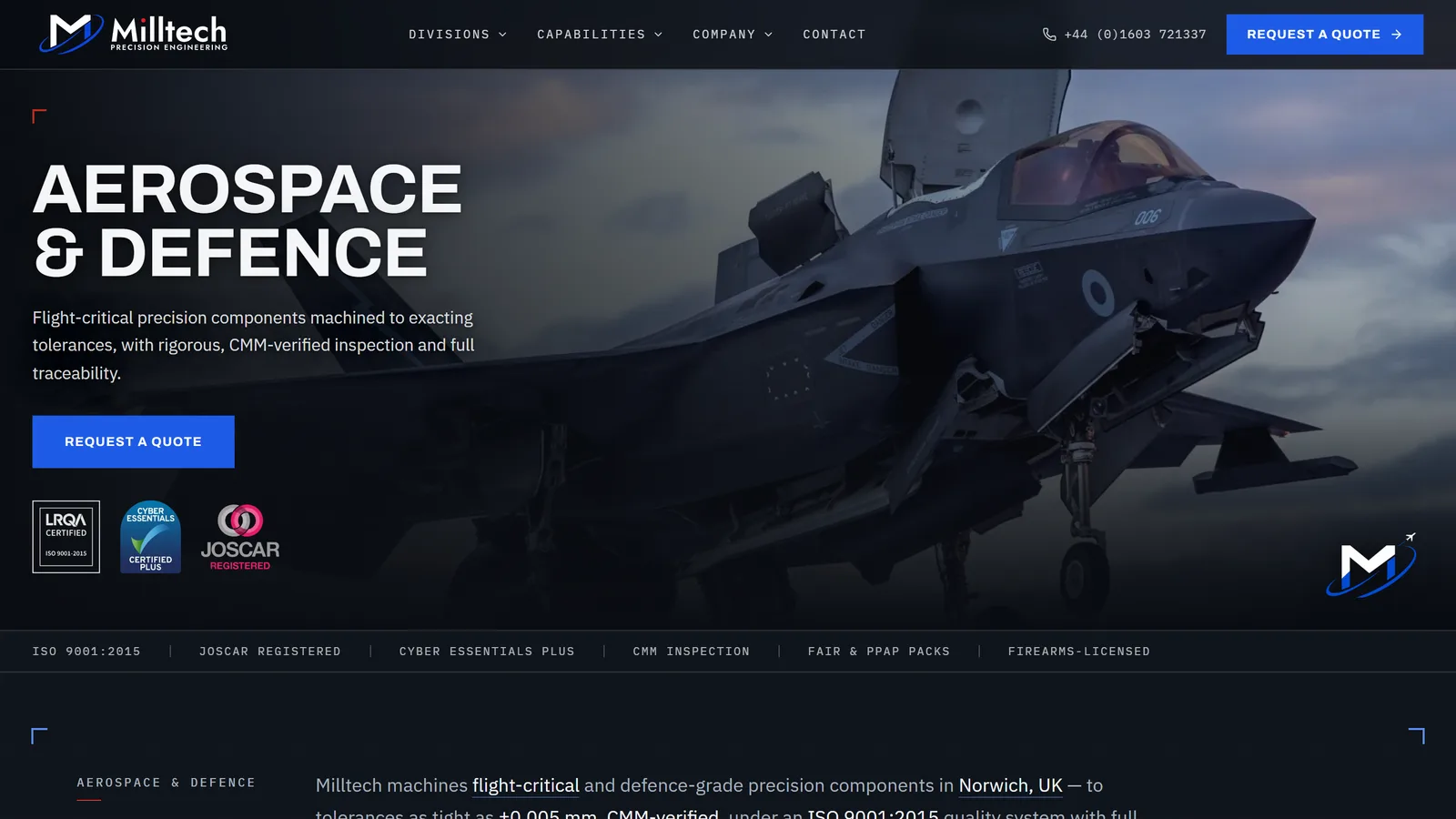
A rebuild for a Norwich CNC subcontractor — four divisions, capability pages that state the tolerance, and a quote path that asks for the drawing.
Next
The snapshot checks what assistants currently say about a business like yours, and where the answer comes from. It takes about a minute.