The build
A site written for a technical buyer
Specs, materials, tolerances and capacity laid out in the terms a buyer already searches with — so they can qualify you without an enquiry, and enquire already half-scoped.
Contract electronics buyers arrive with a BOM, a volume and a deadline, and decide fast whether you can handle their build class — fine-pitch SMT, mixed-technology, box-build, harness, panel — and the compliance their end-market demands.
Most EMS and electrical manufacturer sites lead with a photo of a pick-and-place machine and a row of standards logos, which tells a buyer nothing about whether their particular board, harness or panel is a fit. I make your real capability legible — process, technology, standards, NPI turnaround — and turn a BOM and Gerbers into a scoped RFQ instead of an email thread. The buyer who now asks an AI assistant for a contract manufacturer only gets you named when that capability is written down where it can be read.
What I'd build you
The build
Specs, materials, tolerances and capacity laid out in the terms a buyer already searches with — so they can qualify you without an enquiry, and enquire already half-scoped.
Found
A page per process, material and sector instead of one “Services” page — every one its own door into the site, matched to how buyers search rather than how the business is organised.
Asked for
Buyers ask an assistant before they ask a supplier, and it quotes whoever actually answered. Question-led content and structured data put your words in that answer.
Measured, not claimed
2.9s.
Time to main content on a phone, against 6.9s for the median of 5 comparable firms.
Reported
Speed, search visibility and enquiry volume measured on a regular cycle and reported back — so the site is answerable for something rather than just existing.
What I build for electronics & electrical
Capability pages by build class — SMT, through-hole, mixed-technology, box-build — with line capacity and technology limits
Standards and quality pages (IPC-A-610, J-STD-001, ISO 9001 and the end-market approvals you hold) built for the procurement gate
A secure BOM / Gerber upload that captures quantity, build class, test requirement and turnaround
An NPI / prototype-to-volume journey that positions you as a partner across the product life
AI visibility for "contract electronics manufacturer" and end-market buyer questions
Your exact sector
Not “manufacturing” in general — the specific process and product, written the way buyers and AI assistants actually search for it.
What manufacturers ask before they hire me. If yours is not here, ask it — the answer is usually short.
Your existing customers still check you out, but new programme buyers and the AI assistants they consult only recommend suppliers whose capability and quality system they can actually read. The referral gets you named; the site closes the confidence gap and wins the shortlist.
Yes — a secure upload flow captures the BOM and Gerbers plus quantity, build class and turnaround, so quoting starts from complete information instead of an email chain.
I give your standards their own structured, schema-marked pages, so they surface in search and in AI answers rather than hiding as a logo in the footer.
Capability pages target the exact terms buyers and AI use — "contract electronics manufacturer", "PCB assembly", "wire harness maker" — so you rank and get quoted for the specific work you want more of.
I make box-build and full-product assembly an explicit, findable offer with the NPI context behind it, so the buyer wanting a finished product, not a populated board, recognises the fit.
Yes — I build application pages aimed at those sectors, so a buyer in medical, aerospace or industrial finds a manufacturer who speaks to their compliance and reliability constraints instead of a generalist.
That’s the aim of the structured capability and standards content — and with my tool Periscope I measure how often ChatGPT, Gemini and Perplexity name you for real buyer questions, then work the pages that move it.
Proof — recent manufacturer work
All case studies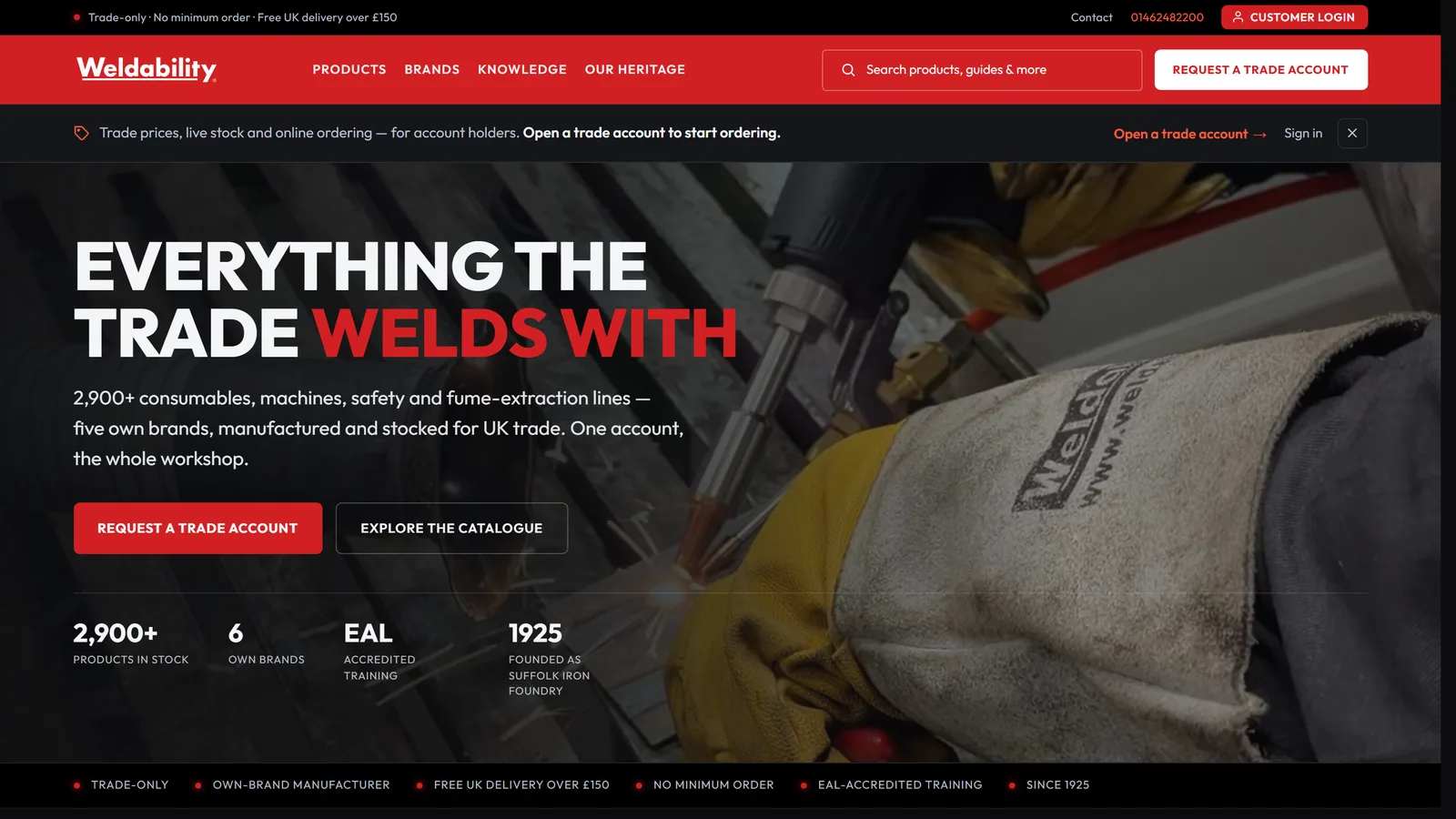
Welding supplies & equipment — trade wholesale
A trade portal for a welding wholesaler founded in 1925 — 3,400 pages, contract pricing, credit and reordering pulled live from the ERP.
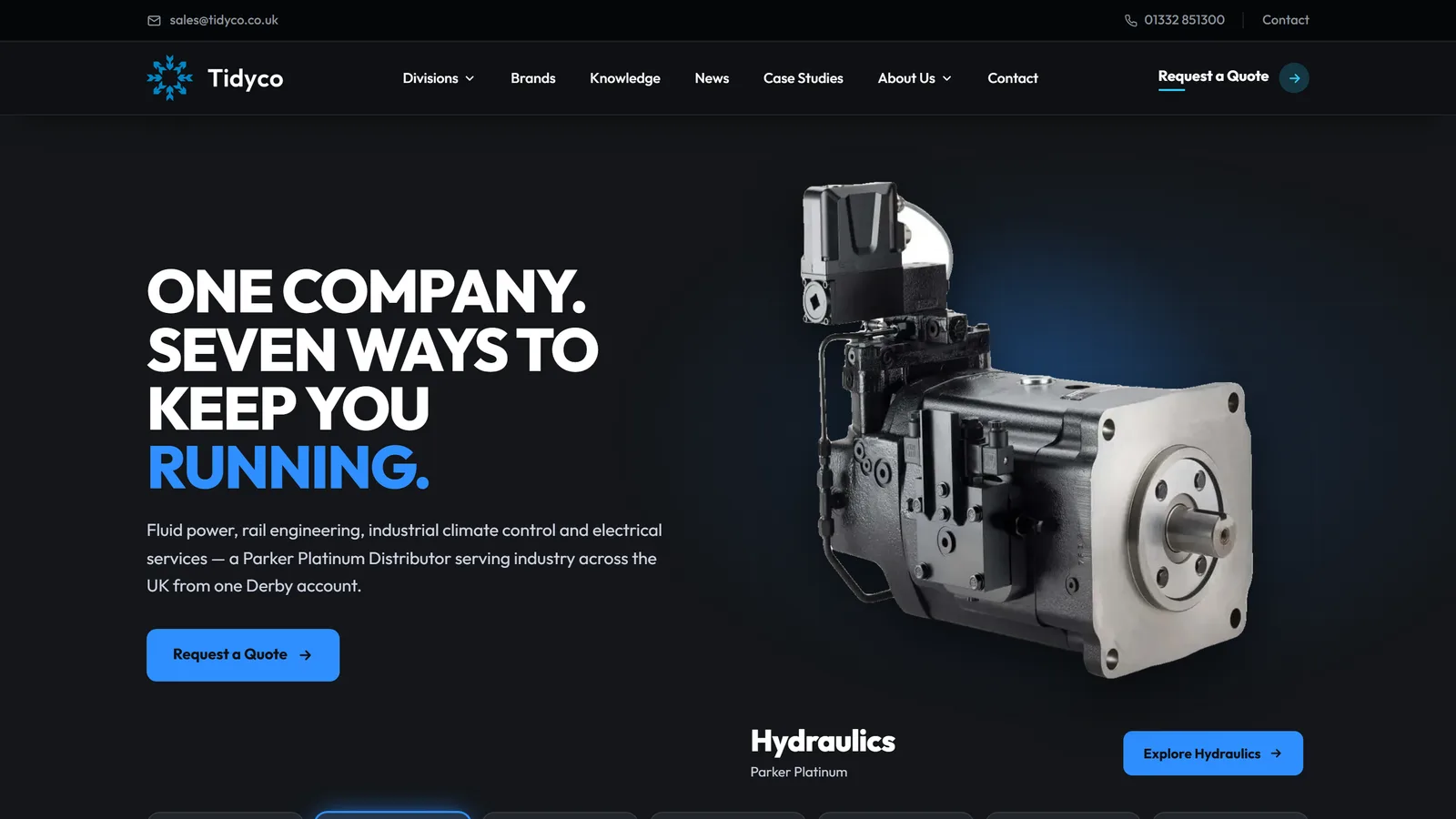
Industrial distribution & engineering services
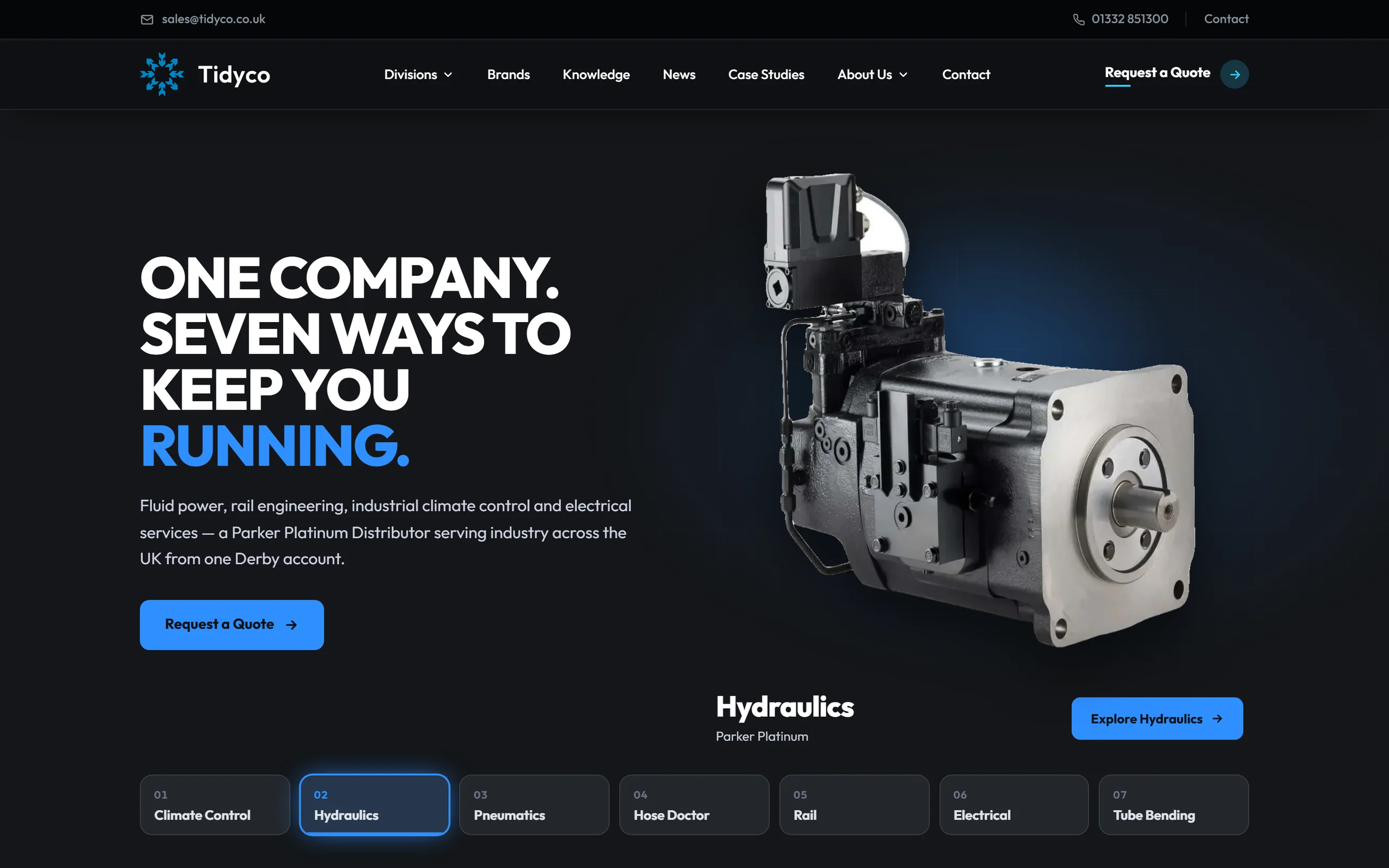
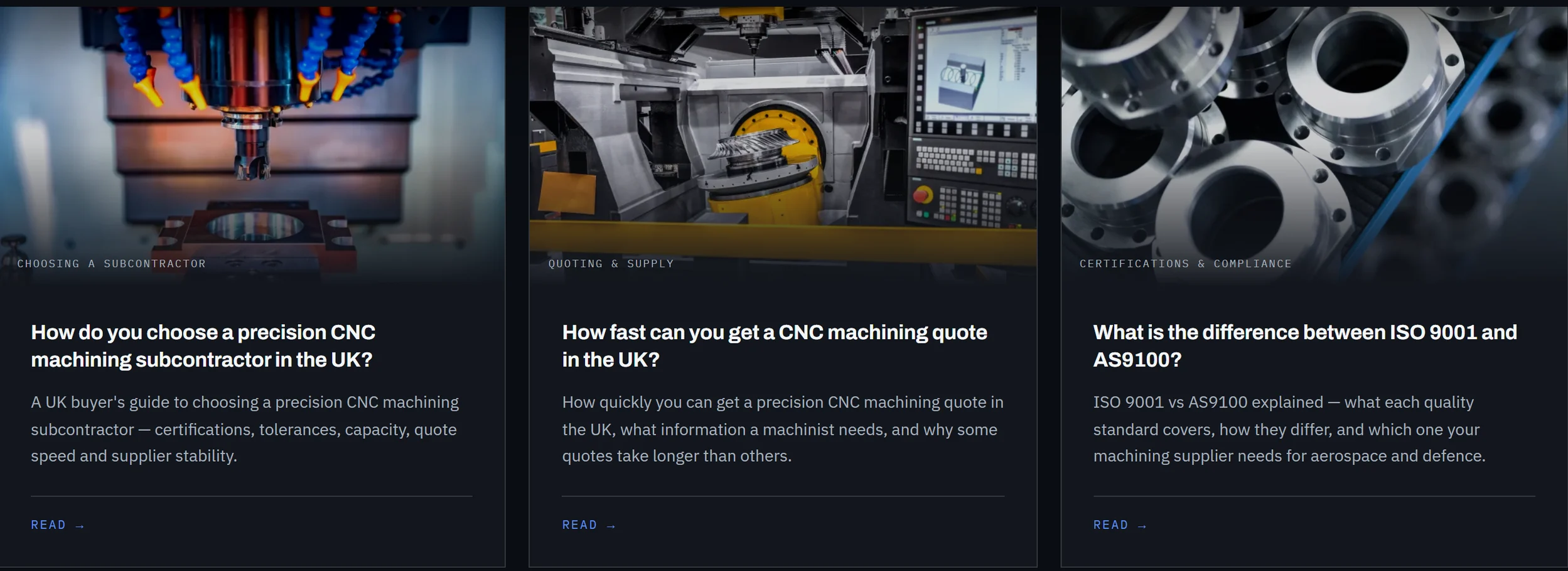
A rebuild for a Derby fluid-power and rail engineering group — seven divisions, one front door, and a 50-guide library that answers buyers before they enquire.
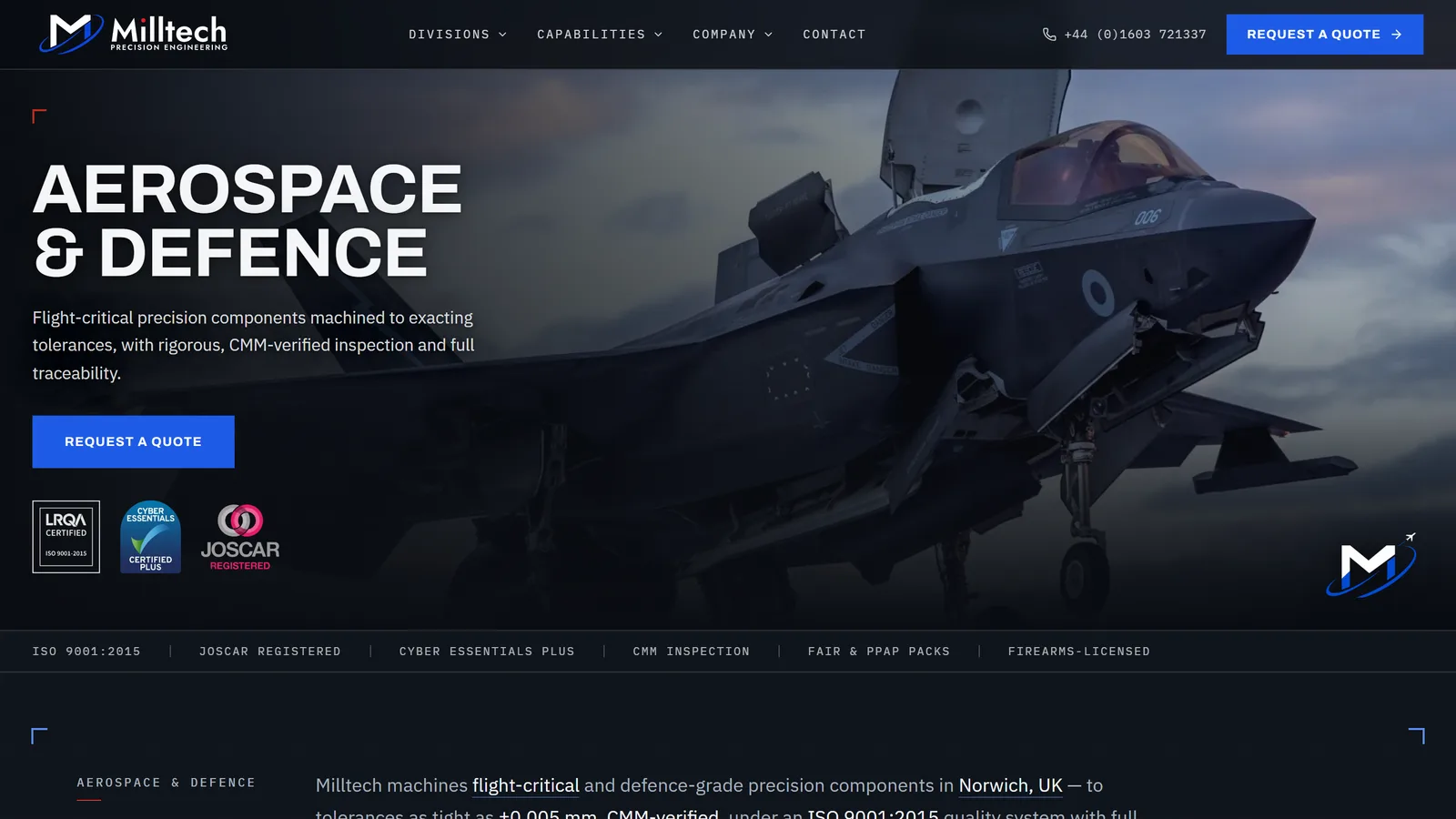
Precision CNC machining
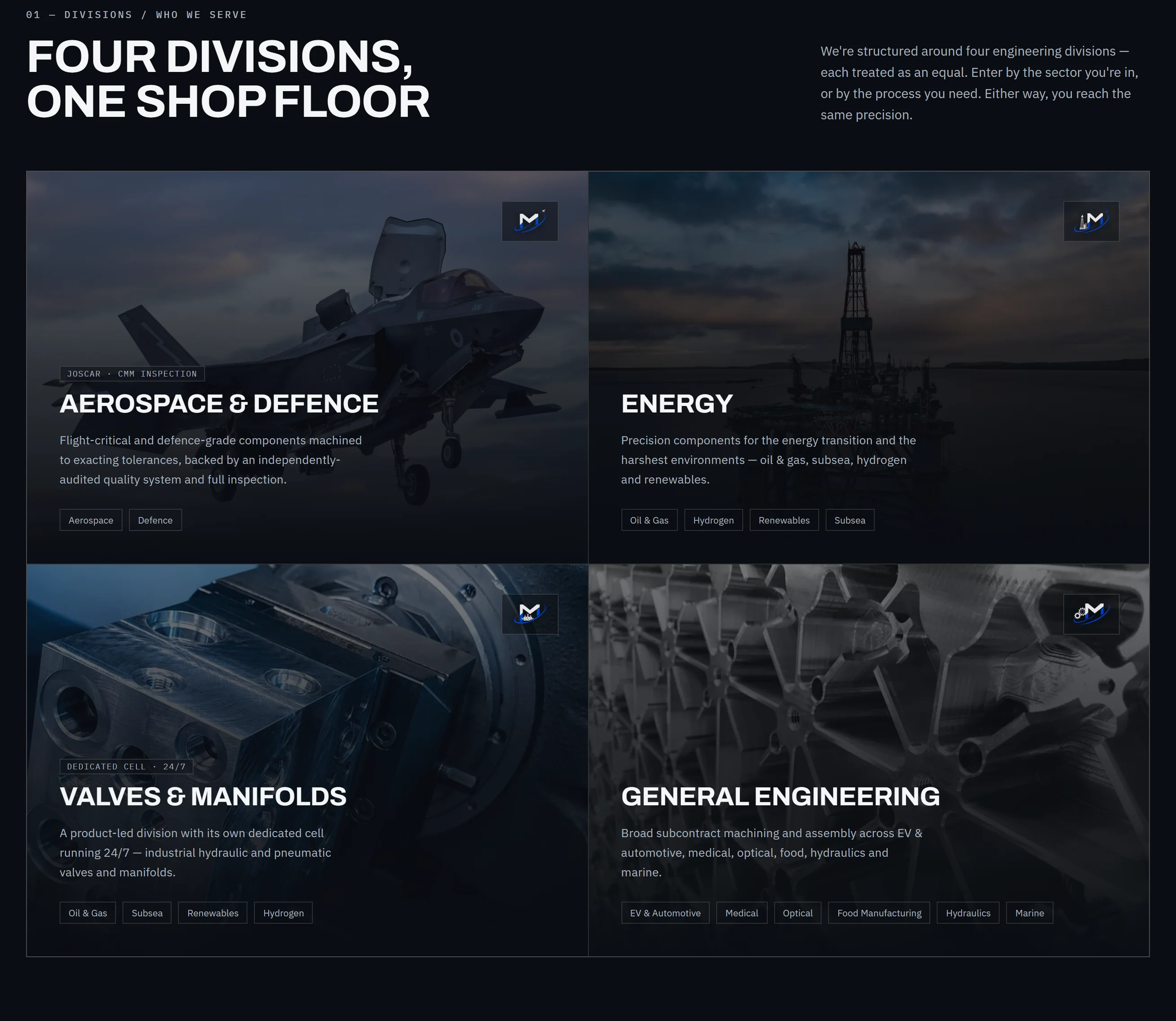
A rebuild for a Norwich CNC subcontractor — four divisions, capability pages that state the tolerance, and a quote path that asks for the drawing.
Related reading
All articlesOpinion
Buyers now run a first-pass supplier filter through ChatGPT before a human ever sees your site. Here's what the AI checks — and why most manufacturers get quietly cut.
How-to
Site speed sounds like a developer's obsession. For a B2B manufacturer it's a commercial signal — one of the few technical things a buyer notices without realising.
Comparison
When does a manufacturer need a real trade portal instead of a catalogue and an enquiry form? An honest look at what each costs and what actually pays for itself.
Next
The snapshot checks what assistants currently say about a business like yours, and where the answer comes from. It takes about a minute.