
The build
A site written for a technical buyer
Specs, materials, tolerances and capacity laid out in the terms a buyer already searches with — so they can qualify you without an enquiry, and enquire already half-scoped.
Food, drink and consumer-goods manufacturers live a double life most agencies never design for — a retail or foodservice buyer judging you on certifications, capacity and reliability, and, increasingly, a customer buying direct from your own store.
Web people tend to force you to choose: a brochure that ignores the shop, or a shop that ignores the trade buyer who actually moves your volume. I build the site so both work at once — the buyer can confirm your credentials and start a co-pack or listing enquiry, and the D2C shopper can buy and subscribe — and so you get found for the specific thing you make, on Google and in AI answers alike. The manufacturer with a real online store isn’t a smaller client to me; it’s a bigger opportunity done properly.
What I'd build you
The build
Specs, materials, tolerances and capacity laid out in the terms a buyer already searches with — so they can qualify you without an enquiry, and enquire already half-scoped.
Found
A page per process, material and sector instead of one “Services” page — every one its own door into the site, matched to how buyers search rather than how the business is organised.
Asked for
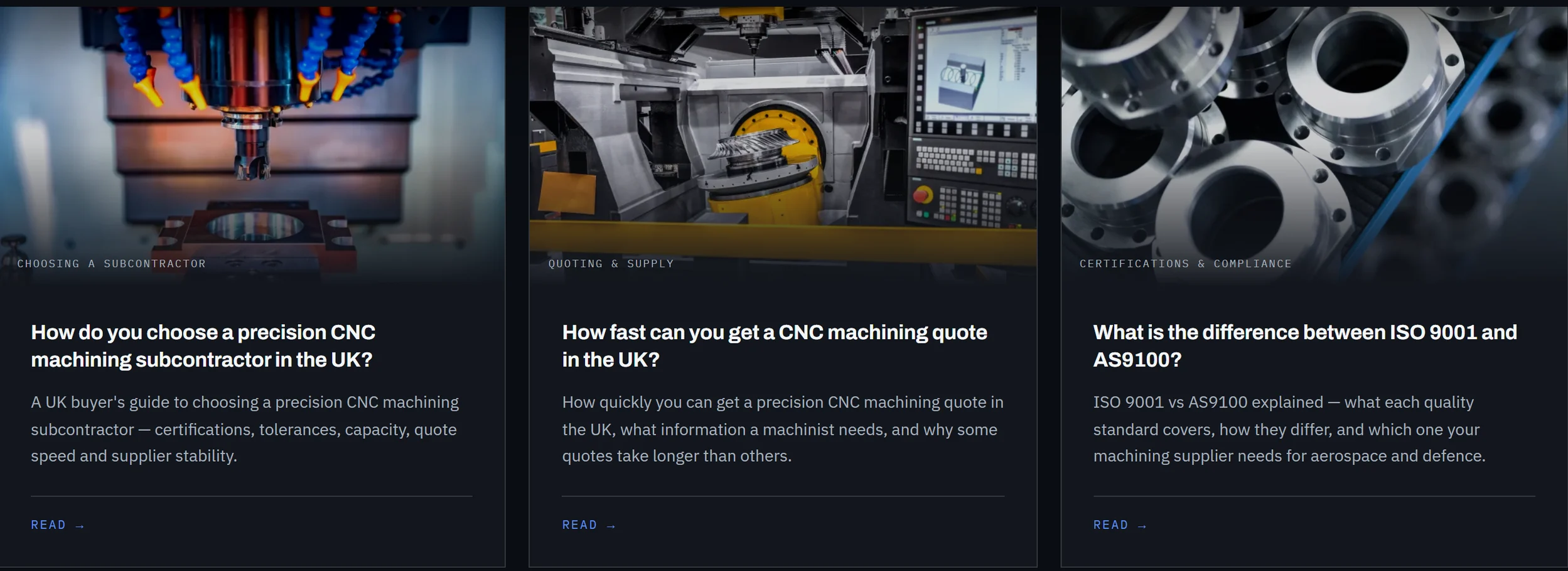
Buyers ask an assistant before they ask a supplier, and it quotes whoever actually answered. Question-led content and structured data put your words in that answer.
Measured, not claimed
2.9s.
Time to main content on a phone, against 6.9s for the median of 5 comparable firms.
Reported
Speed, search visibility and enquiry volume measured on a regular cycle and reported back — so the site is answerable for something rather than just existing.
What I build for food, beverage & consumer-goods
A dual-audience structure that serves retail/foodservice buyers and D2C shoppers without either diluting the other
Trade-account and wholesale ordering journeys for distributors and retail buyers
A private-label / co-pack enquiry flow scoped to product, volumes, format and launch date
Food-safety and compliance credential pages (BRCGS, HACCP, SALSA, GMP) built for buyer due-diligence
D2C e-commerce with subscriptions and a stockist / where-to-buy route where the product suits it
Your exact sector
Not “manufacturing” in general — the specific process and product, written the way buyers and AI assistants actually search for it.
What manufacturers ask before they hire me. If yours is not here, ask it — the answer is usually short.
Yes, and doing both well is the point — I build a clear trade route for buyers and distributors alongside a D2C store for customers, so a retail buyer gets credentials and an enquiry path while a shopper gets a shop, rather than one audience getting a compromise.
I build the capability and credentials a category buyer checks first — formats, volumes, food-safety accreditation — into structured pages, so you clear their filter before the meeting instead of relying on a deck that answers half their questions.
I give BRCGS, HACCP, SALSA or GMP their own structured, schema-marked pages, so they show up in search and in AI answers and reassure a buyer at the point of decision, not as a logo buried in the footer.
A dedicated co-pack enquiry flow captures product type, volumes, format and timeline, so a brand looking for a manufacturer arrives already scoped and you quote from real detail instead of a vague "can you make this?".
Absolutely — a D2C store with subscriptions is repeat revenue you own outright, with no marketplace fee and a direct customer relationship, and I build it whenever your product and margins genuinely suit selling direct.
Product, category and application pages target the exact terms buyers and AI use, so you get found for the chilled ready-meals, the craft gin or the private-label skincare you actually make, not lost under a generic label.
A trade-account journey lets approved buyers see their pricing and reorder themselves, which cuts the phone-and-email overhead and makes you the effortless supplier they keep coming back to.
That’s what the structured capability and credential content is for — and with my tool Periscope I measure how often ChatGPT, Gemini and Perplexity name you for real buyer questions, then work the pages that move it.
Proof — recent manufacturer work
All case studies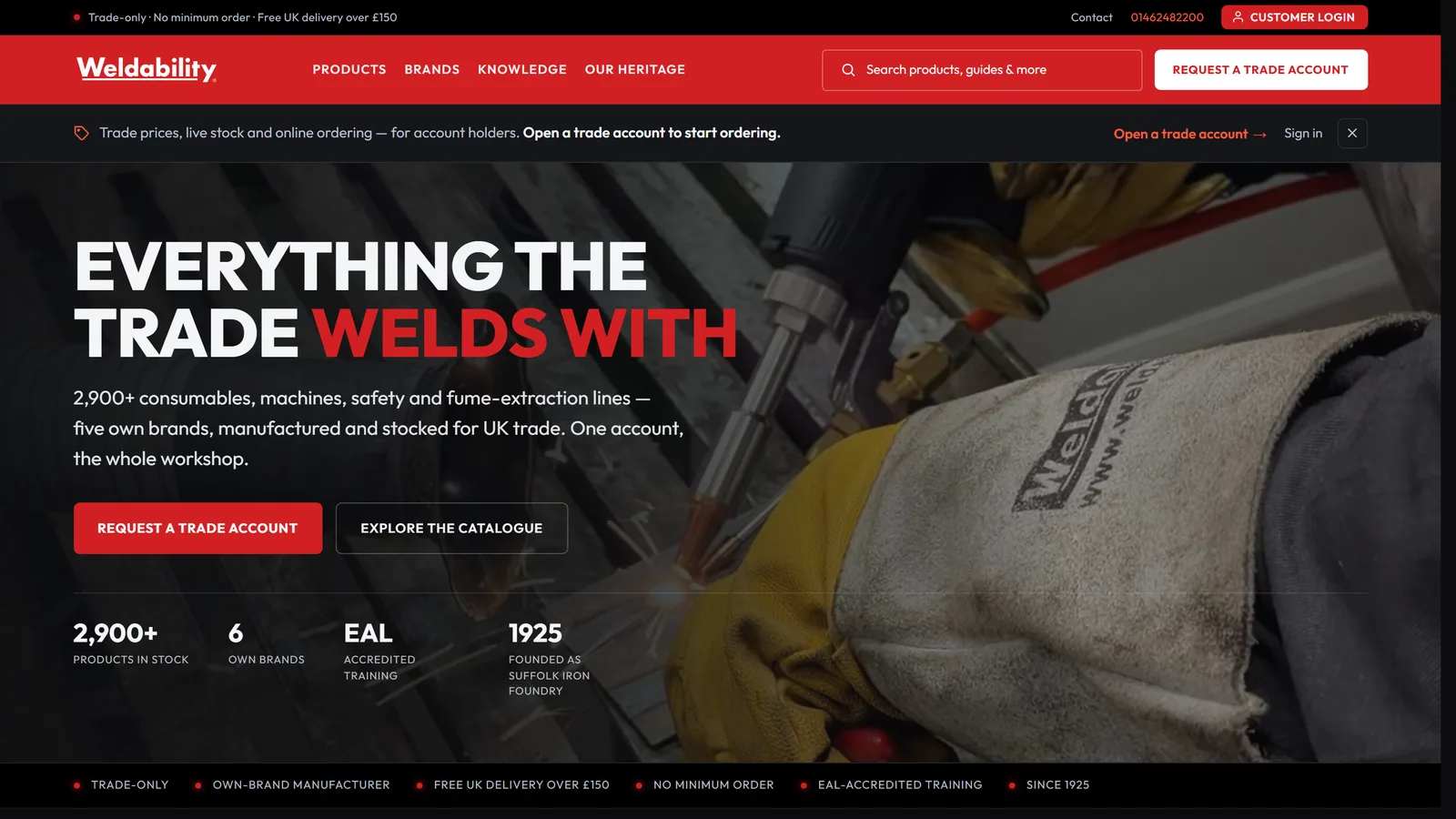
Welding supplies & equipment — trade wholesale
A trade portal for a welding wholesaler founded in 1925 — 3,400 pages, contract pricing, credit and reordering pulled live from the ERP.
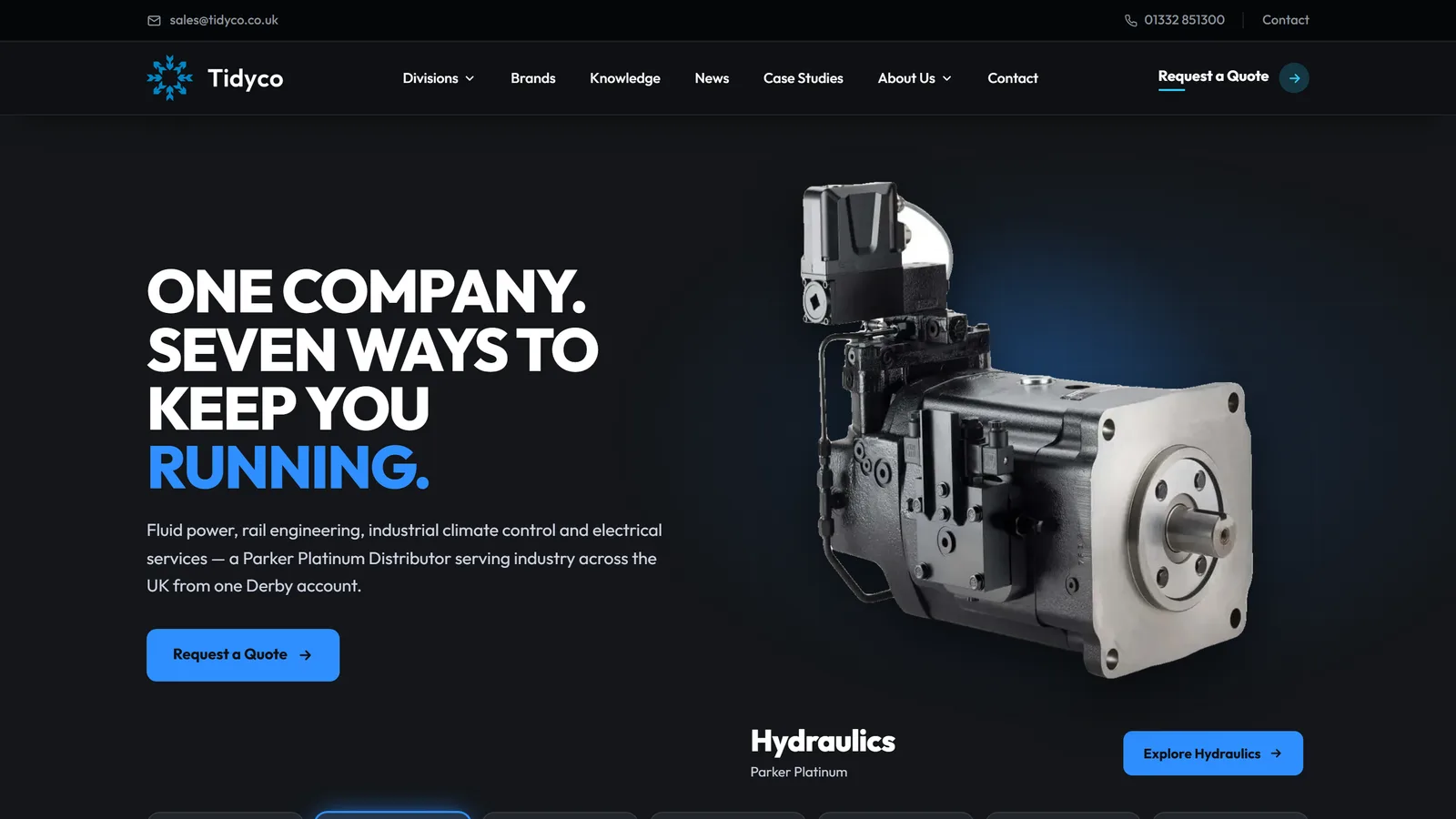
Industrial distribution & engineering services
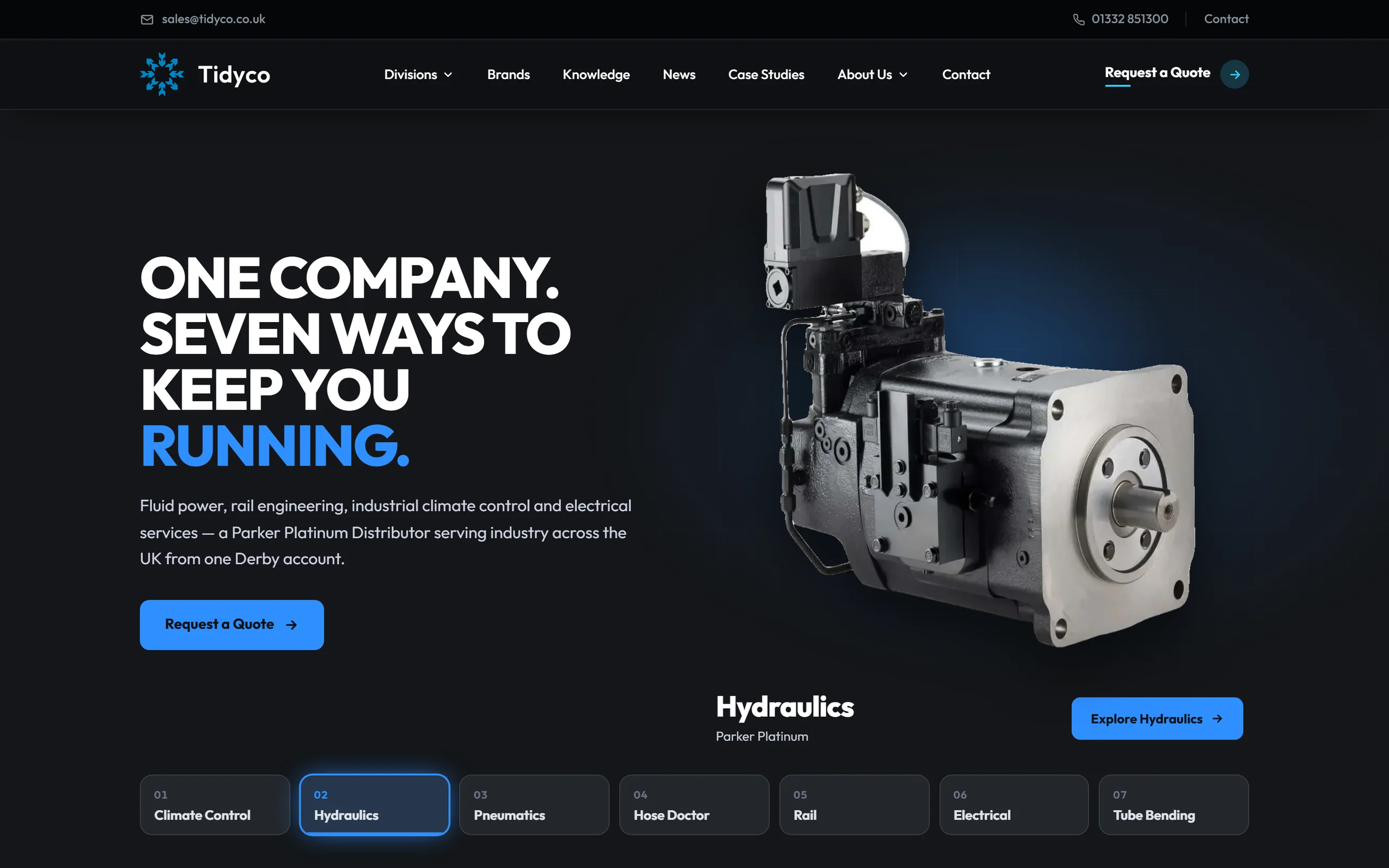
A rebuild for a Derby fluid-power and rail engineering group — seven divisions, one front door, and a 50-guide library that answers buyers before they enquire.

Precision CNC machining
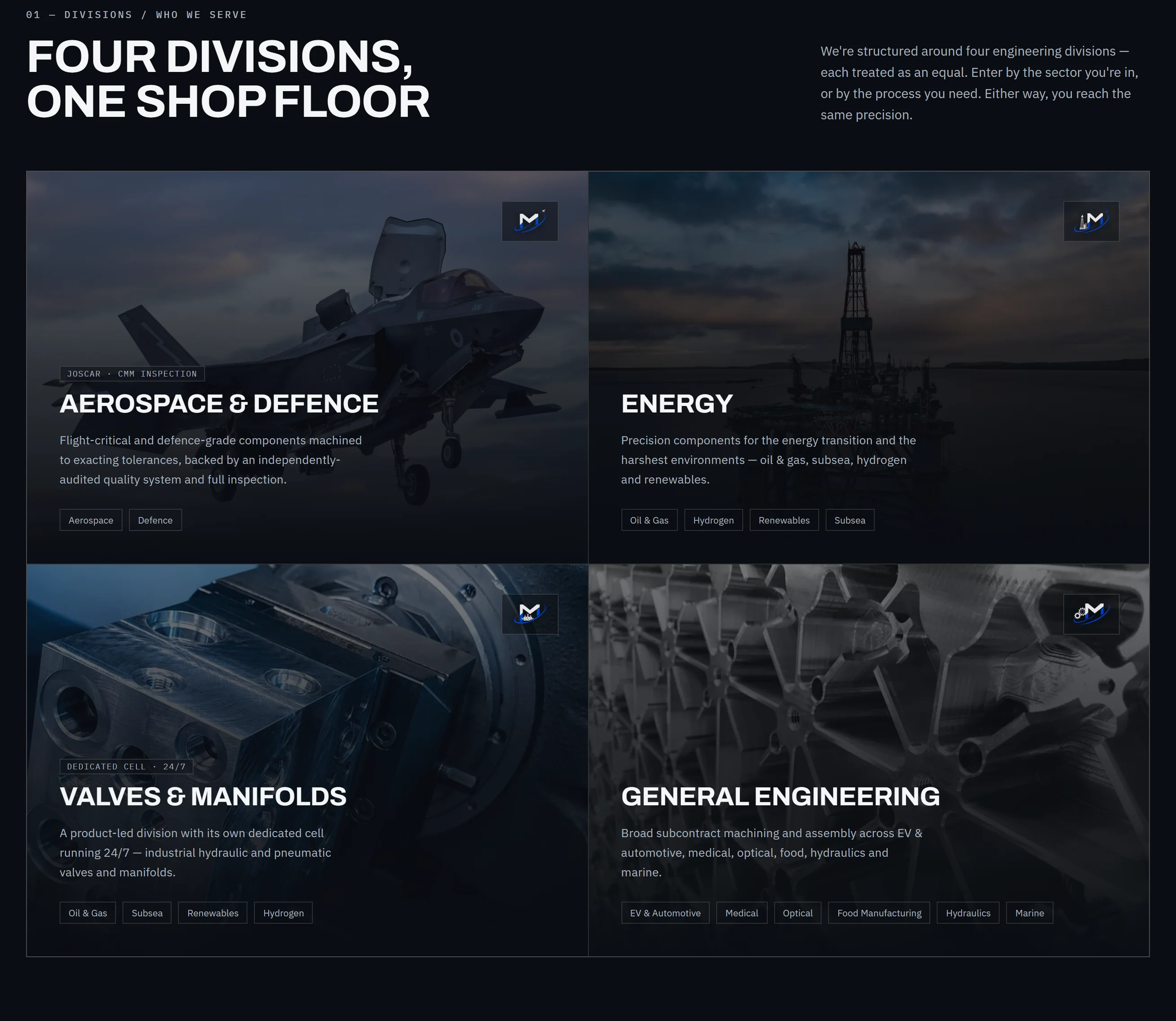
A rebuild for a Norwich CNC subcontractor — four divisions, capability pages that state the tolerance, and a quote path that asks for the drawing.
Next
The snapshot checks what assistants currently say about a business like yours, and where the answer comes from. It takes about a minute.