The build
A site written for a technical buyer
Specs, materials, tolerances and capacity laid out in the terms a buyer already searches with — so they can qualify you without an enquiry, and enquire already half-scoped.
Machining & Precision
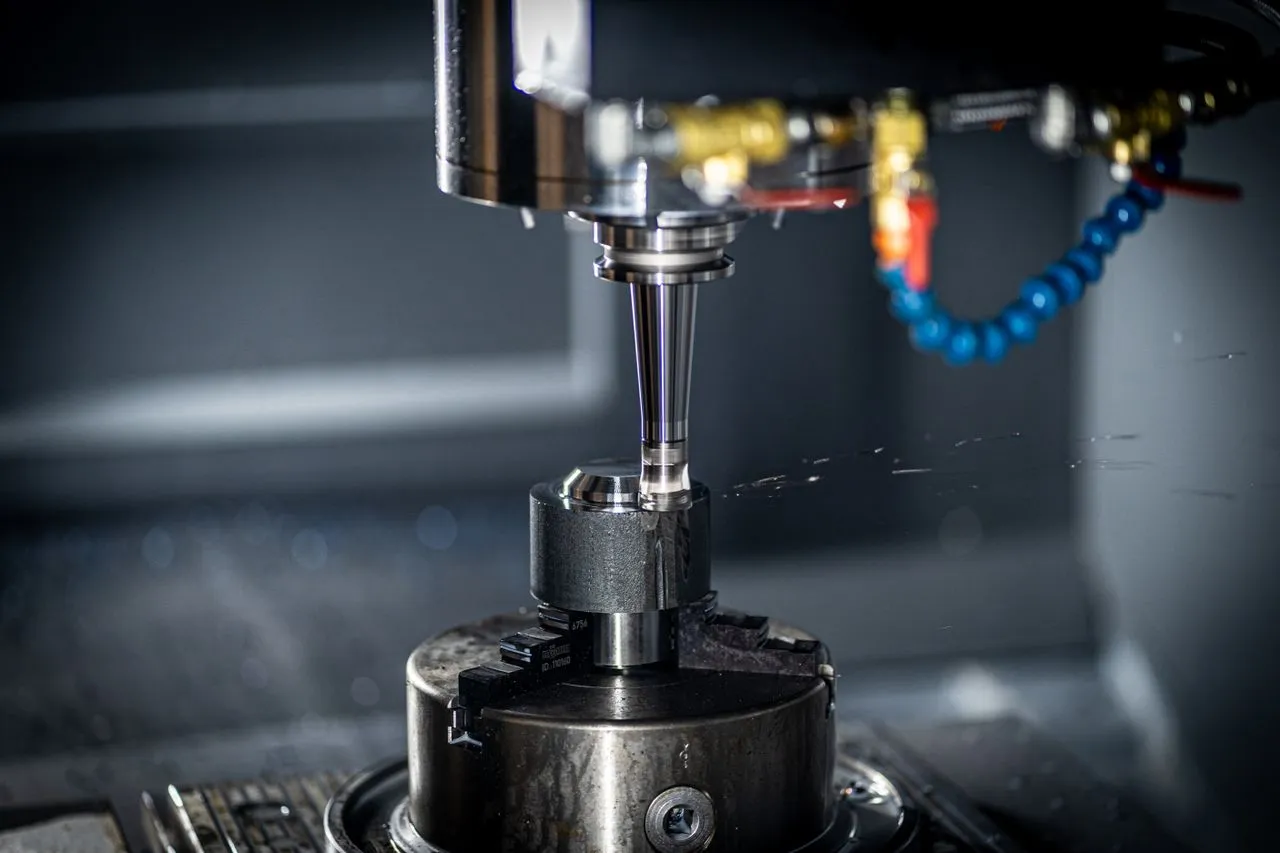
Multi-axis and Swiss work sells on complexity and small-part precision — the features you can produce in one hit, the tolerances you can keep on tiny diameters, and the high-mix, low-volume work that scares off bigger shops.
Buyers with this work are specialists looking for a specialist. I showcase the parts you can hold and the tolerances you keep, so those specific, high-value enquiries find you rather than a general machinist.
What I'd build you
The build
Specs, materials, tolerances and capacity laid out in the terms a buyer already searches with — so they can qualify you without an enquiry, and enquire already half-scoped.
Found
A page per process, material and sector instead of one “Services” page — every one its own door into the site, matched to how buyers search rather than how the business is organised.
Asked for
Buyers ask an assistant before they ask a supplier, and it quotes whoever actually answered. Question-led content and structured data put your words in that answer.
Measured, not claimed
2.9s.
Time to main content on a phone, against 6.9s for the median of 5 comparable firms.
Reported
Speed, search visibility and enquiry volume measured on a regular cycle and reported back — so the site is answerable for something rather than just existing.
What I build for multi-axis / swiss
Capability pages for 5-axis and sliding-head/Swiss, with typical part sizes and tolerances
A part gallery that proves complexity and finish (the deciding factor for this buyer)
High-mix, low-volume positioning for prototype-to-small-batch programmes
A part-upload RFQ tuned for complex, tightly-toleranced geometry
What manufacturers ask before they hire me. If yours is not here, ask it — the answer is usually short.
I build capability content around Swiss and full 5-axis work — part sizes, tolerances, single-setup complexity — so a buyer searching for exactly that specialist reaches you, not a 3-axis job shop.
A curated part gallery plus honest capability specs (typical tolerances, materials, part envelopes) demonstrate the precision these buyers are checking for — proof does more here than any adjective.
I position you explicitly for prototype-to-small-batch programmes, because the buyer who values fast, accurate low-volume work is a different (and better) fit than one chasing the lowest price on 10,000 parts.
Process content that explains what single-setup multi-axis work saves them — cycle time, accuracy across features, fewer fixturing errors — sells the capability before they enquire.
The RFQ flow is built for exactly that: upload the model and I capture the material, tolerance and quantity, so you can give a feasibility read and a quote together.
Application pages target those niches directly, so "Swiss-turned medical components" or "precision connector machining" surface you to the buyer already looking for that specialism.
More in machining & precision
Proof — recent manufacturer work
All case studies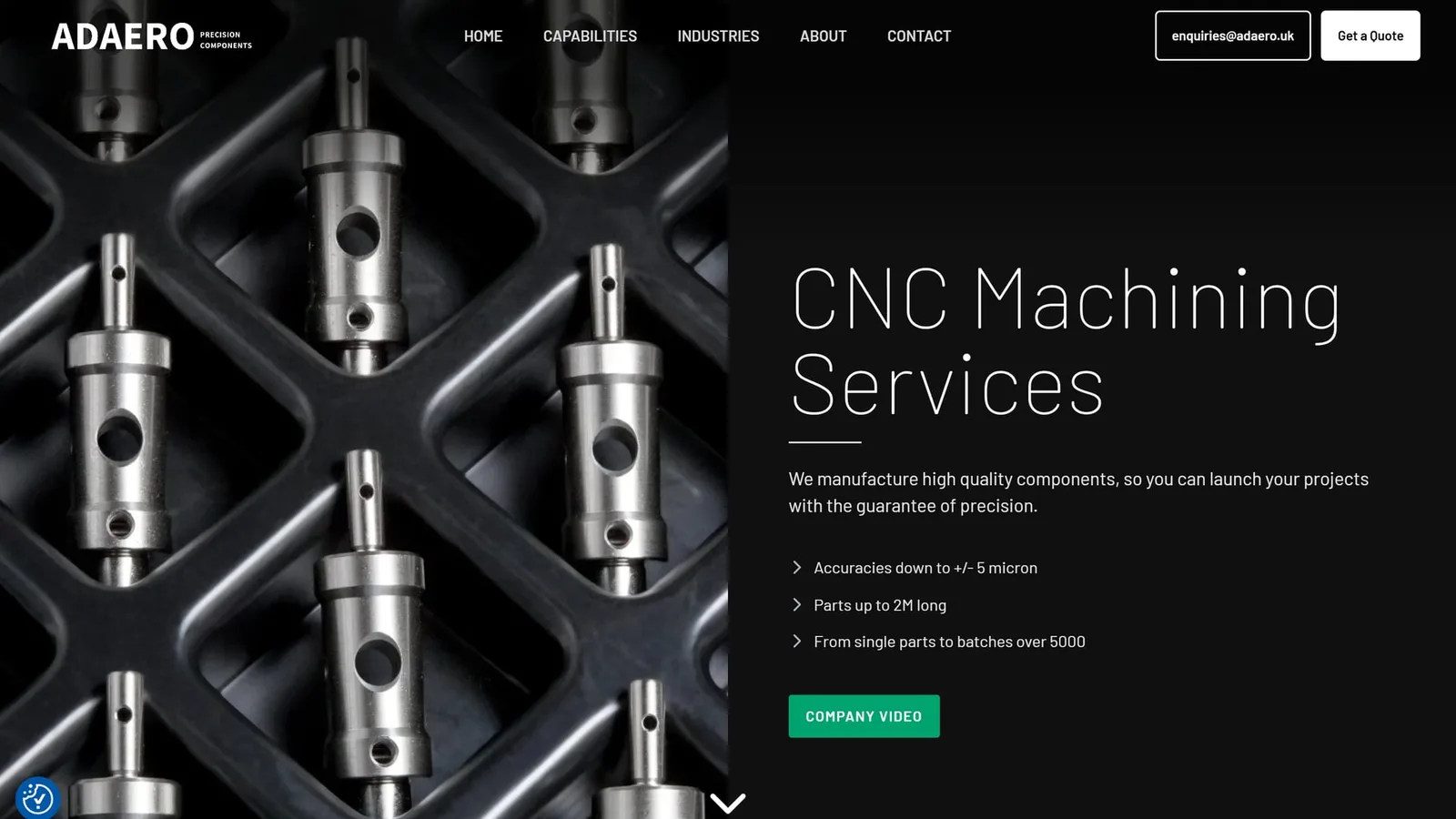
Precision CNC machining
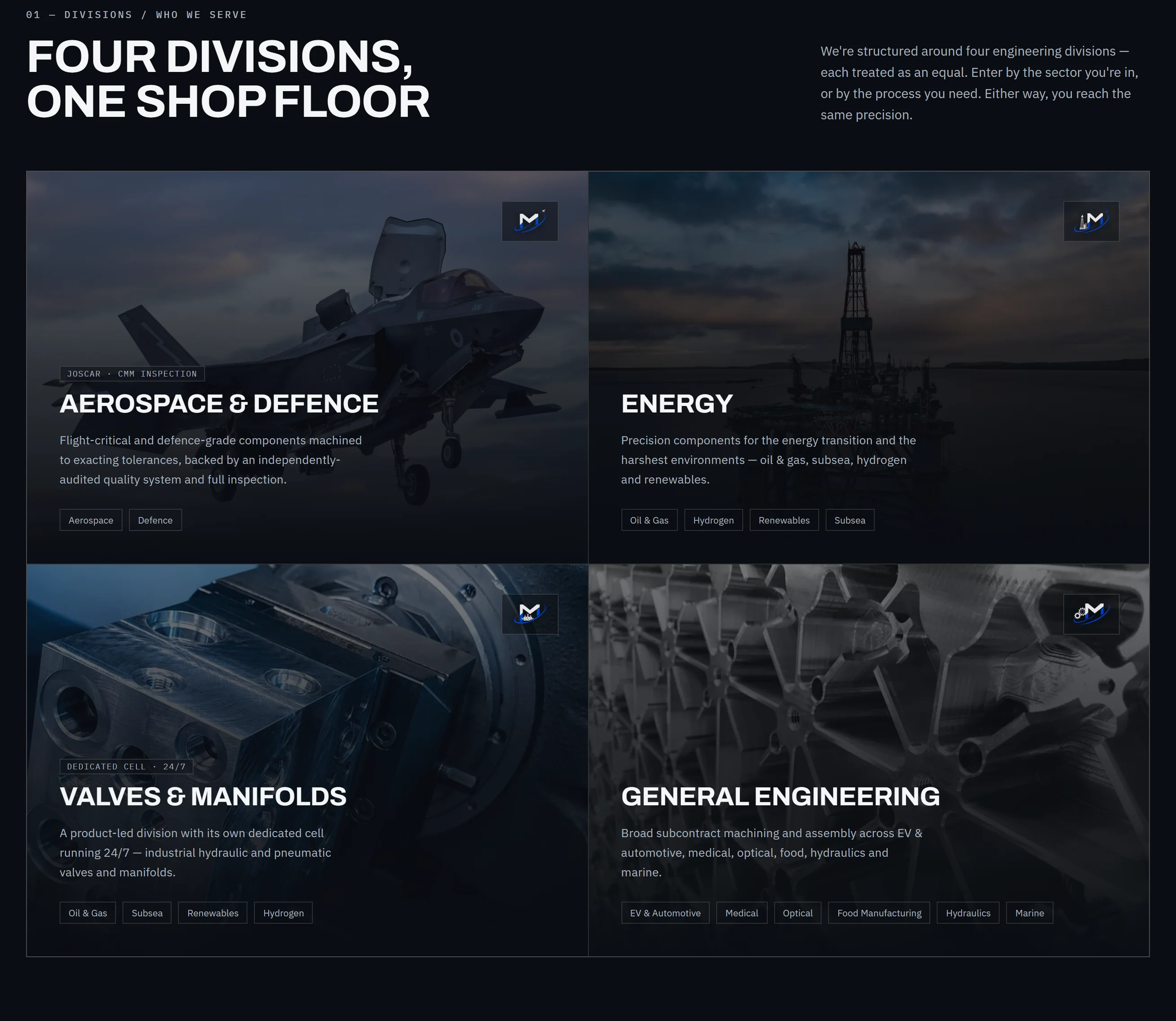
A new website for Adaero Precision Components, replacing a one-page brochure with a CNC machining presence that earns credibility at the procurement table.
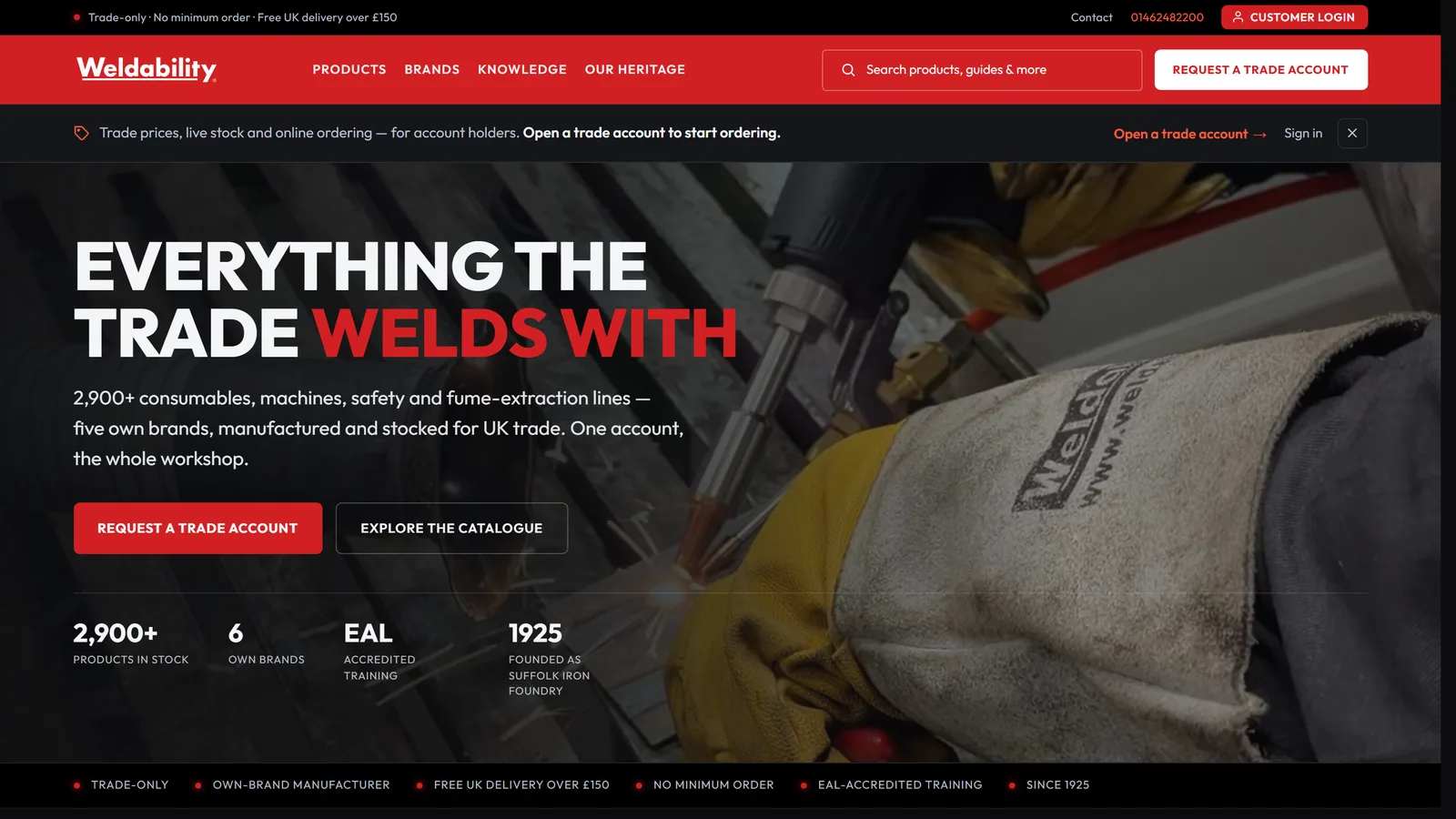
Welding supplies & equipment — trade wholesale
A trade portal for a welding wholesaler founded in 1925 — 3,400 pages, contract pricing, credit and reordering pulled live from the ERP.
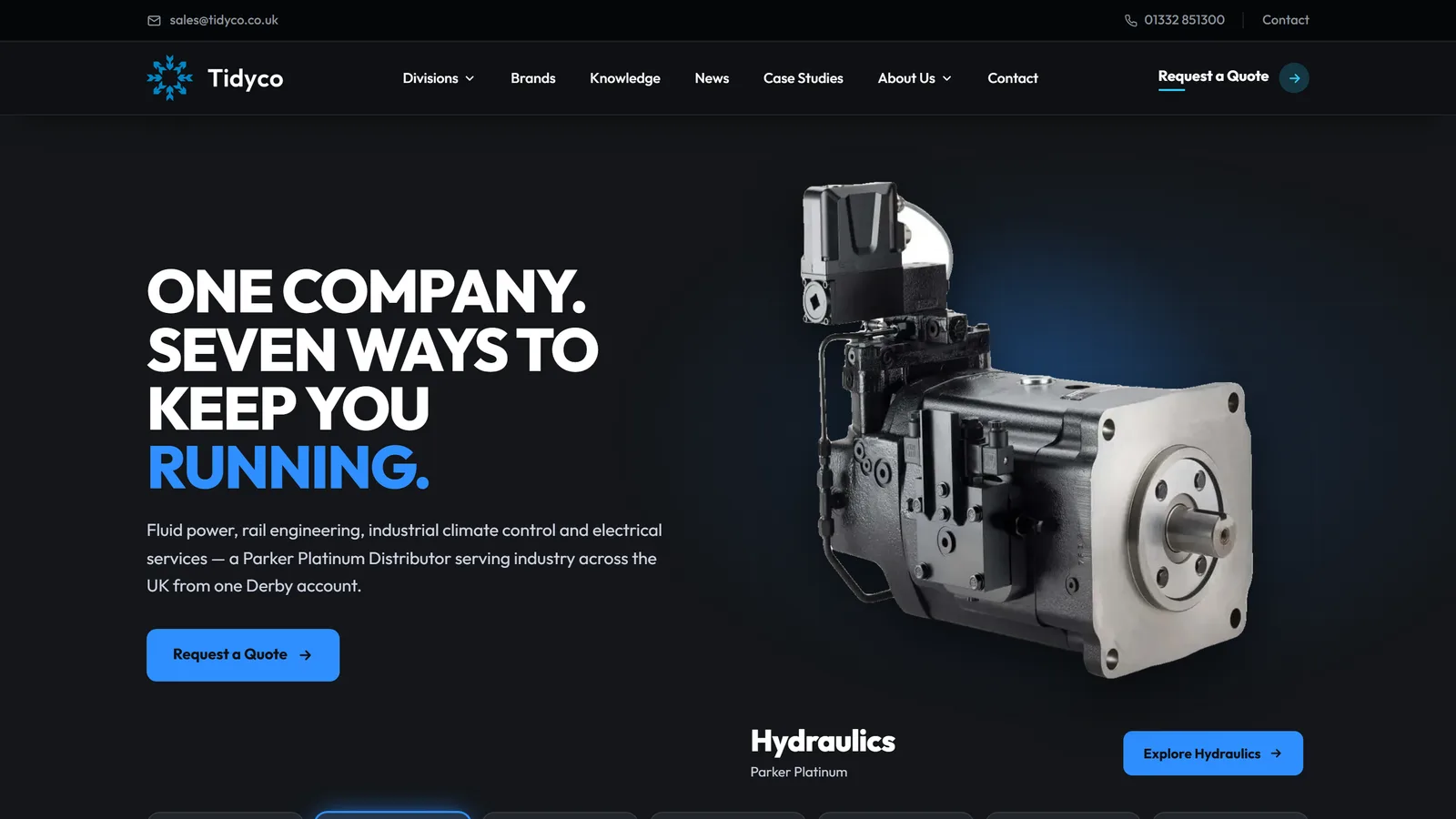
Industrial distribution & engineering services
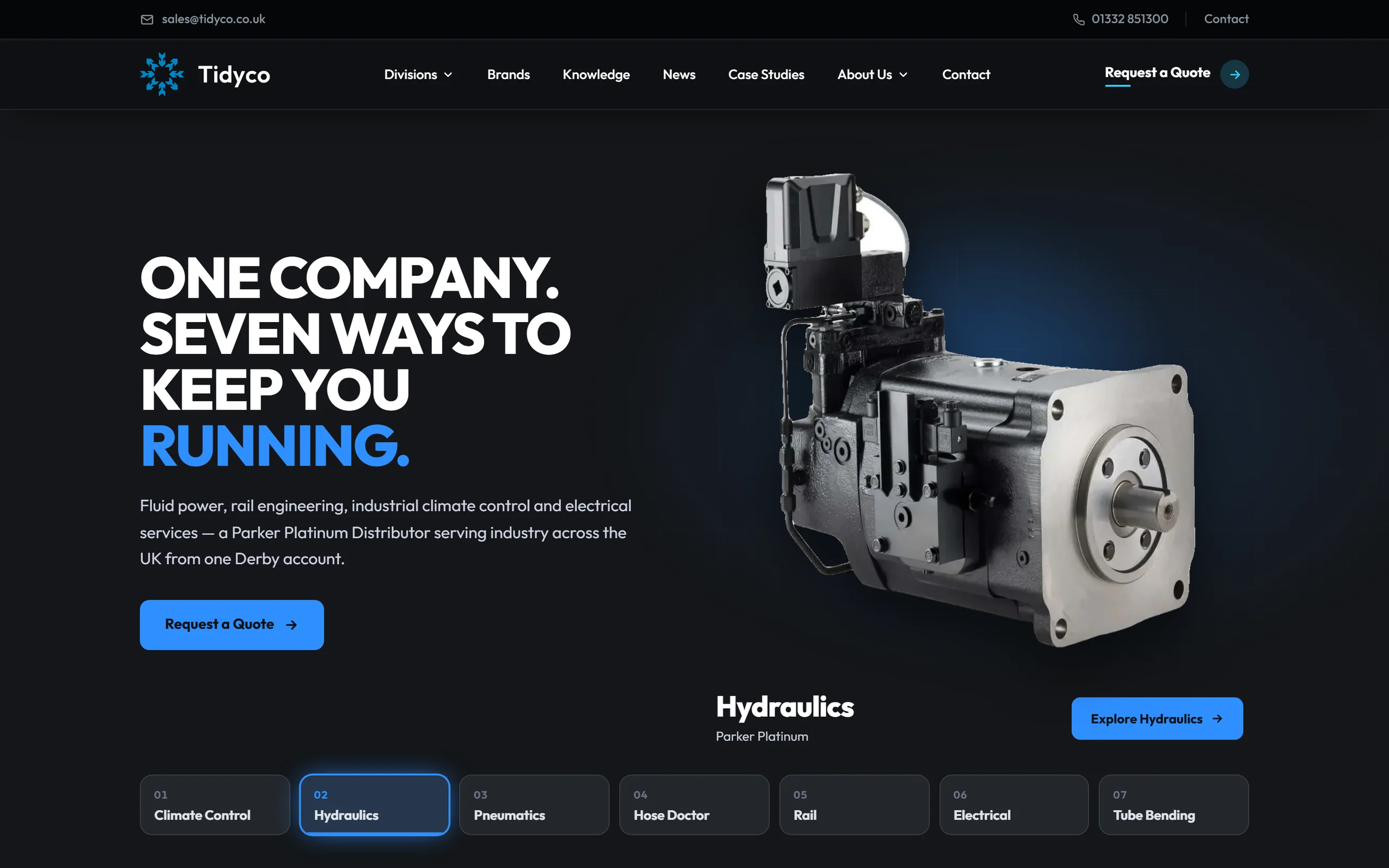
A rebuild for a Derby fluid-power and rail engineering group — seven divisions, one front door, and a 50-guide library that answers buyers before they enquire.
Related reading
All articlesOpinion
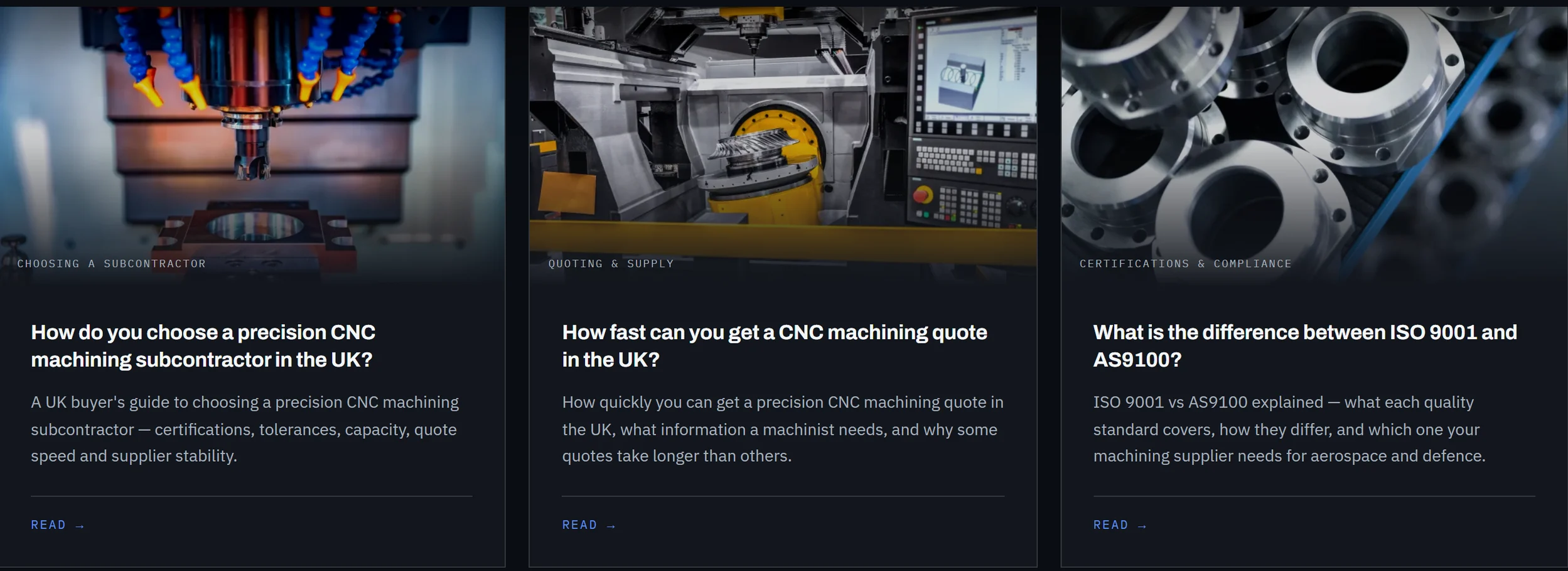
Buyers now run a first-pass supplier filter through ChatGPT before a human ever sees your site. Here's what the AI checks — and why most manufacturers get quietly cut.
Teardown
An anonymised walk through a typical precision-machining homepage, the way a procurement buyer would see it — and the five things quietly sending them to a competitor.
How-to
Site speed sounds like a developer's obsession. For a B2B manufacturer it's a commercial signal — one of the few technical things a buyer notices without realising.
Next
The snapshot checks what assistants currently say about a business like yours, and where the answer comes from. It takes about a minute.