The build
A site written for a technical buyer
Specs, materials, tolerances and capacity laid out in the terms a buyer already searches with — so they can qualify you without an enquiry, and enquire already half-scoped.
Plastics, Rubber & Composites
Rubber and elastomer moulding is really a compounding and process sale — the buyer has a duty (a temperature, a chemical, a hardness, a standard) and needs a moulder who’ll pick the right compound and mould it repeatably.
The material choice usually matters more than the part shape, yet most rubber sites bury it and just list compression, transfer and injection moulding. I make your compounds, processes and applications legible to the exact requirement, and capture the enquiry with the spec you need to quote.
What I'd build you
The build
Specs, materials, tolerances and capacity laid out in the terms a buyer already searches with — so they can qualify you without an enquiry, and enquire already half-scoped.
Found
A page per process, material and sector instead of one “Services” page — every one its own door into the site, matched to how buyers search rather than how the business is organised.
Asked for
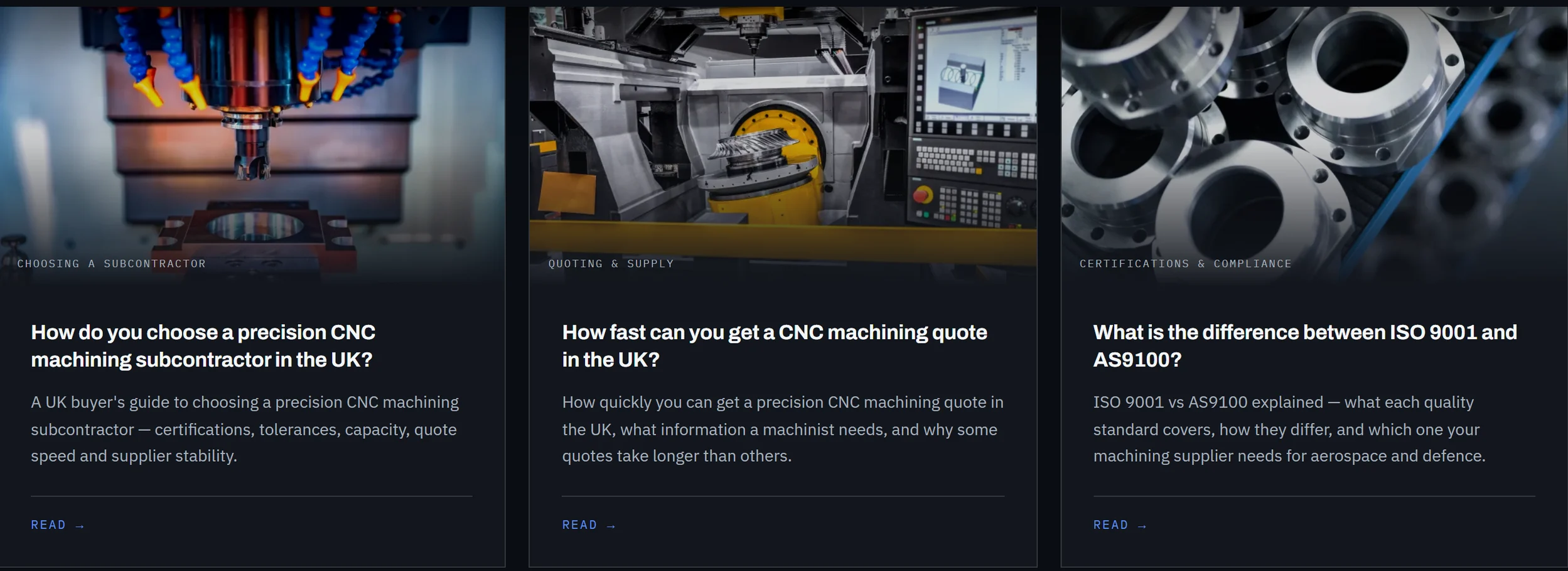
Buyers ask an assistant before they ask a supplier, and it quotes whoever actually answered. Question-led content and structured data put your words in that answer.
Measured, not claimed
2.9s.
Time to main content on a phone, against 6.9s for the median of 5 comparable firms.
Reported
Speed, search visibility and enquiry volume measured on a regular cycle and reported back — so the site is answerable for something rather than just existing.
What I build for rubber & elastomer
Compound pages by material and duty (nitrile, EPDM, silicone, "Viton" fluoroelastomer, natural rubber)
Process pages (compression, transfer and injection moulding) with typical part types and volumes
Application pages where compound selection is critical (automotive, food-contact, water, chemical, industrial)
An RFQ flow capturing part, compound or duty, shore hardness, quantity and any standard
What manufacturers ask before they hire me. If yours is not here, ask it — the answer is usually short.
I build a page around the compounds you run — nitrile, EPDM, silicone, fluoroelastomer — so a buyer searching for a specific material or resistance matches to you rather than a generic “rubber moulding” page.
An RFQ flow captures the part, the compound or the duty it must meet, the shore hardness, the quantity and any standard, so you can select material and quote tooling without a dozen questions.
Content that talks through material selection against temperature, chemical and hardness requirements demonstrates the expertise that justifies your price over a moulder who just quotes whatever the buyer names.
Yes — each gets its own page, because the process suits different part sizes and volumes, and a buyer with a high-volume seal searches differently from one needing a large low-volume moulding.
Application pages speak to those requirements directly, so a buyer needing a food-grade or water-approved compound finds a moulder who understands the material and its approvals.
Content around repeatability, tooling and scheduled supply positions you for OEM programmes and ongoing call-off, where rubber moulding relationships become genuinely valuable.
More in plastics, rubber & composites
Proof — recent manufacturer work
All case studies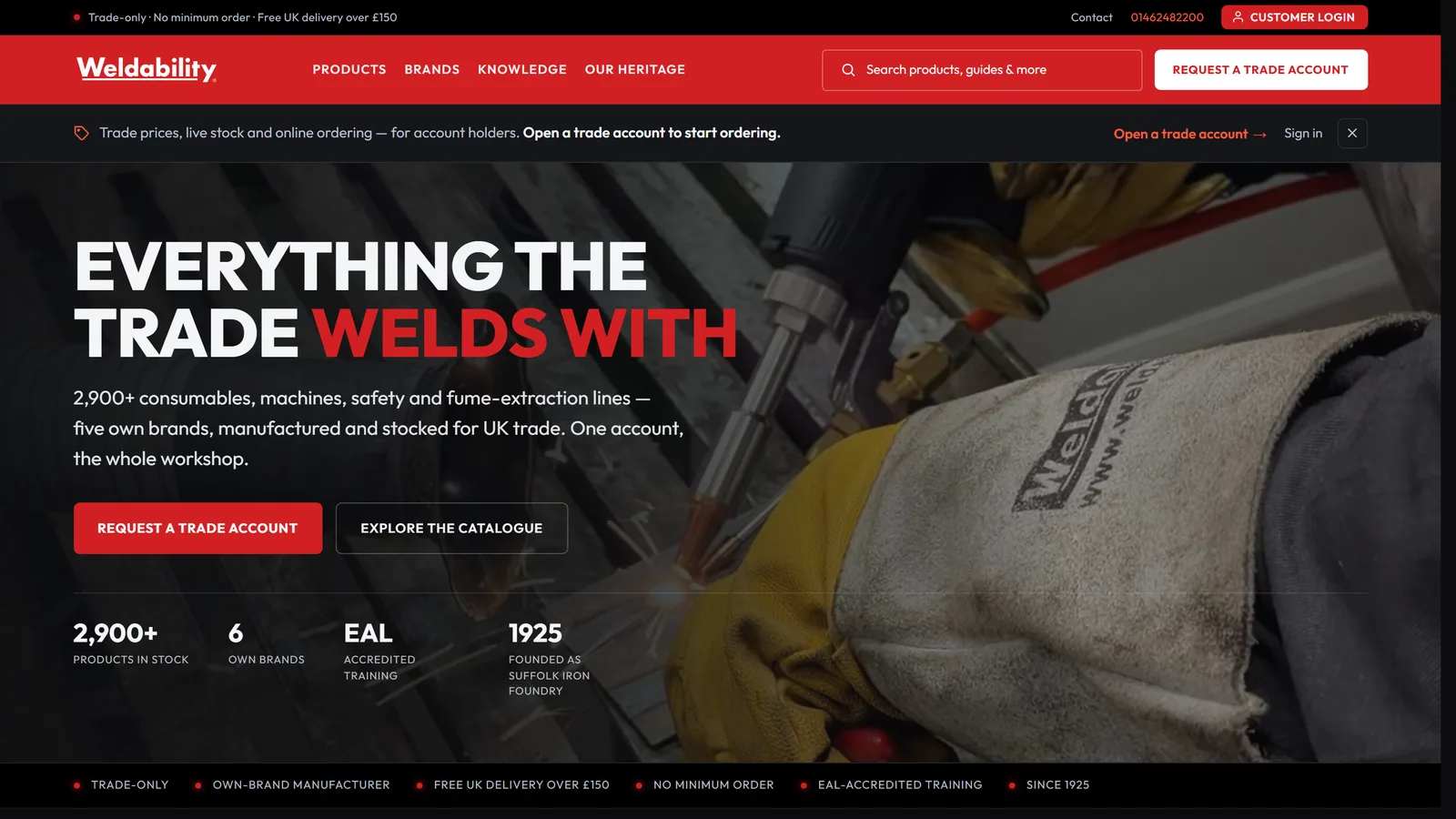
Welding supplies & equipment — trade wholesale
A trade portal for a welding wholesaler founded in 1925 — 3,400 pages, contract pricing, credit and reordering pulled live from the ERP.
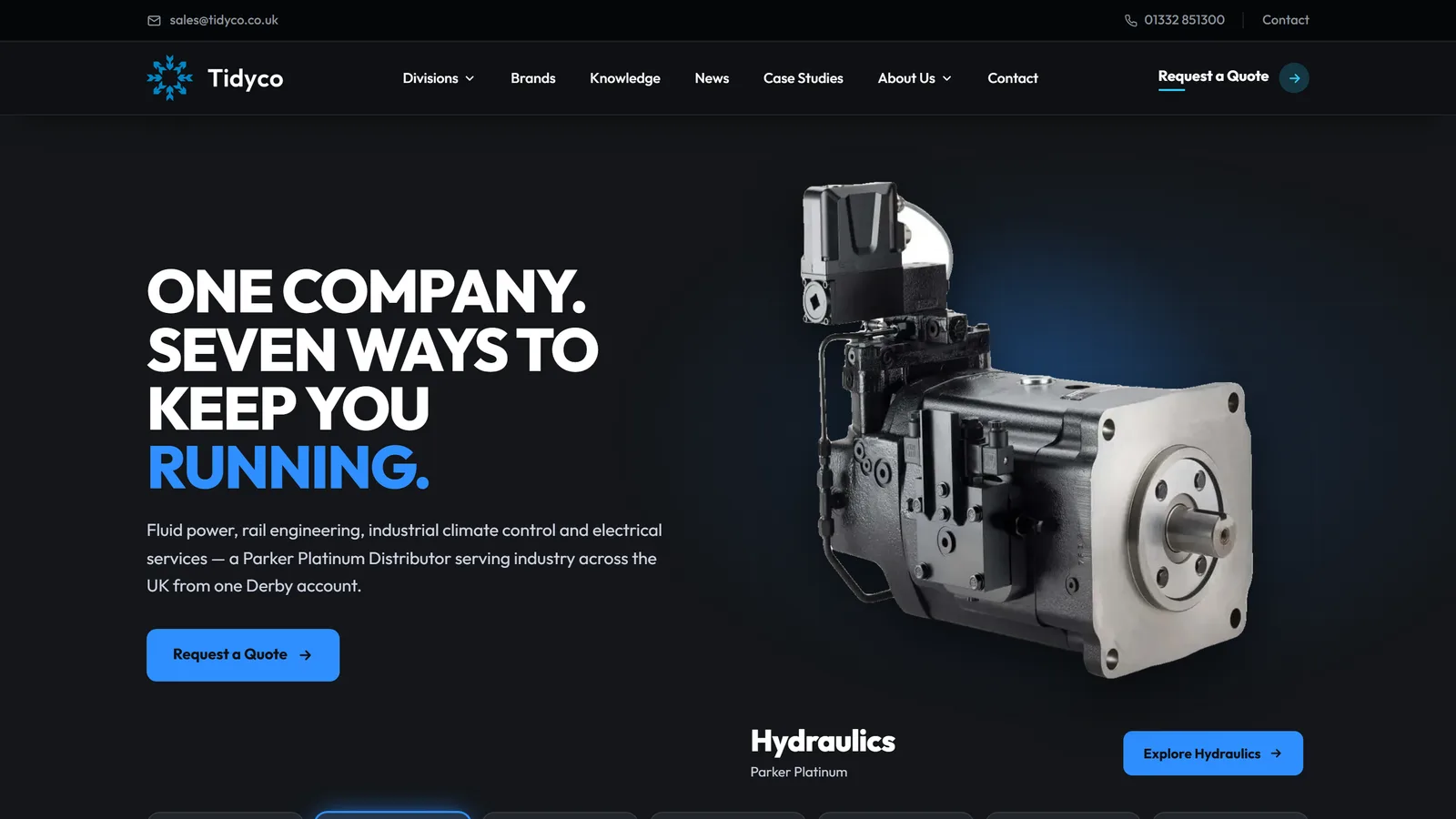
Industrial distribution & engineering services
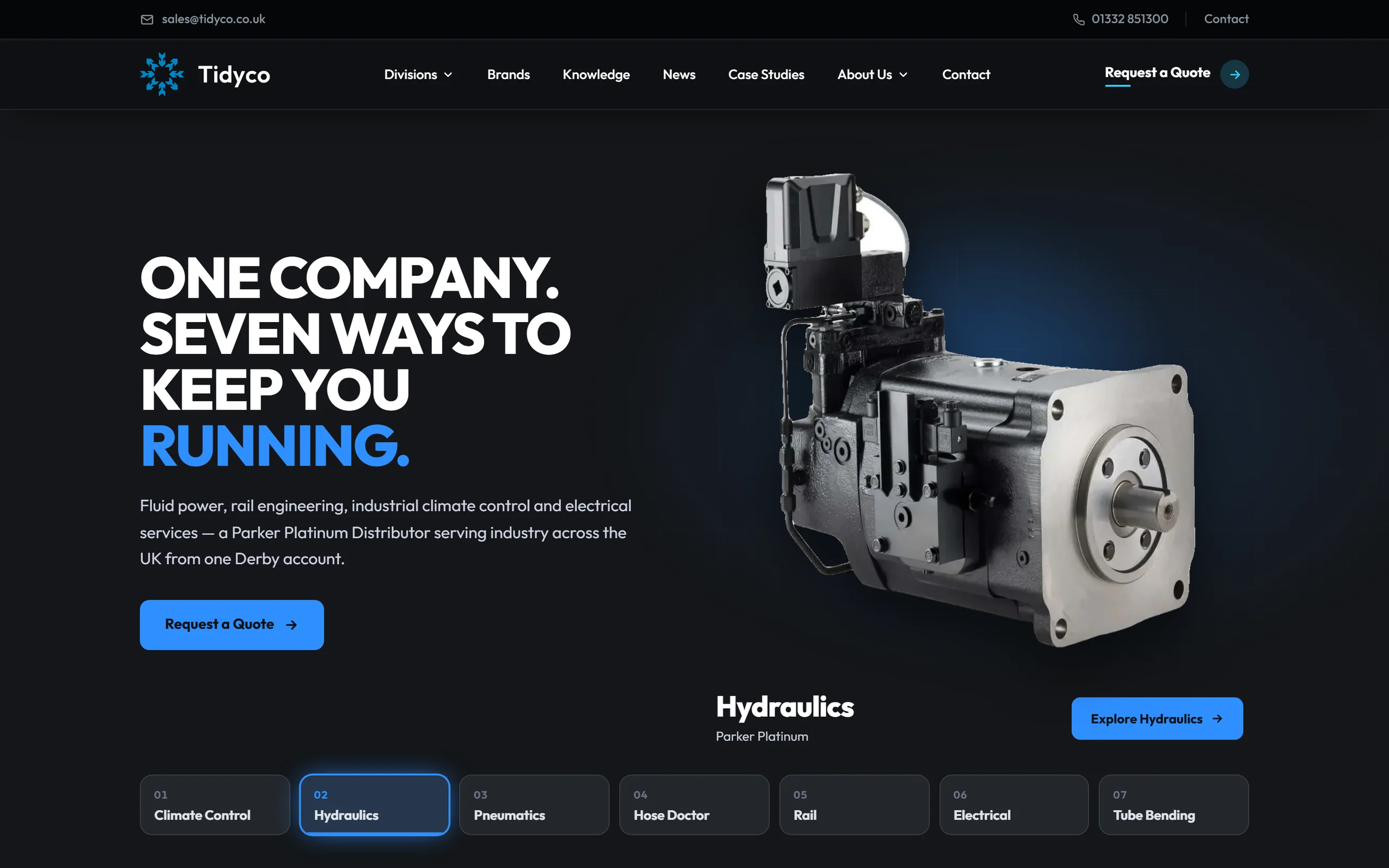
A rebuild for a Derby fluid-power and rail engineering group — seven divisions, one front door, and a 50-guide library that answers buyers before they enquire.

Precision CNC machining
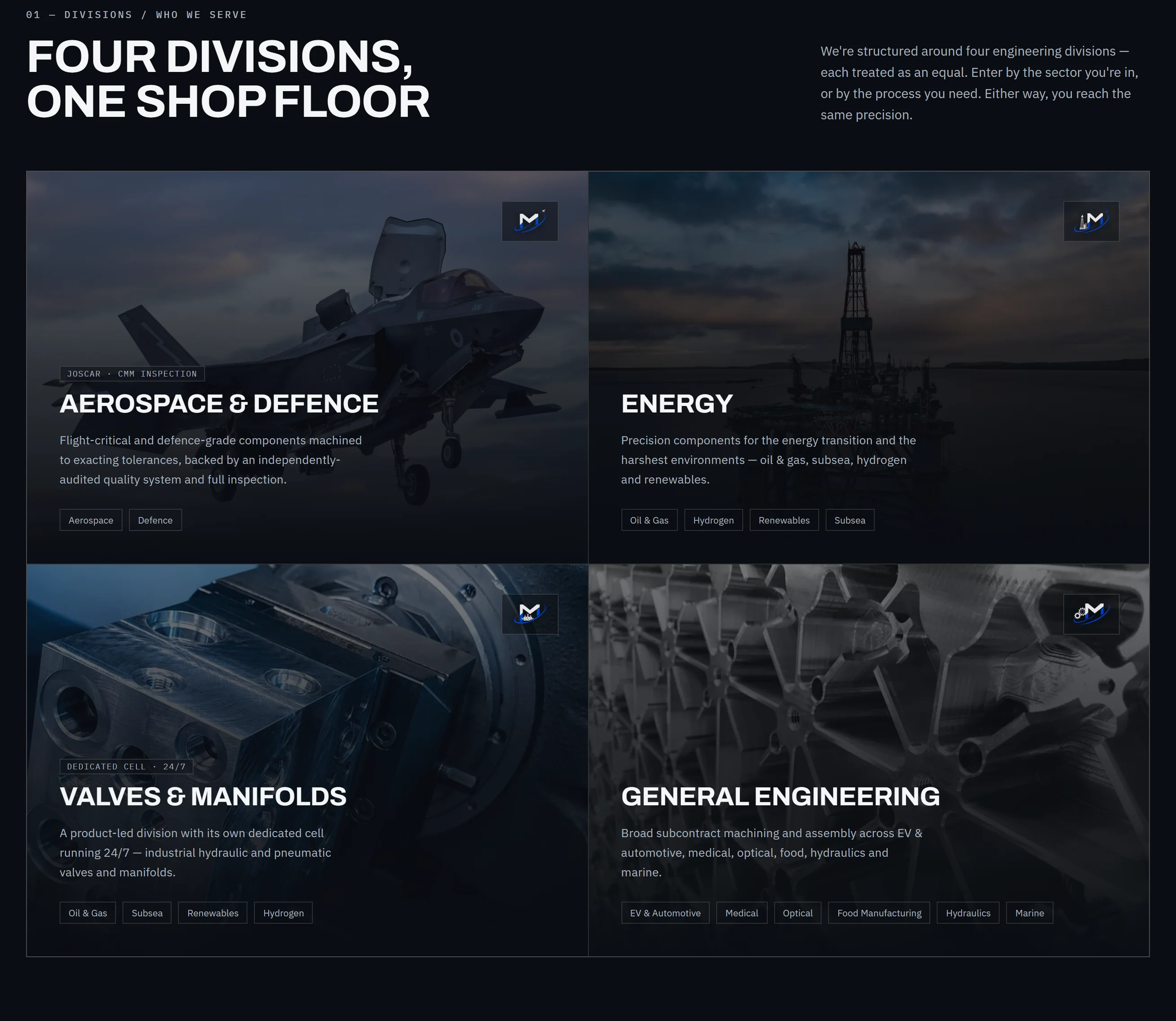
A rebuild for a Norwich CNC subcontractor — four divisions, capability pages that state the tolerance, and a quote path that asks for the drawing.
Next
The snapshot checks what assistants currently say about a business like yours, and where the answer comes from. It takes about a minute.