The build
A site written for a technical buyer
Specs, materials, tolerances and capacity laid out in the terms a buyer already searches with — so they can qualify you without an enquiry, and enquire already half-scoped.
Fabricated Metal
Architectural metalwork is chosen on finish, on how well you collaborate through design, and on whether an architect can specify you with confidence — a balustrade, a facade or a feature staircase is a visible, reputation-bearing element, not a hidden bracket.
The deciding factor is almost always the quality of the finish, and that has to be seen, not claimed. I build sites that show the work in detail and make you easy to get onto the specifier’s shortlist, with the finishes, materials and downloads an architect needs to draw you in. That’s how bespoke, higher-margin architectural work finds you instead of the cheapest cladding sub.
What I'd build you
The build
Specs, materials, tolerances and capacity laid out in the terms a buyer already searches with — so they can qualify you without an enquiry, and enquire already half-scoped.
Found
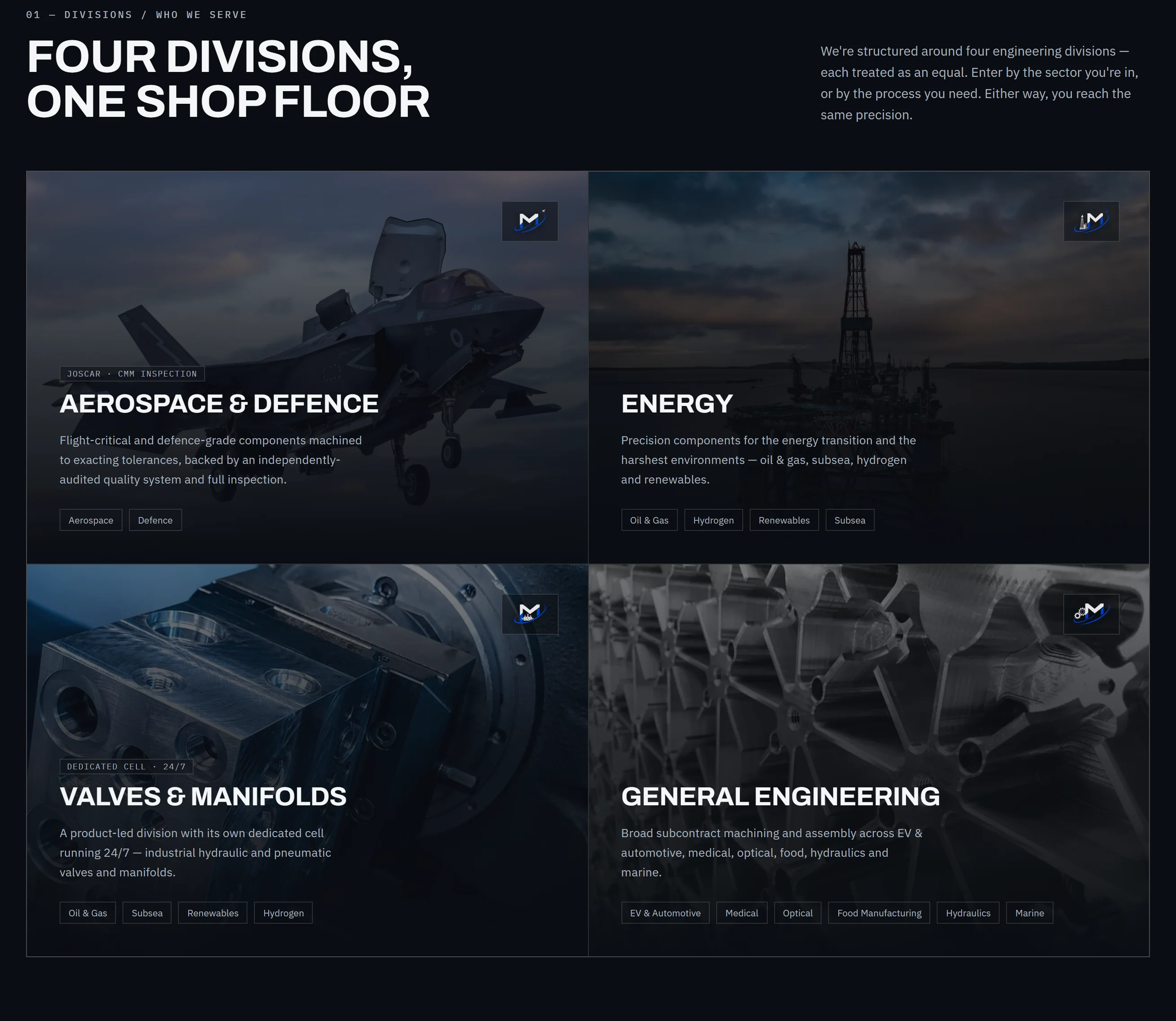
A page per process, material and sector instead of one “Services” page — every one its own door into the site, matched to how buyers search rather than how the business is organised.
Asked for
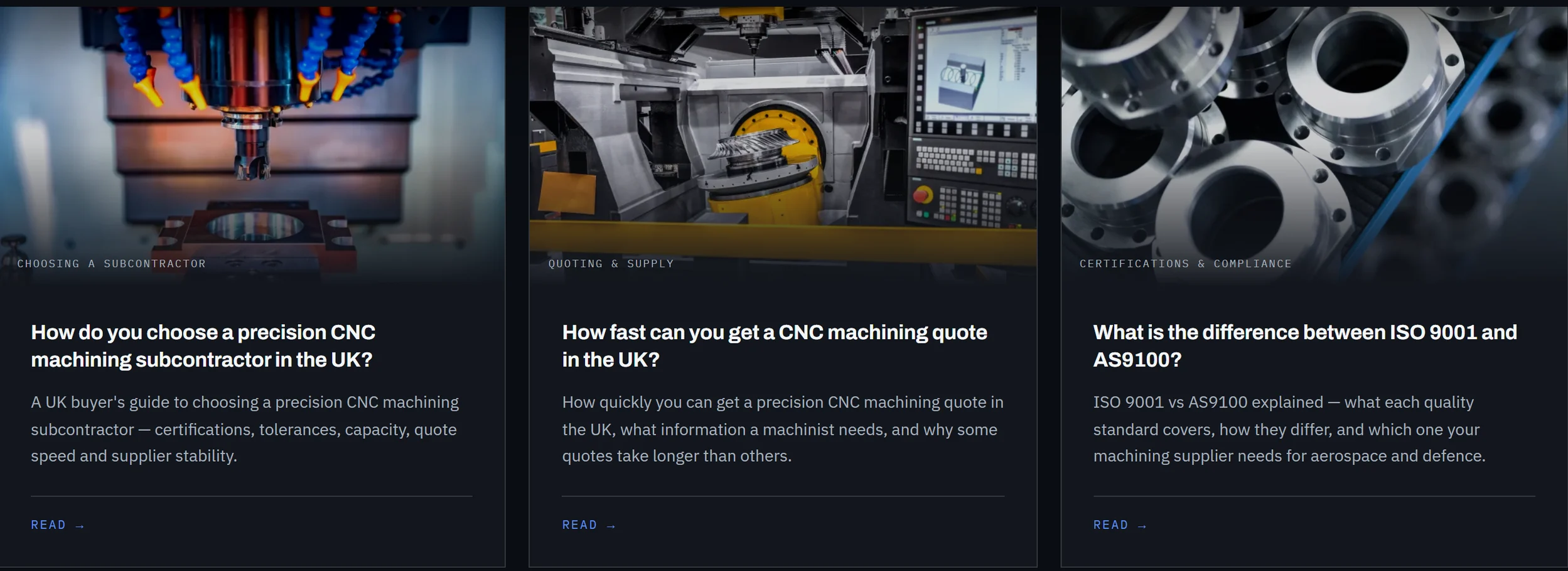
Buyers ask an assistant before they ask a supplier, and it quotes whoever actually answered. Question-led content and structured data put your words in that answer.
Measured, not claimed
2.9s.
Time to main content on a phone, against 6.9s for the median of 5 comparable firms.
Reported
Speed, search visibility and enquiry volume measured on a regular cycle and reported back — so the site is answerable for something rather than just existing.
What I build for architectural metal & cladding
A photographic portfolio built to show finish and craftsmanship at close range
A specifier journey with finishes, materials and downloadable details
Content on design collaboration and bespoke capability that positions you as a maker, not a supplier
A project enquiry flow capturing the element, finish, material and architect/builder contact
What manufacturers ask before they hire me. If yours is not here, ask it — the answer is usually short.
A specifier-focused journey with finishes, materials and downloads makes you easy to draw in and specify, so you land on the shortlist instead of quoting after the design is fixed.
A portfolio built for architectural work shows the finish at close range — the deciding factor on visible metalwork, and the thing a spec sheet can never convey.
Product and application pages target those terms, so an architect searching for a facade fabricator or a feature-staircase maker finds you for exactly that.
Content on design collaboration and bespoke capability positions you as a maker who improves the detail, which is what justifies your price over a commodity cladding installer.
A structured finishes-and-materials page lets a specifier confirm you offer the look they want — anodised, powder-coat, patinated, brushed — before they enquire.
An enquiry flow captures the element, finish, material and the architect or builder’s details, so a bespoke enquiry arrives with enough to have a real conversation.
Proof — recent manufacturer work
All case studies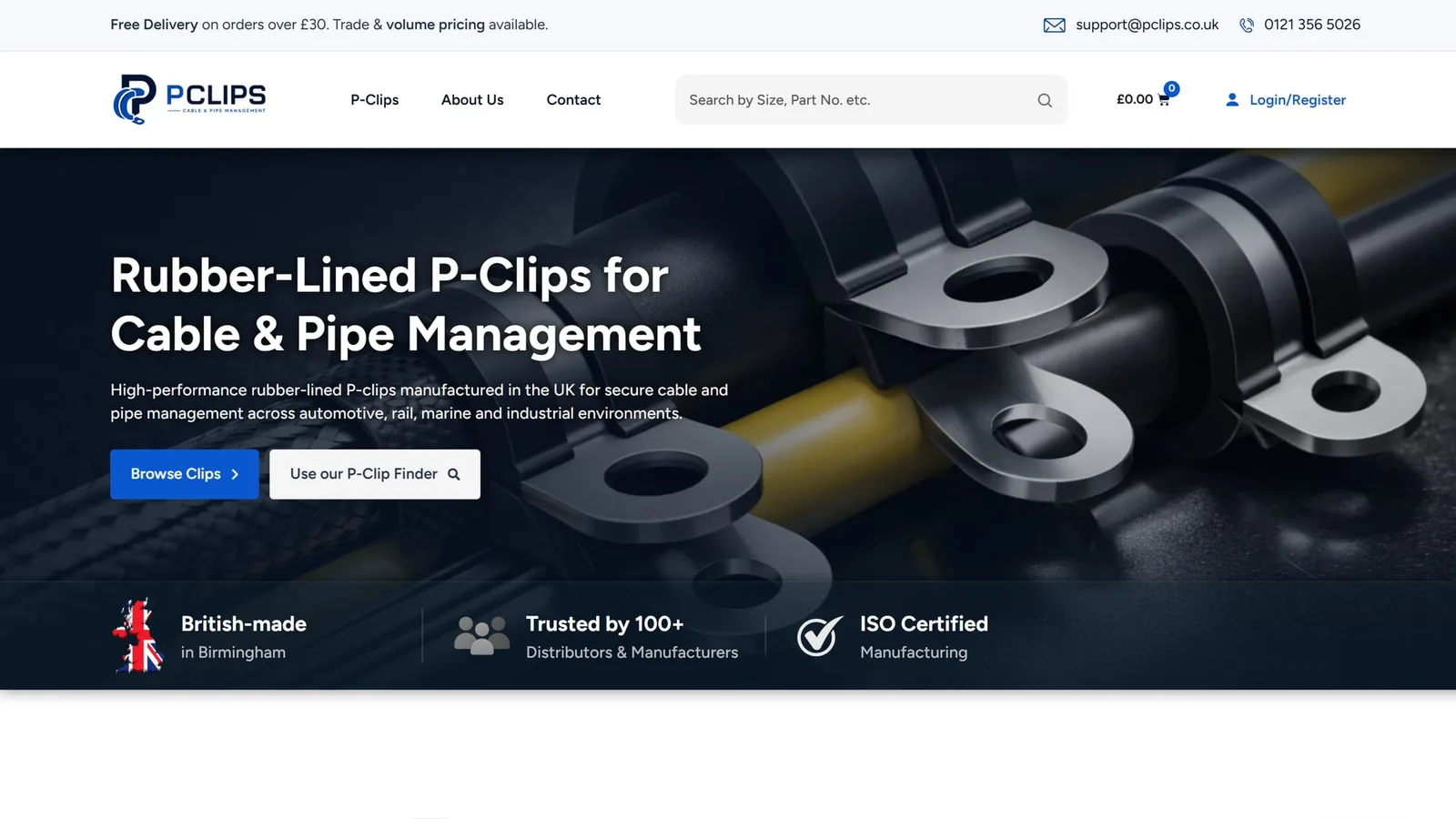
Industrial fastener manufacturing
A new B2B e-commerce site for Birmingham Specialities — built so a procurement buyer sees the engineering and certifications before the cookie banner loads.
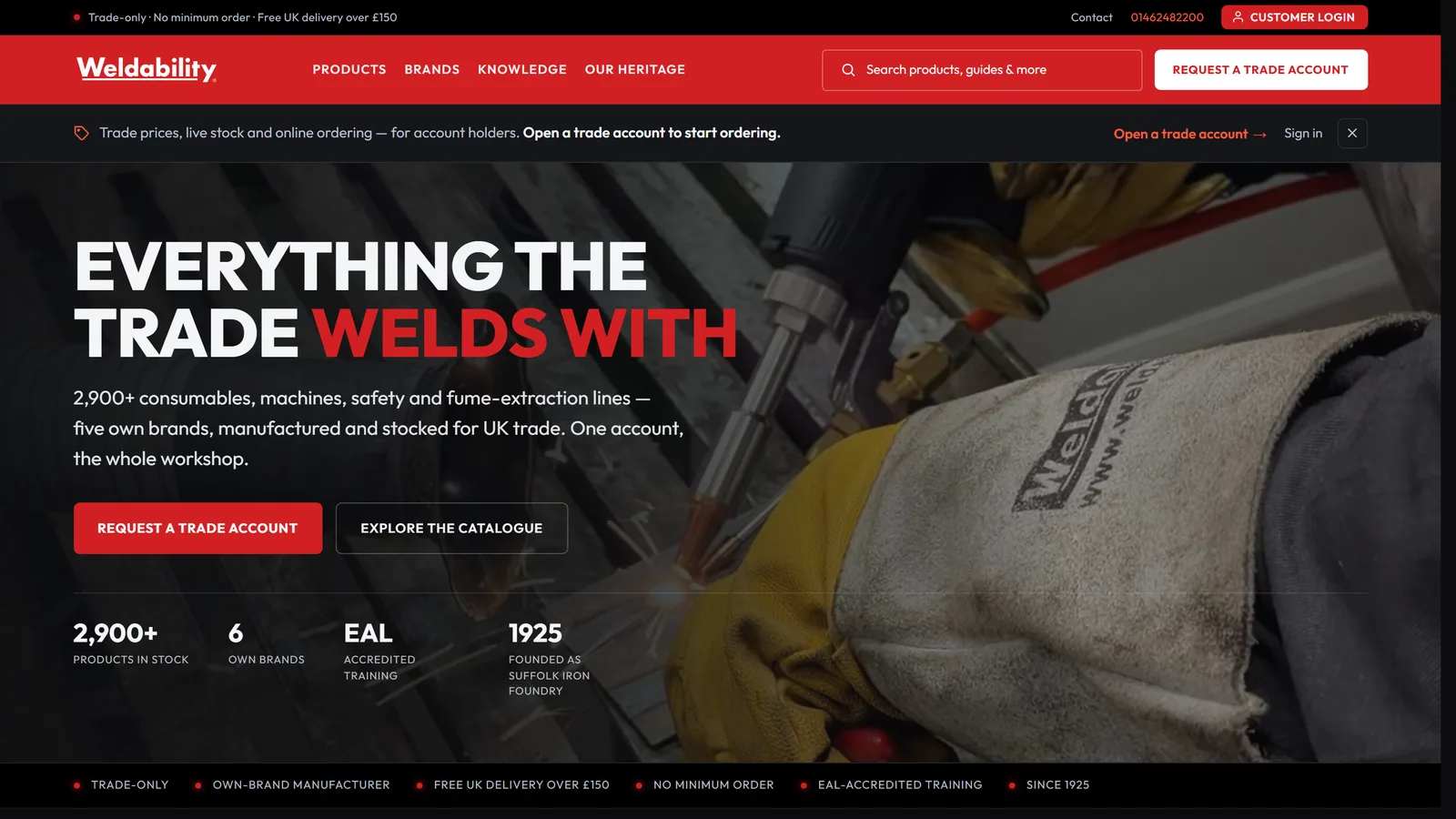
Welding supplies & equipment — trade wholesale
A trade portal for a welding wholesaler founded in 1925 — 3,400 pages, contract pricing, credit and reordering pulled live from the ERP.
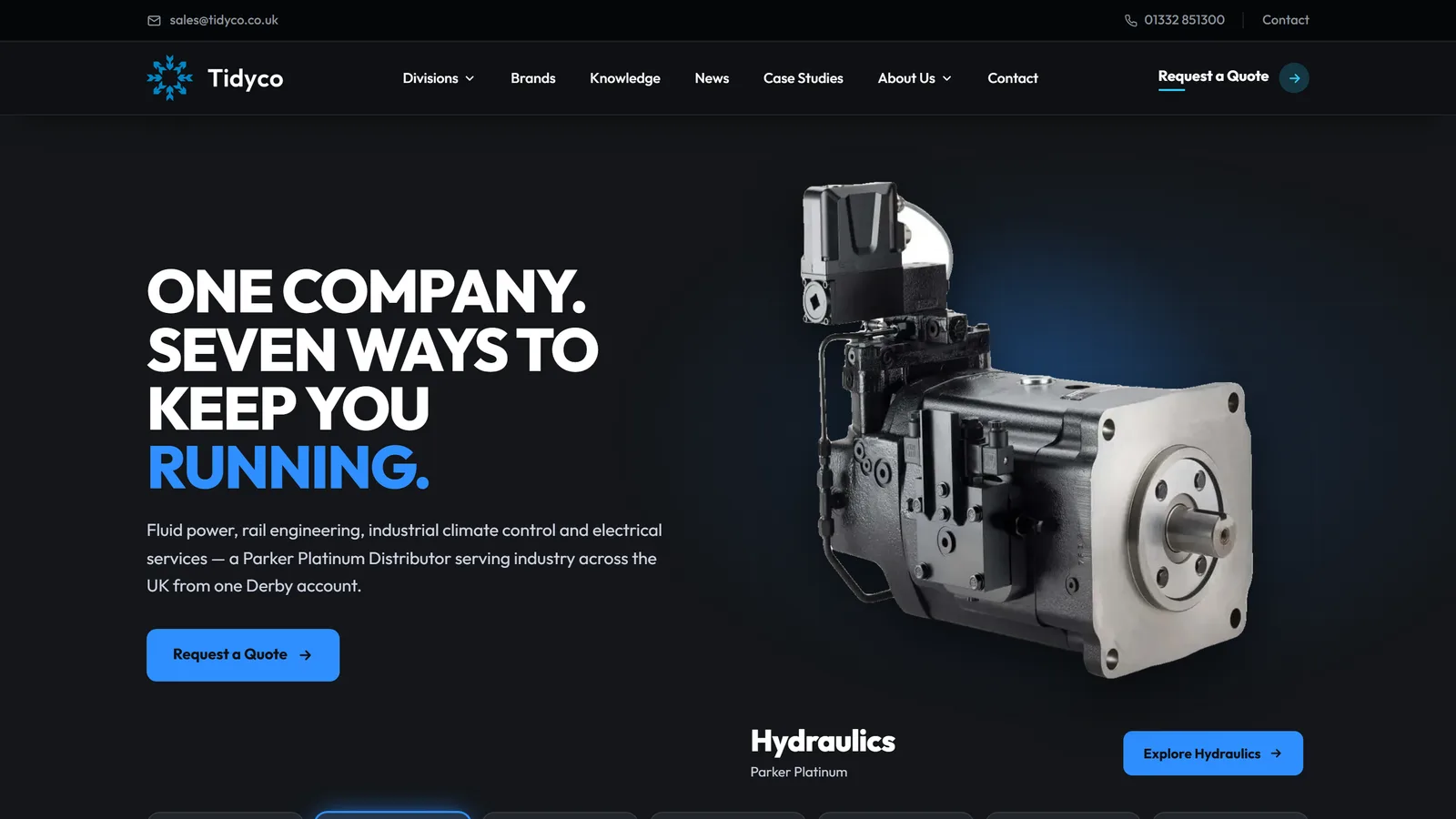
Industrial distribution & engineering services
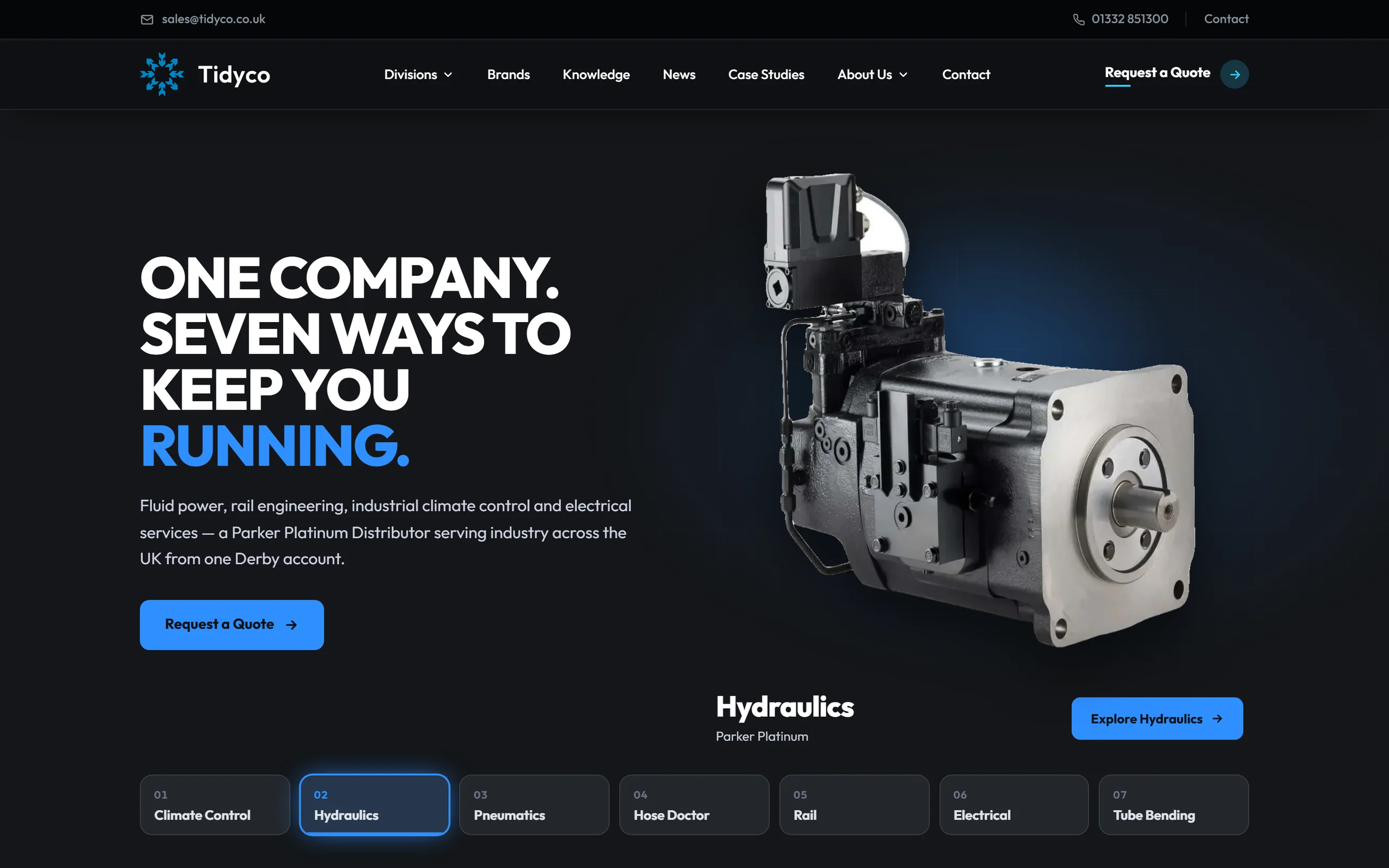
A rebuild for a Derby fluid-power and rail engineering group — seven divisions, one front door, and a 50-guide library that answers buyers before they enquire.
Related reading
All articlesOpinion
Buyers now run a first-pass supplier filter through ChatGPT before a human ever sees your site. Here's what the AI checks — and why most manufacturers get quietly cut.
How-to
Site speed sounds like a developer's obsession. For a B2B manufacturer it's a commercial signal — one of the few technical things a buyer notices without realising.
Opinion
Most manufacturers who aren't getting enquiries assume the site looks dated. Nearly always the real problem is somewhere else entirely. Here's where to actually look.
Next
The snapshot checks what assistants currently say about a business like yours, and where the answer comes from. It takes about a minute.