The build
A site written for a technical buyer
Specs, materials, tolerances and capacity laid out in the terms a buyer already searches with — so they can qualify you without an enquiry, and enquire already half-scoped.
Process, Chemicals & Coatings
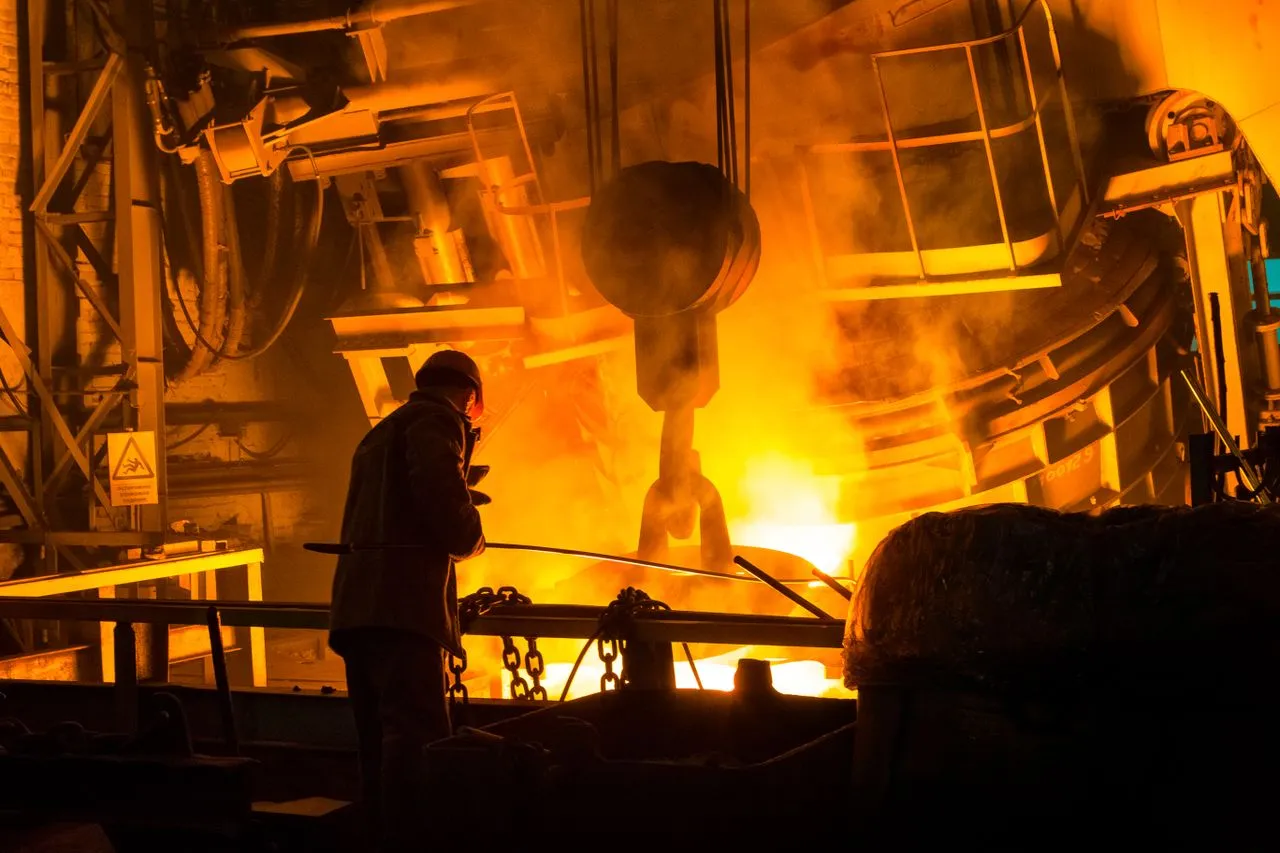
Heat treaters are sent parts against a spec — a process, a target hardness, a case depth, a standard on a drawing — and the buyer wants to know you can hit it and prove it before they trust you with a batch.
Much of that confidence is currently built by reputation among local machinists, but the new customer and the AI they ask can only see what your site states. Most heat-treatment sites list "hardening and tempering" and leave the buyer guessing on materials, hardness and capacity. I make your processes, achievable results and metallurgical proof legible, so machinists and toolmakers send parts to you instead of the shop across town.
What I'd build you
The build
Specs, materials, tolerances and capacity laid out in the terms a buyer already searches with — so they can qualify you without an enquiry, and enquire already half-scoped.
Found
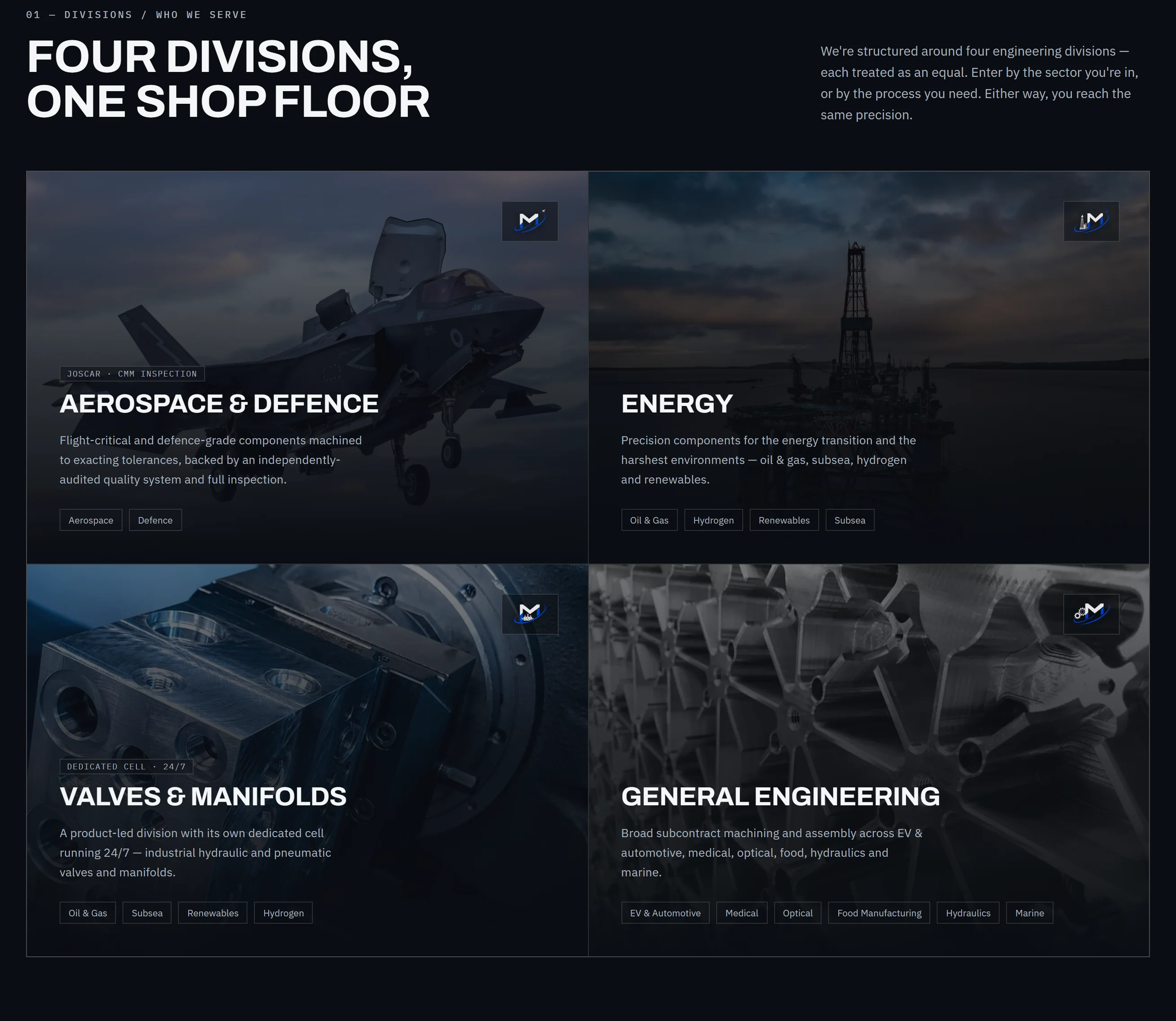
A page per process, material and sector instead of one “Services” page — every one its own door into the site, matched to how buyers search rather than how the business is organised.
Asked for
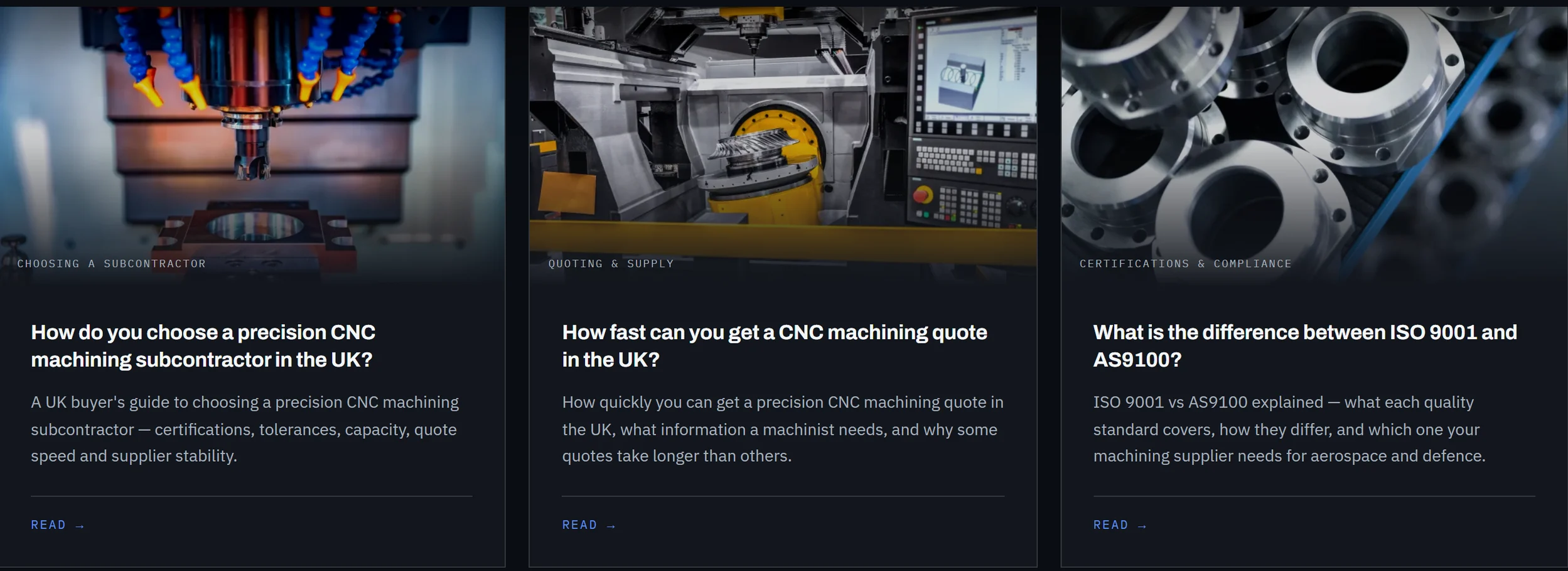
Buyers ask an assistant before they ask a supplier, and it quotes whoever actually answered. Question-led content and structured data put your words in that answer.
Measured, not claimed
2.9s.
Time to main content on a phone, against 6.9s for the median of 5 comparable firms.
Reported
Speed, search visibility and enquiry volume measured on a regular cycle and reported back — so the site is answerable for something rather than just existing.
What I build for heat treatment
A page per process (through-hardening, case-hardening & carburising, nitriding, annealing, stress relief) with materials and achievable hardness
Furnace and capacity content — part size, batch, load weight and turnaround
Metallurgical testing and traceability content (hardness testing, case-depth verification, certification) for the QA gate
A parts-in enquiry flow capturing part, material, target hardness or case depth and volumes
What manufacturers ask before they hire me. If yours is not here, ask it — the answer is usually short.
I build a page per process — through-hardening, carburising, nitriding, annealing, stress relief — with the materials and results each achieves, so a buyer searching for exactly that process reaches you instead of a generic listing.
Yes — I structure content around the materials you treat and the hardness or case depth you achieve, so an engineer can confirm you’ll hit their spec before they ship a single part.
I make your furnace and load capacity explicit — maximum part size, batch and load weight, turnaround — so an oversized or high-volume job self-qualifies and you stop fielding calls for work you can’t take.
Metallurgical testing and traceability content — hardness testing, case-depth checks, certification you provide — reassures a buyer the spec is measured and documented, which is what they need before releasing critical parts.
I build content aimed directly at the machinists, toolmakers and fabricators who subcontract heat treatment, so the trade buyers who send steady repeat batches can find and trust you.
A parts-in enquiry flow captures the part, material, target hardness or case depth, standard and quantity, so you can quote and slot the batch without a round of clarifying emails.
More in process, chemicals & coatings
Proof — recent manufacturer work
All case studies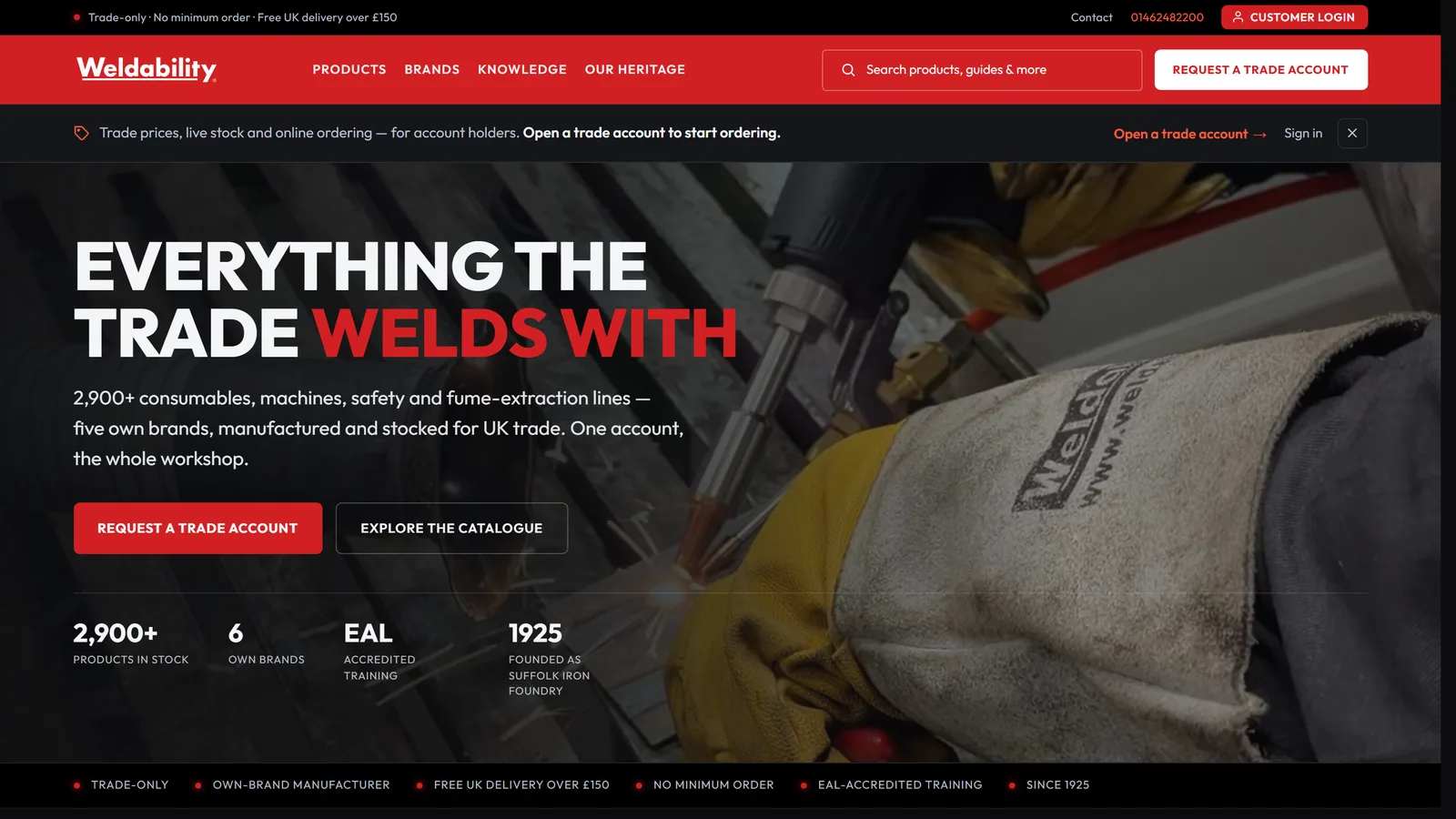
Welding supplies & equipment — trade wholesale
A trade portal for a welding wholesaler founded in 1925 — 3,400 pages, contract pricing, credit and reordering pulled live from the ERP.
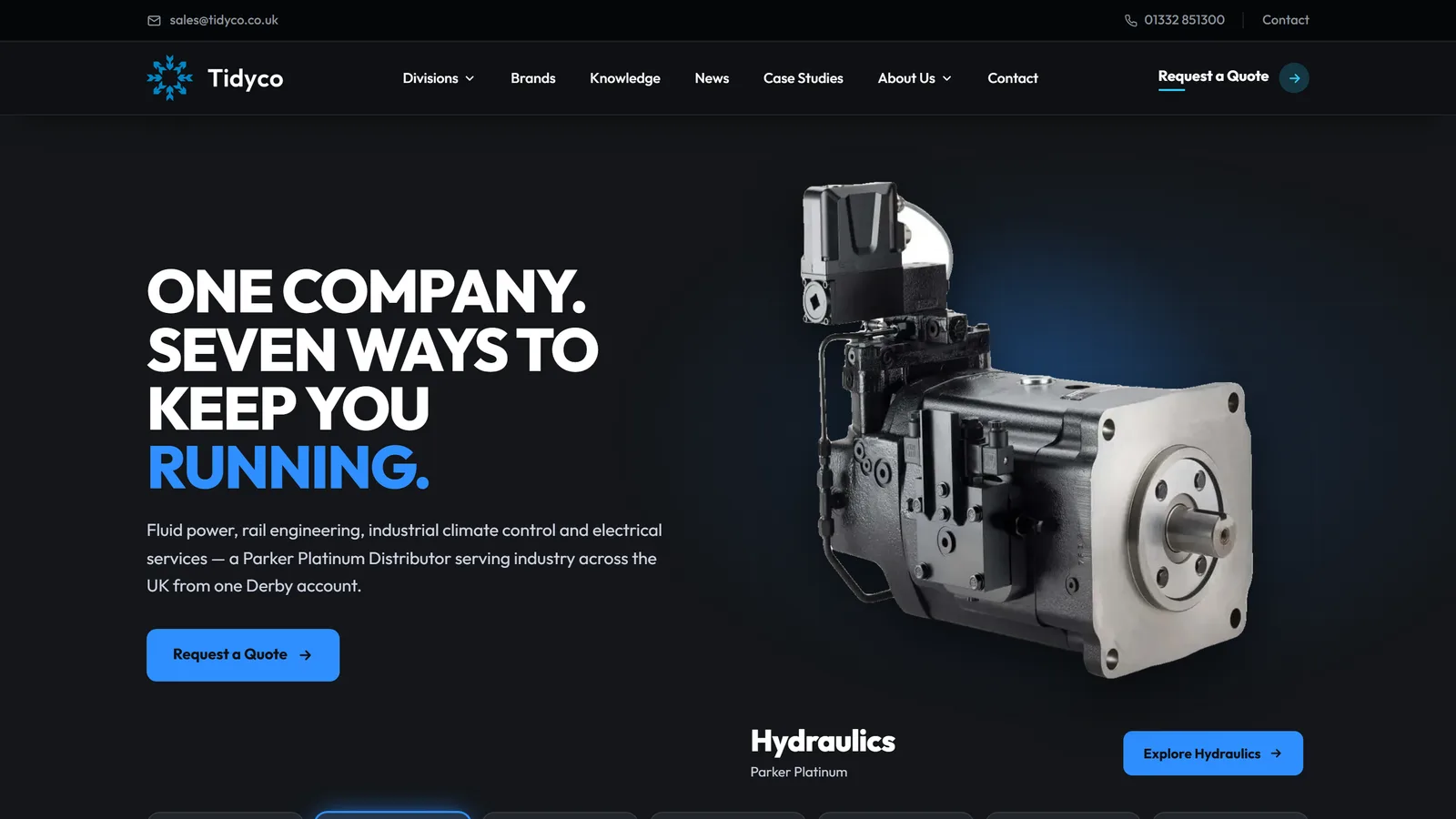
Industrial distribution & engineering services
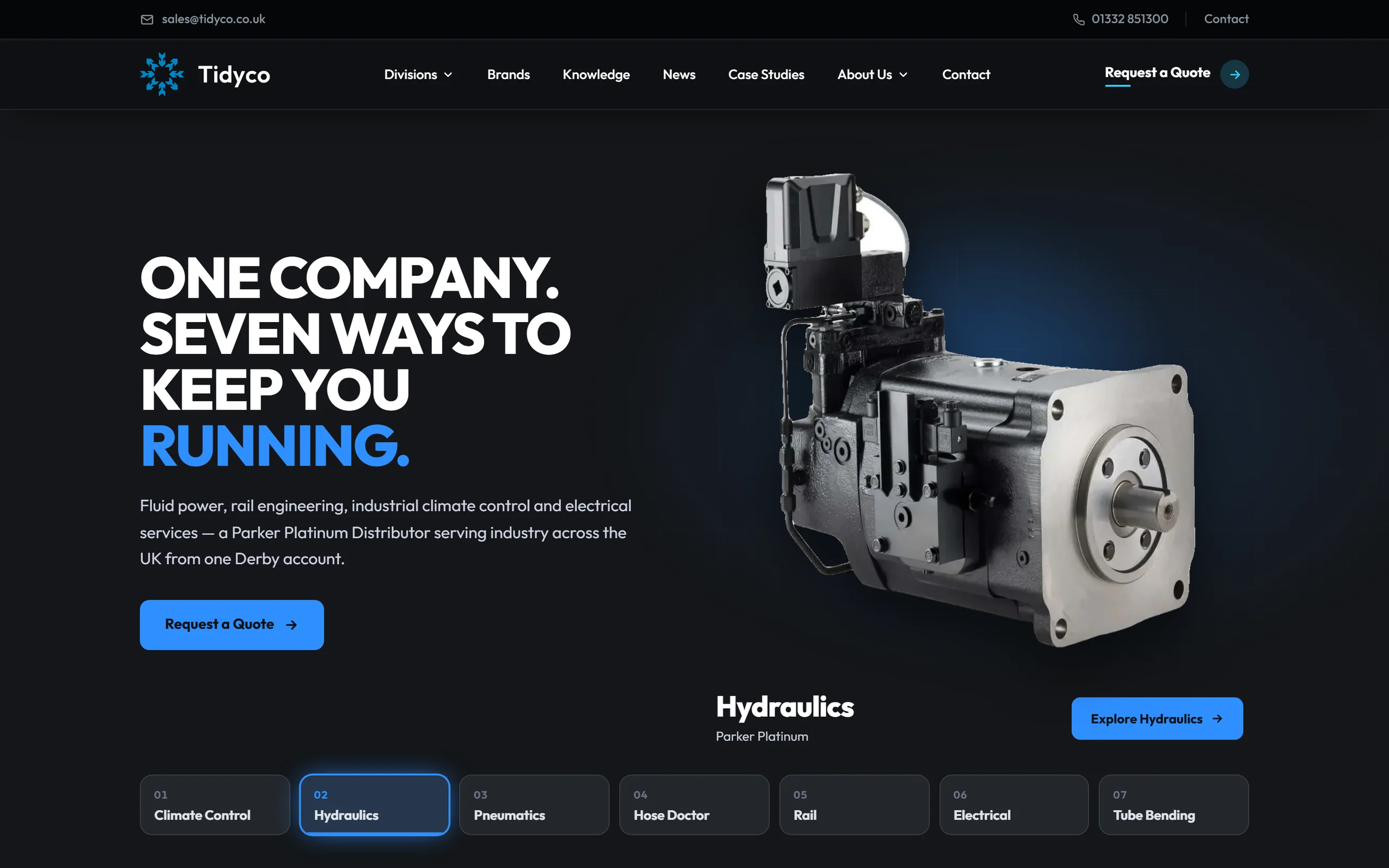
A rebuild for a Derby fluid-power and rail engineering group — seven divisions, one front door, and a 50-guide library that answers buyers before they enquire.

Precision CNC machining
A rebuild for a Norwich CNC subcontractor — four divisions, capability pages that state the tolerance, and a quote path that asks for the drawing.
Related reading
All articlesOpinion
Buyers now run a first-pass supplier filter through ChatGPT before a human ever sees your site. Here's what the AI checks — and why most manufacturers get quietly cut.
Opinion
If your best trade customers still order by phone, it isn't loyalty — it's habit, and habits move to whoever removes the friction first. Here's what shifts it.
How-to
For technical products, the datasheet is what a buyer uses to choose. Locking it in an unfindable PDF hands the enquiry to a competitor who published theirs.
Next
The snapshot checks what assistants currently say about a business like yours, and where the answer comes from. It takes about a minute.