The build
A site written for a technical buyer
Specs, materials, tolerances and capacity laid out in the terms a buyer already searches with — so they can qualify you without an enquiry, and enquire already half-scoped.
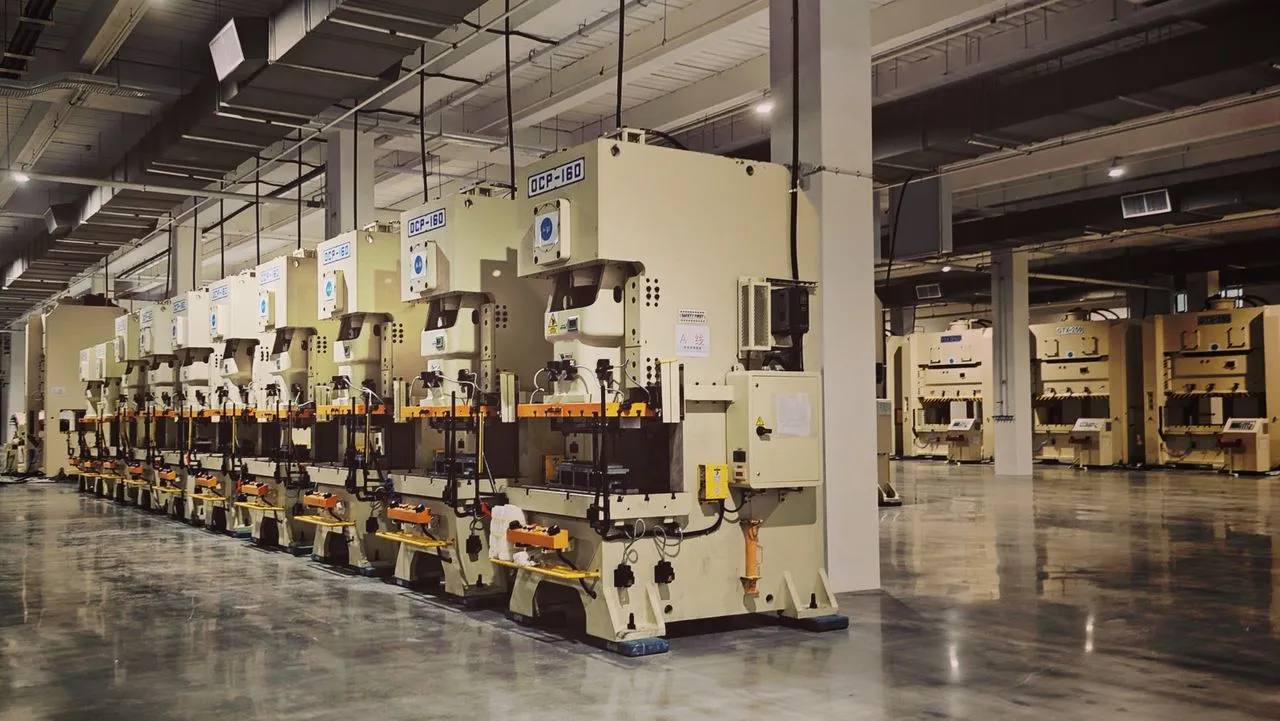
When a buyer looks at machinery, they’re not shopping for a product — they’re trying to solve a line problem, hit a throughput, or replace kit that can’t keep up, and they’re weighing years of parts and support behind the purchase.
Most machine-builder sites lead with a photo and a model number and leave the buyer to work out whether it fits their application, which is the one question they came to answer. I build sites organised around applications and outcomes, proven by real installations, so a serious buyer recognises their problem in your work and enquires already able to describe the job. And I treat spares, service and the aftermarket as front-door revenue — because for capital equipment, the relationship after the sale is worth more than the sale.
What I'd build you
The build
Specs, materials, tolerances and capacity laid out in the terms a buyer already searches with — so they can qualify you without an enquiry, and enquire already half-scoped.
Found
A page per process, material and sector instead of one “Services” page — every one its own door into the site, matched to how buyers search rather than how the business is organised.
Asked for
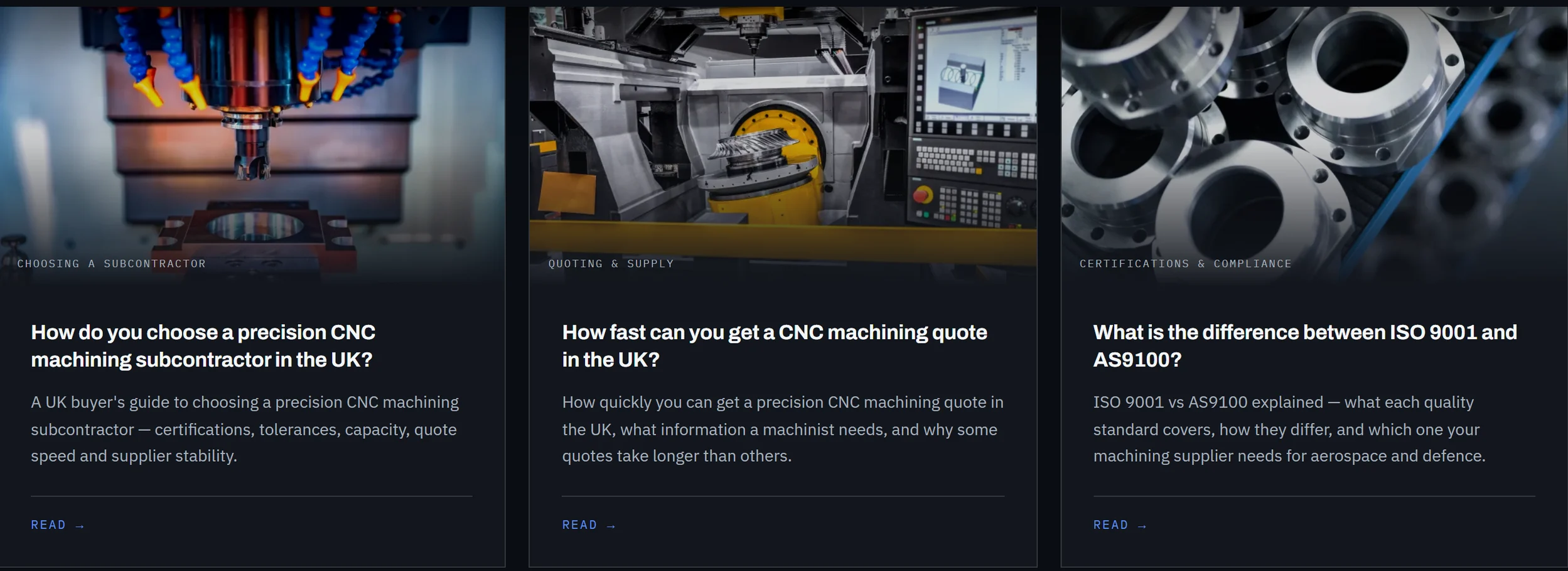
Buyers ask an assistant before they ask a supplier, and it quotes whoever actually answered. Question-led content and structured data put your words in that answer.
Measured, not claimed
2.9s.
Time to main content on a phone, against 6.9s for the median of 5 comparable firms.
Reported
Speed, search visibility and enquiry volume measured on a regular cycle and reported back — so the site is answerable for something rather than just existing.
What I build for machinery & equipment
Application and outcome pages structured for technical buyers, not a flat product catalogue
Case studies and installations that prove capability and carry the buyer’s business case
Spares, service and aftermarket portals — with parts lookup by model/serial — that secure repeat revenue
A project-enquiry flow that scopes application, throughput, constraints and timeline before the call
AI visibility so application-led buyer questions — "who builds X for Y line" — name you
Your exact sector
Not “manufacturing” in general — the specific process and product, written the way buyers and AI assistants actually search for it.
What manufacturers ask before they hire me. If yours is not here, ask it — the answer is usually short.
Yes — application-led pages connect what you build to the buyer’s problem and payback, which is how technical and capital buyers actually evaluate, rather than a flat catalogue that makes them do the matching themselves.
Case studies and installations demonstrate capability a spec sheet can’t, and give a buyer the evidence they need to justify the spend internally — often the deciding factor over a cheaper quote they can’t verify.
Often yes — a self-serve spares and service portal with parts lookup by model or serial cuts admin, keeps your engineers on new work, and locks in the aftermarket revenue that follows every machine you sell.
A structured enquiry flow scoped to your applications captures the throughput, constraints and timeline up front, so you qualify and respond seriously instead of chasing the basics.
Your existing customers still check you out, but new project buyers and the AI assistants they consult only recommend suppliers whose capability and support they can actually read. Referral gets you named; the site closes the confidence gap and wins the shortlist.
That’s the aim of application-led, structured content — and with my tool Periscope I measure how often ChatGPT, Gemini and Perplexity name you for real buyer questions, then work the pages that move it.
A machine sale is an enquiry-and-quote conversation, not a checkout — but the spares, consumables and parts behind it often do suit a store or portal. I build to your actual mix, not a template.
I structure by industry and application so each buyer lands on content that speaks to their world, rather than one flat range that none of them fully recognise.
Proof — recent manufacturer work
All case studies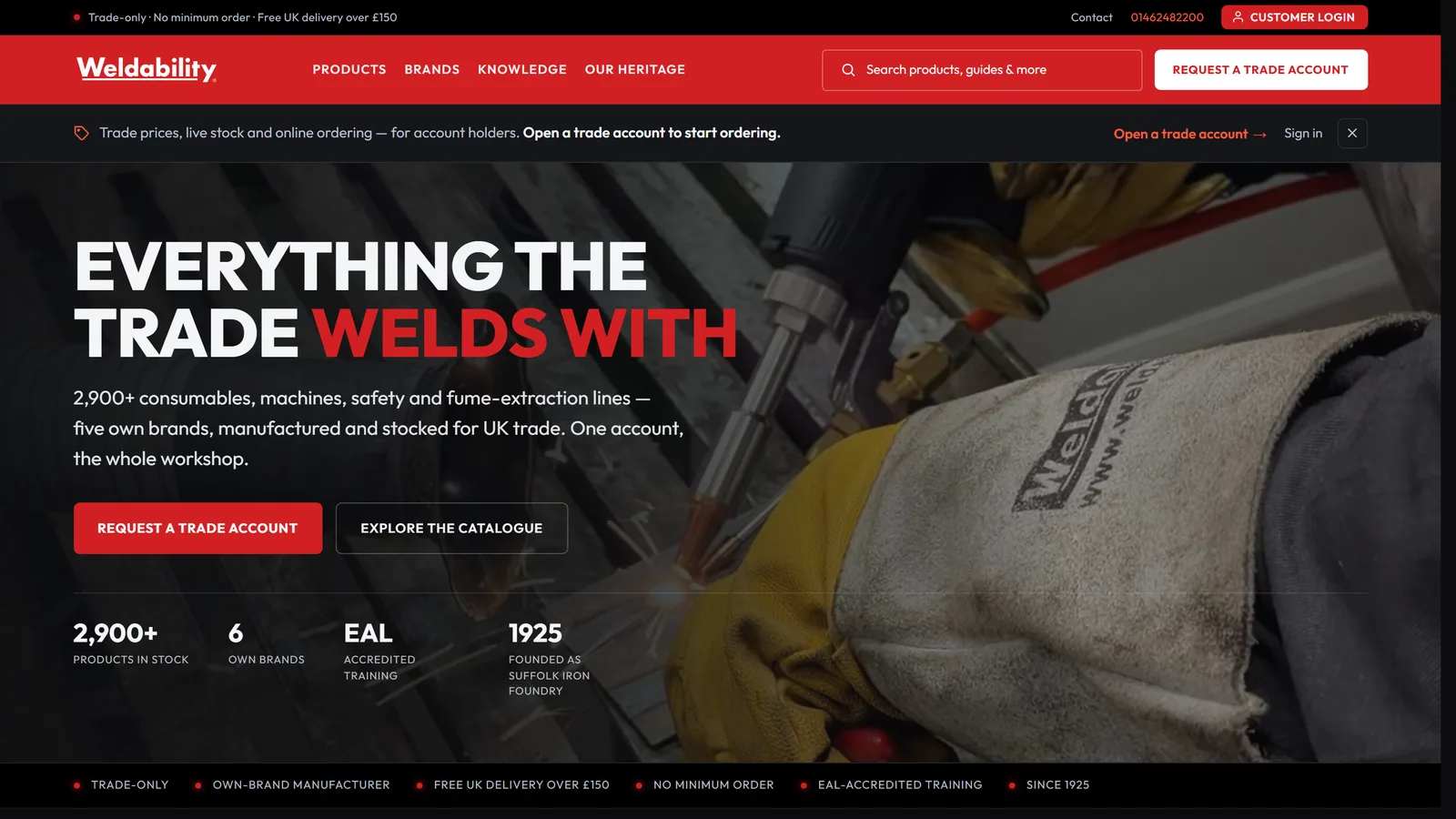
Welding supplies & equipment — trade wholesale
A trade portal for a welding wholesaler founded in 1925 — 3,400 pages, contract pricing, credit and reordering pulled live from the ERP.
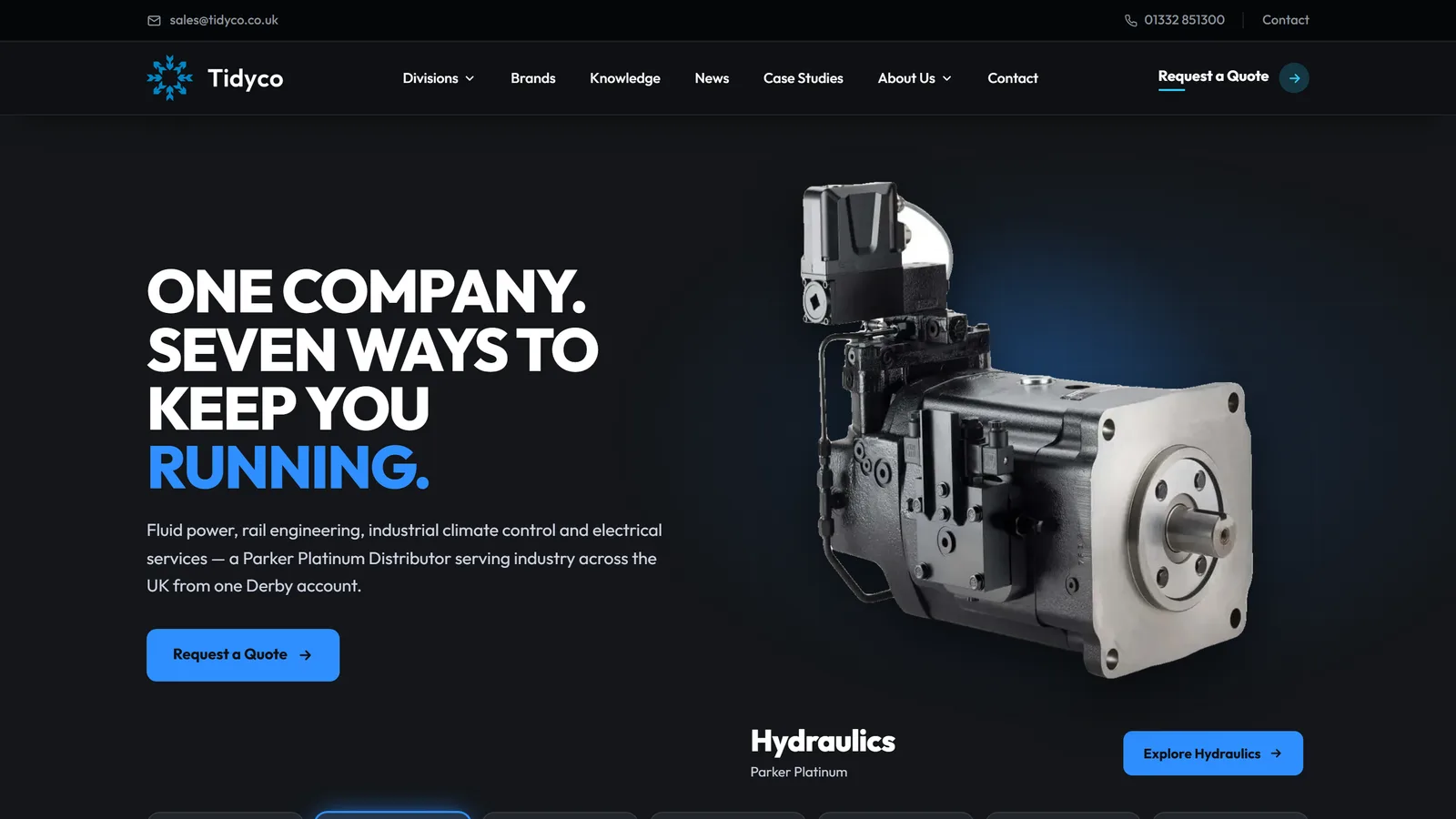
Industrial distribution & engineering services
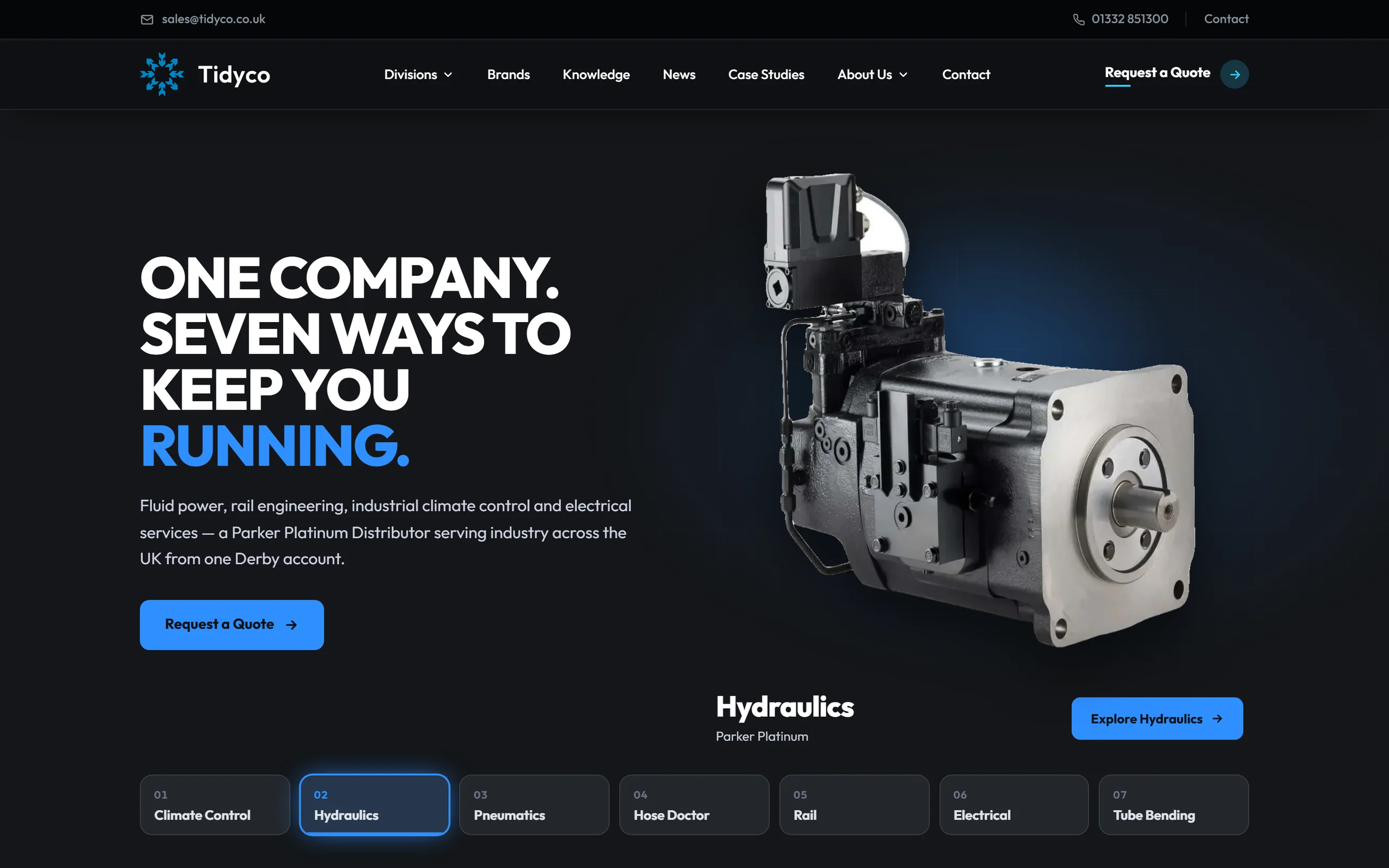
A rebuild for a Derby fluid-power and rail engineering group — seven divisions, one front door, and a 50-guide library that answers buyers before they enquire.
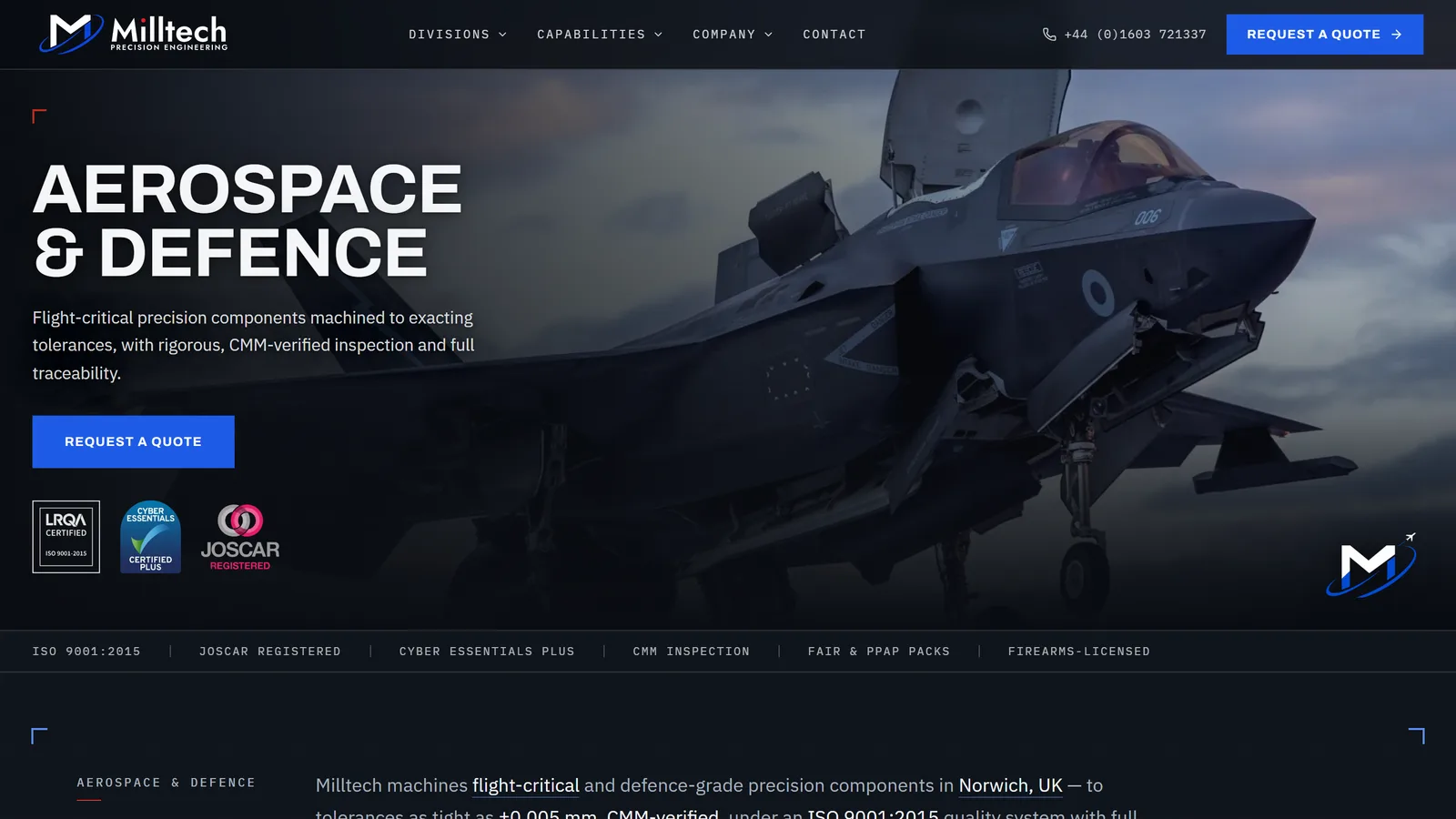
Precision CNC machining
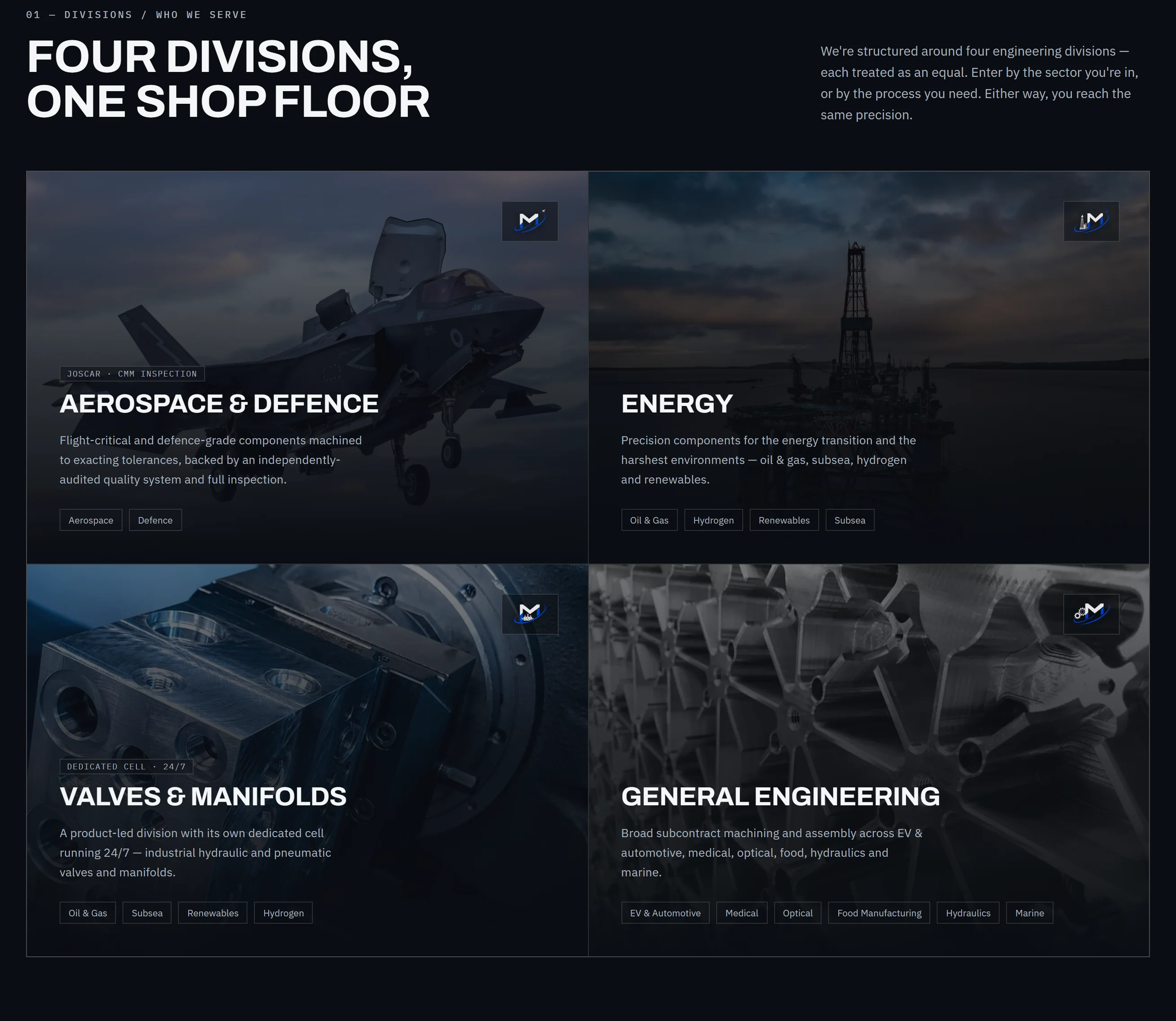
A rebuild for a Norwich CNC subcontractor — four divisions, capability pages that state the tolerance, and a quote path that asks for the drawing.
Related reading
All articlesOpinion
Buyers now run a first-pass supplier filter through ChatGPT before a human ever sees your site. Here's what the AI checks — and why most manufacturers get quietly cut.
How-to
Site speed sounds like a developer's obsession. For a B2B manufacturer it's a commercial signal — one of the few technical things a buyer notices without realising.
Opinion
Most manufacturers who aren't getting enquiries assume the site looks dated. Nearly always the real problem is somewhere else entirely. Here's where to actually look.
Next
The snapshot checks what assistants currently say about a business like yours, and where the answer comes from. It takes about a minute.