The build
A site written for a technical buyer
Specs, materials, tolerances and capacity laid out in the terms a buyer already searches with — so they can qualify you without an enquiry, and enquire already half-scoped.
Materials & Packaging
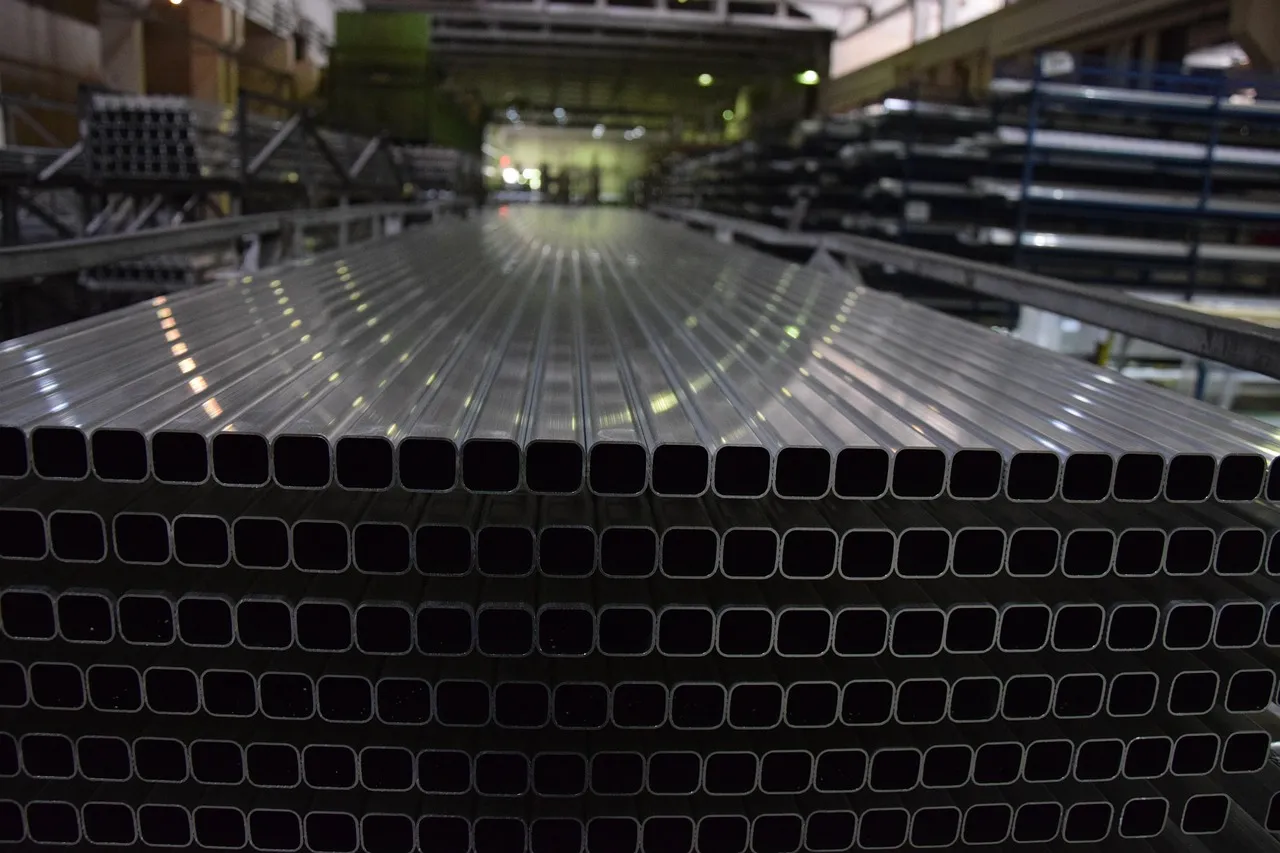
An extrusion buyer arrives one of two ways — pulling a standard section from a catalogue, or bringing a drawing for a bespoke die.
They want to know your alloys and tempers (6060, 6063, 6082), your press size and circle diameter, your finishing (mill, anodised, powder, machining) and whether cutting a new die is worth it at their volume. Most extrusion sites show a wall of profiles and never answer the die question, which is exactly where the serious enquiry stalls. I build a site that separates stock profiles from custom-die work, states your press and finishing capability plainly, and makes both the catalogue pick and the new-die enquiry easy to start.
What I'd build you
The build
Specs, materials, tolerances and capacity laid out in the terms a buyer already searches with — so they can qualify you without an enquiry, and enquire already half-scoped.
Found
A page per process, material and sector instead of one “Services” page — every one its own door into the site, matched to how buyers search rather than how the business is organised.
Asked for
Buyers ask an assistant before they ask a supplier, and it quotes whoever actually answered. Question-led content and structured data put your words in that answer.
Measured, not claimed
2.9s.
Time to main content on a phone, against 6.9s for the median of 5 comparable firms.
Reported
Speed, search visibility and enquiry volume measured on a regular cycle and reported back — so the site is answerable for something rather than just existing.
What I build for aluminium extrusions
A searchable standard-profile catalogue (section, alloy, weight per metre) buyers can order from
A custom-die enquiry that captures the drawing, alloy, temper, finish and annual volume
Finishing and secondary-operation pages (anodising, powder coat, cut-to-length, machining, fabrication)
Die-cost and minimum-volume guidance that qualifies bespoke enquiries before you quote
What manufacturers ask before they hire me. If yours is not here, ask it — the answer is usually short.
I build the range around the exact terms buyers search — alloy, temper, section type — so a buyer needing a 6082-T6 profile reaches you instead of a generic "aluminium supplier" listing.
A bespoke-die enquiry captures the drawing, alloy, temper, finish and expected annual volume up front, so you can scope tooling and price from complete information rather than a vague email.
Guidance on die cost against minimum volumes lets a buyer self-qualify before they enquire, so the bespoke leads that reach you are realistic and you waste fewer quotes on runs that were never viable.
Each secondary operation gets its own page, because a buyer wanting anodised, cut-to-length, machined profiles is a higher-value fit than one buying bare lengths — and most extrusion sites hide that capability entirely.
Yes — I build distinct journeys, a fast catalogue-and-reorder path for distributors and a spec-led enquiry for OEM programme buyers, so each finds the offer that fits without getting in the other’s way.
Capability content targets those searches directly, so a buyer needing short lengths or a modest run finds you rather than assuming an extruder only takes container-load orders.
More in materials & packaging
Proof — recent manufacturer work
All case studies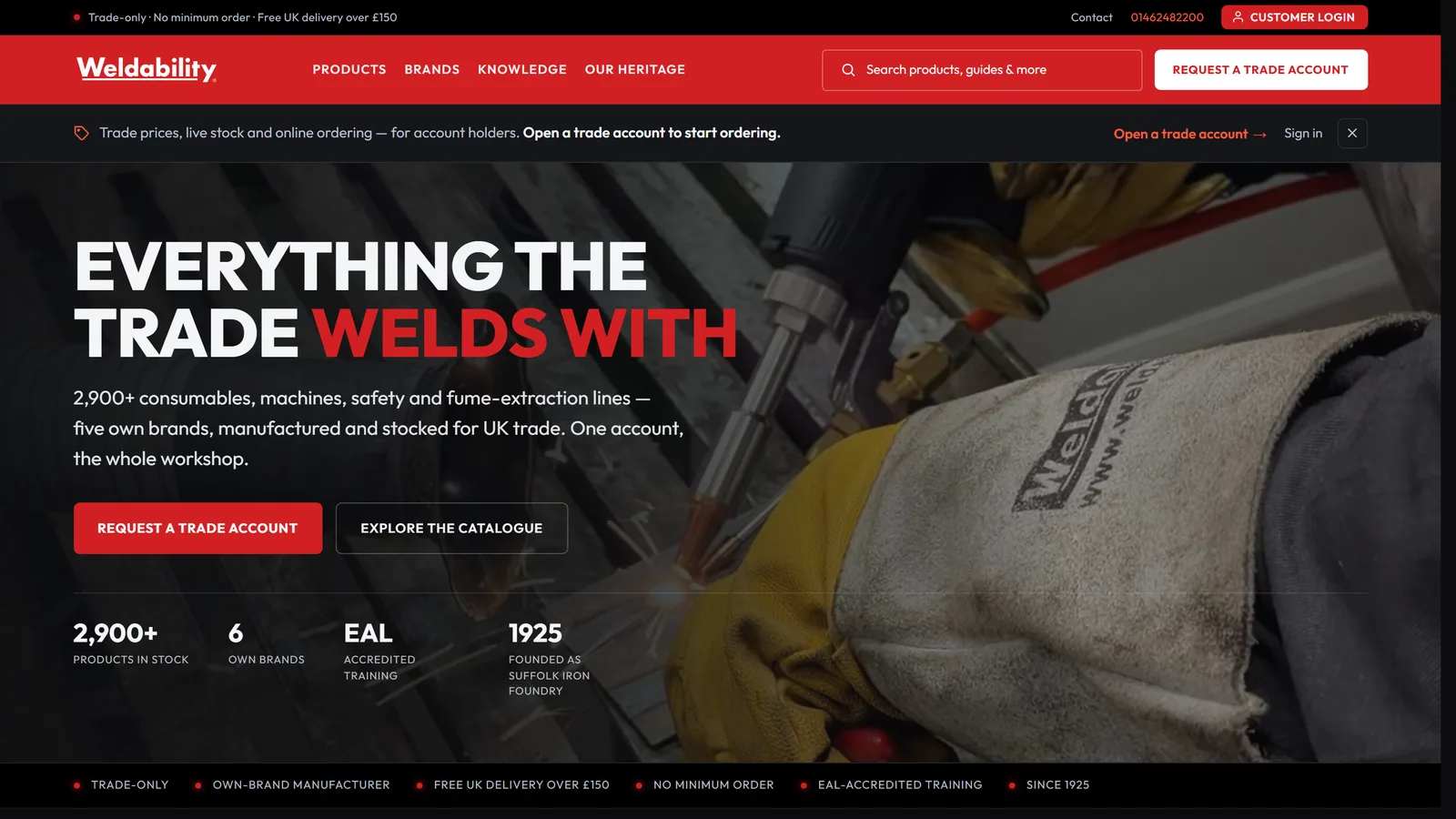
Welding supplies & equipment — trade wholesale
A trade portal for a welding wholesaler founded in 1925 — 3,400 pages, contract pricing, credit and reordering pulled live from the ERP.
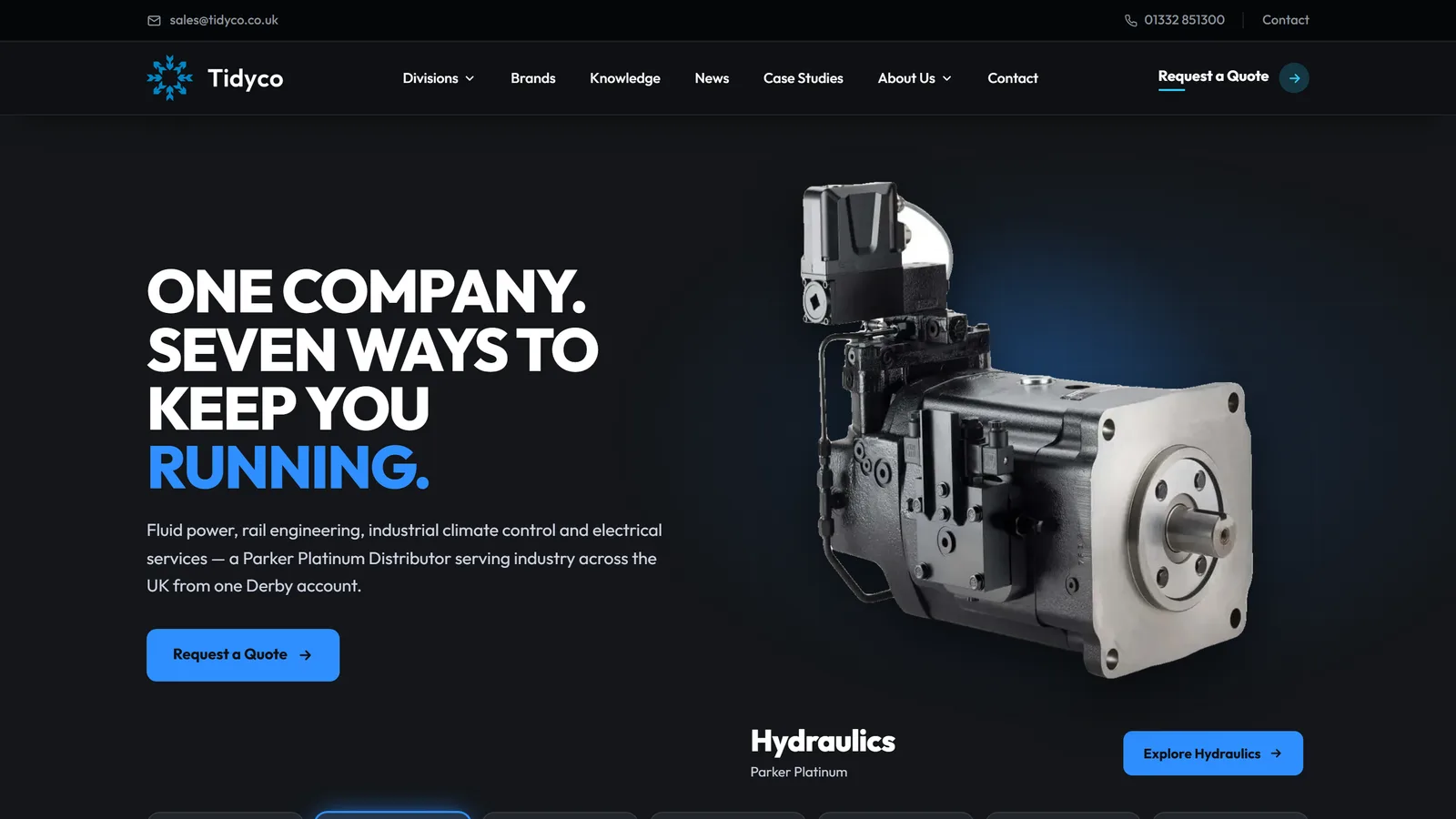
Industrial distribution & engineering services
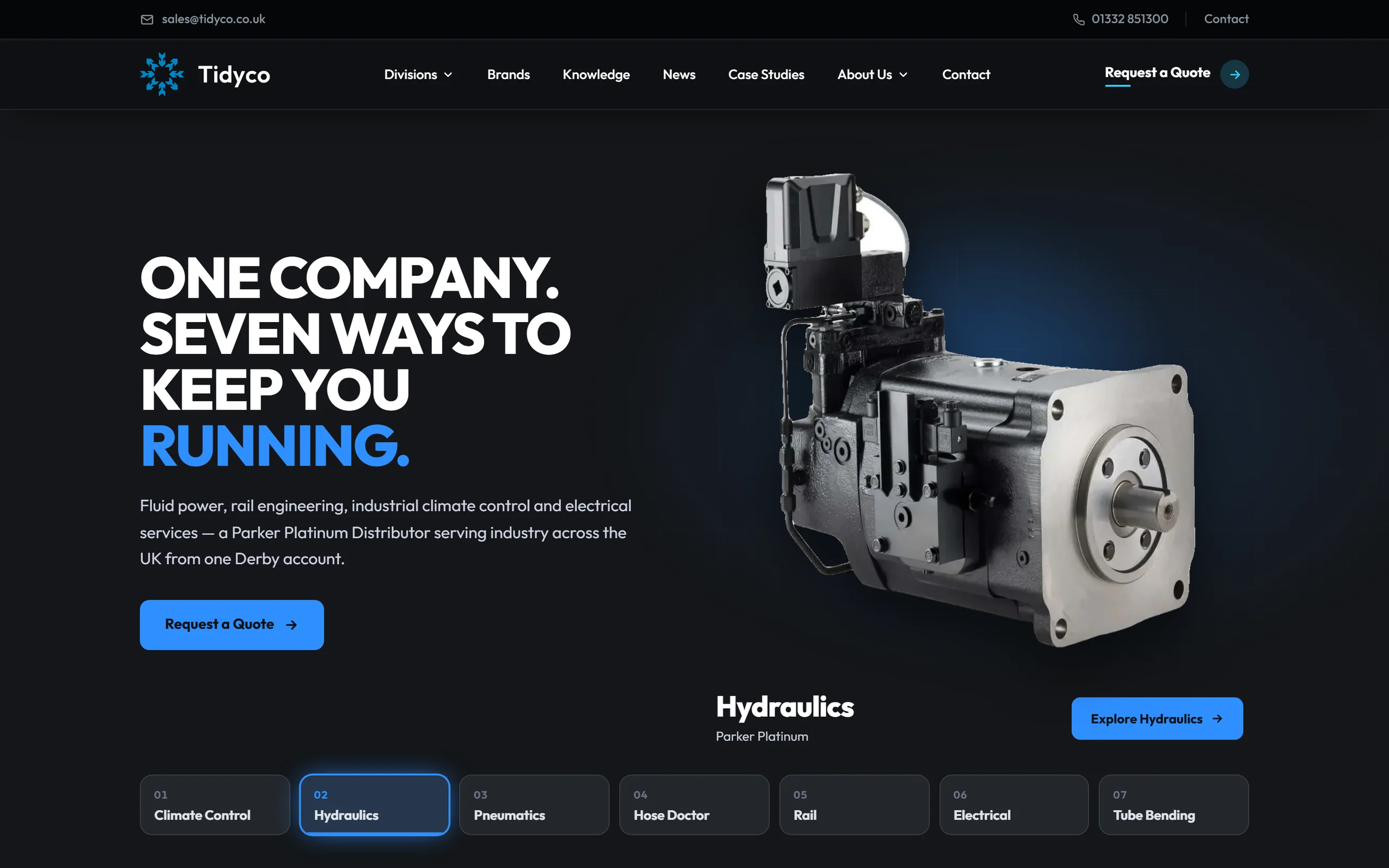
A rebuild for a Derby fluid-power and rail engineering group — seven divisions, one front door, and a 50-guide library that answers buyers before they enquire.
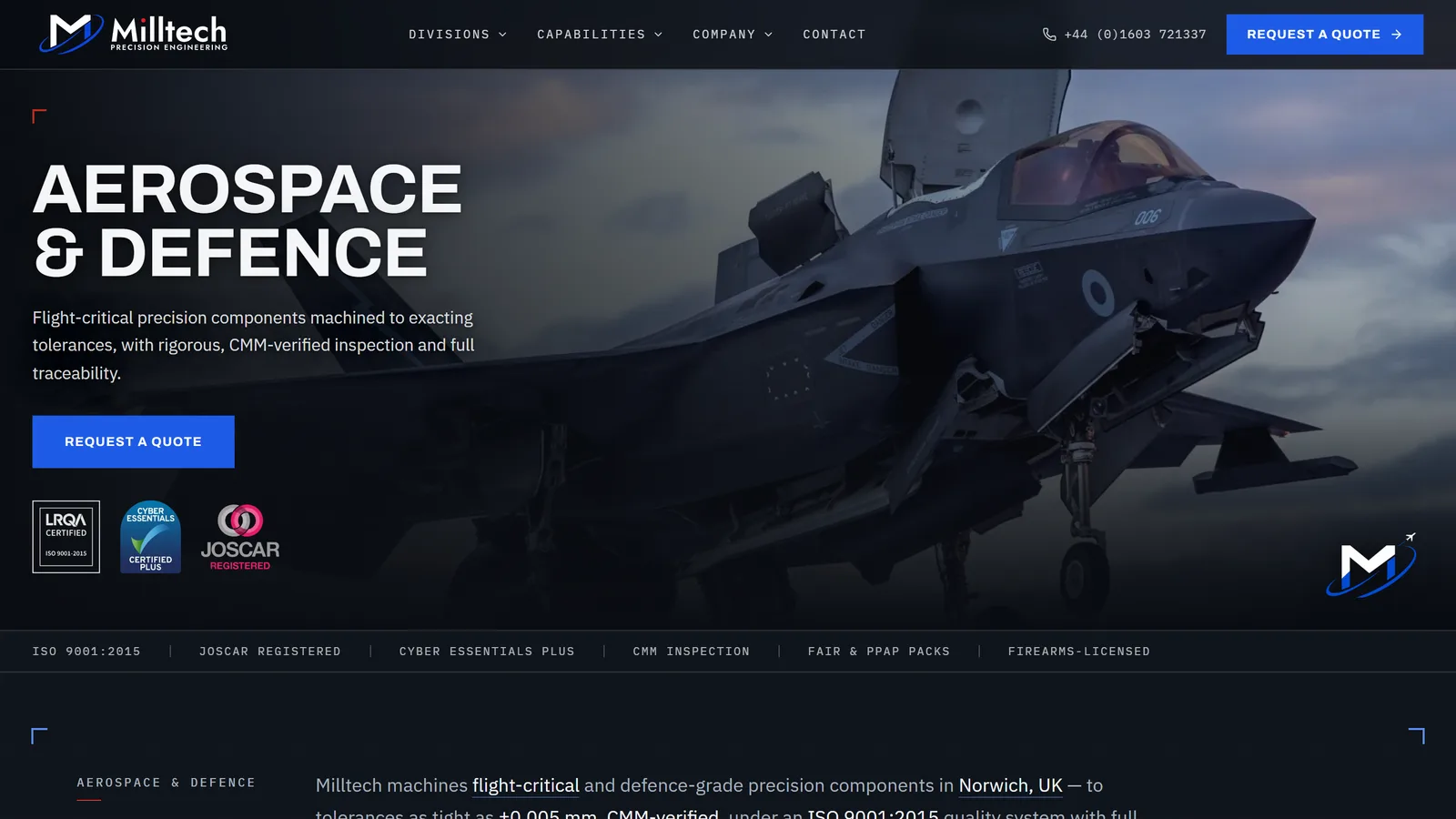
Precision CNC machining
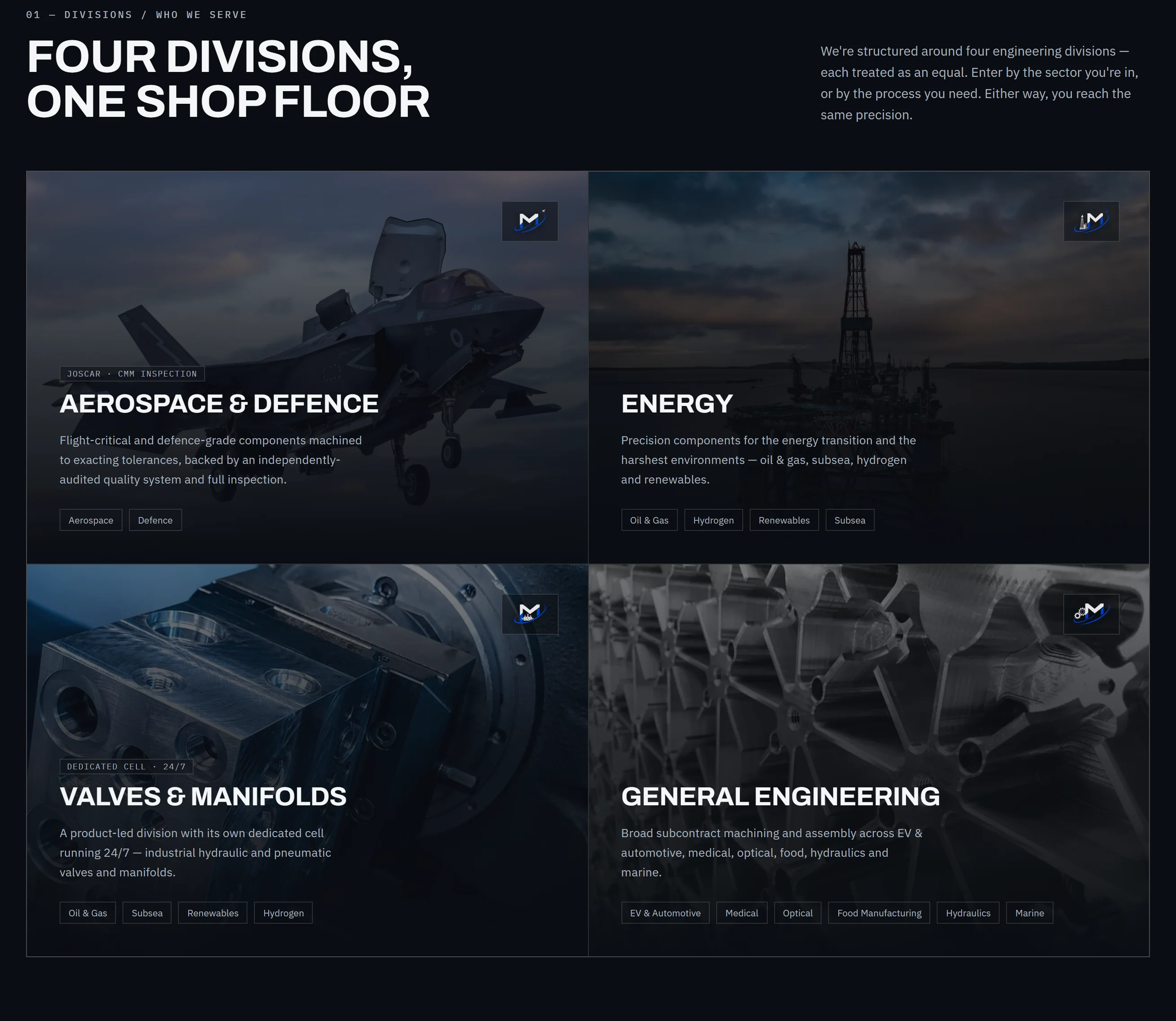
A rebuild for a Norwich CNC subcontractor — four divisions, capability pages that state the tolerance, and a quote path that asks for the drawing.
Related reading
All articlesHow-to
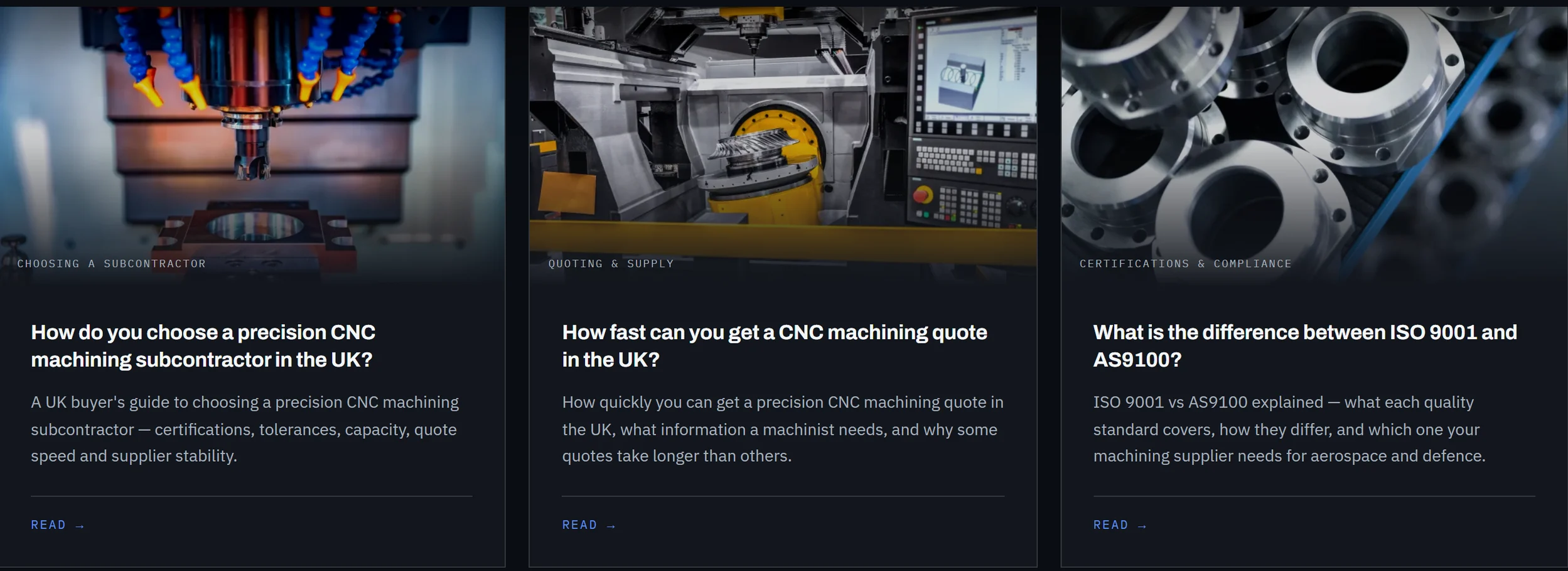
Site speed sounds like a developer's obsession. For a B2B manufacturer it's a commercial signal — one of the few technical things a buyer notices without realising.
Teardown
An anonymised teardown of a typical industrial-components site — a catalogue that looks fine until a buyer tries to use it, and funnels every enquiry into a phone call.
Comparison
When does a manufacturer need a real trade portal instead of a catalogue and an enquiry form? An honest look at what each costs and what actually pays for itself.
Next
The snapshot checks what assistants currently say about a business like yours, and where the answer comes from. It takes about a minute.