The build
A site written for a technical buyer
Specs, materials, tolerances and capacity laid out in the terms a buyer already searches with — so they can qualify you without an enquiry, and enquire already half-scoped.
Machinery & Equipment
Fluid-power buyers split into two very different jobs: an engineer specifying a system or component to a duty, and a maintenance buyer who needs a replacement part or a repair fast because something’s down.
Most hydraulics sites serve neither well — a flat product list that’s hard to search by spec, and no quick path for the urgent reorder. I build sites that make your range findable to the exact component and rating, give the down-tools buyer a fast route to the right part or repair, and make trade reordering effortless so the repeat business stops leaking to whoever answers the phone first.
What I'd build you
The build
Specs, materials, tolerances and capacity laid out in the terms a buyer already searches with — so they can qualify you without an enquiry, and enquire already half-scoped.
Found
A page per process, material and sector instead of one “Services” page — every one its own door into the site, matched to how buyers search rather than how the business is organised.
Asked for
Buyers ask an assistant before they ask a supplier, and it quotes whoever actually answered. Question-led content and structured data put your words in that answer.
Measured, not claimed
2.9s.
Time to main content on a phone, against 6.9s for the median of 5 comparable firms.
Reported
Speed, search visibility and enquiry volume measured on a regular cycle and reported back — so the site is answerable for something rather than just existing.
What I build for hydraulics & fluid power
Range and component pages searchable by spec (pressure, flow, port size, mounting) for the specifying engineer
A repair-and-service path (cylinder repair, power-pack service, breakdown) for the down-tools buyer
A trade-account reorder journey — or a portal — with part-number lookup and order history
Application/system content that positions you for designed fluid-power systems, not just parts off a shelf
What manufacturers ask before they hire me. If yours is not here, ask it — the answer is usually short.
I structure range content by the specs buyers actually search — pressure, flow, port size, mounting — so a specifying engineer matches to the right part instead of scrolling a flat catalogue and giving up.
Yes — I build a distinct repair-and-breakdown path, because a maintenance buyer with a burst cylinder is a different, high-intent visitor from an engineer planning a system, and they need to reach you in one click.
A trade-account reorder journey with part-number lookup and order history — and a portal where the volume justifies it — takes friction out of repeat buying, which is where the steady, defensible revenue sits.
Application and system content positions you as a partner who designs fluid-power solutions to a duty, which justifies your margin over a supplier who only sells parts against a part number.
I build structured, filterable range content so a buyer narrows to the exact spec quickly, rather than facing thousands of undifferentiated products with no way in.
Structured spec and application content is what lets AI match a buyer’s requirement to your range — and with Periscope I track how often you’re named for those questions and work the pages that move it.
Proof — recent manufacturer work
All case studies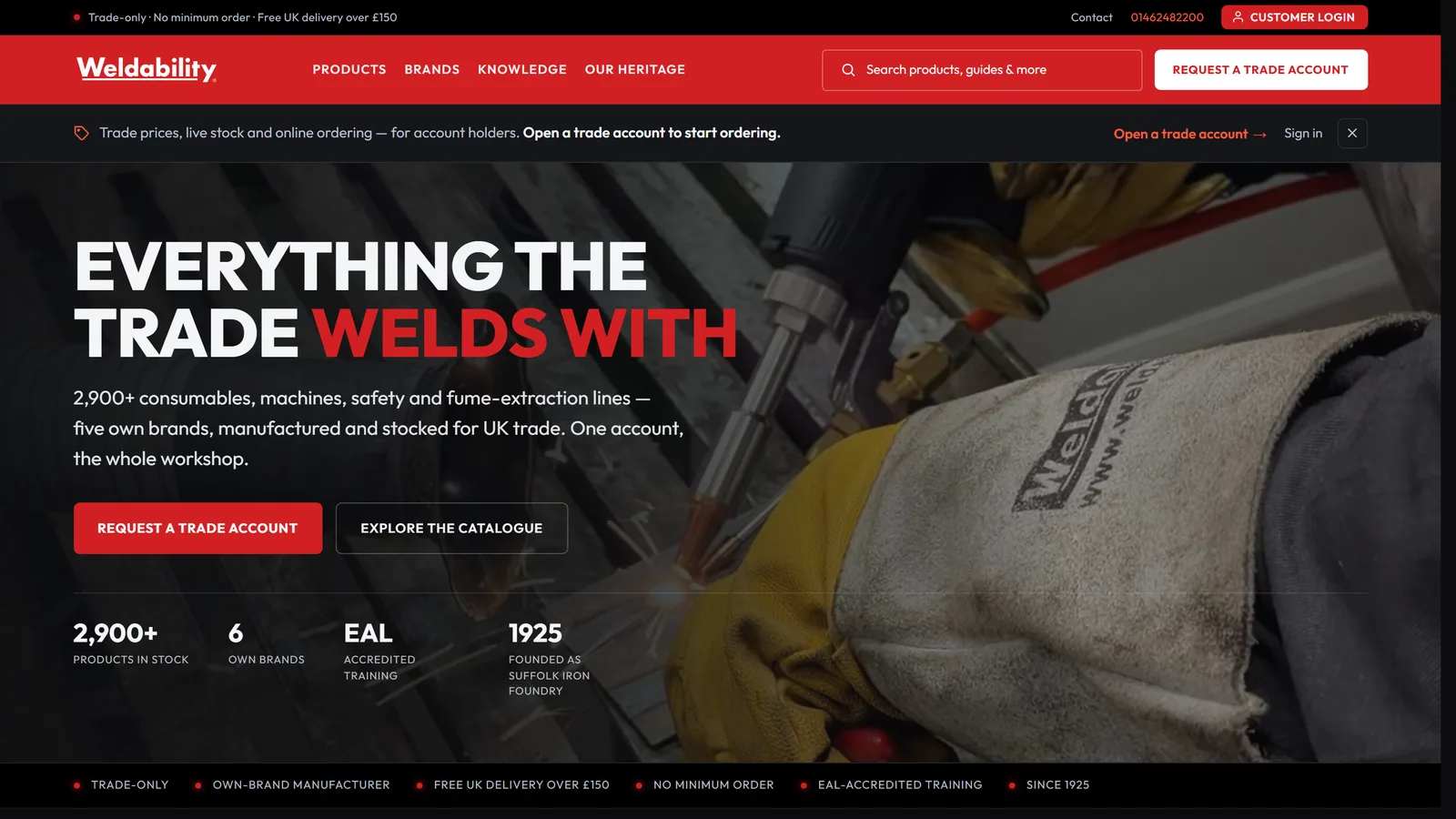
Welding supplies & equipment — trade wholesale
A trade portal for a welding wholesaler founded in 1925 — 3,400 pages, contract pricing, credit and reordering pulled live from the ERP.
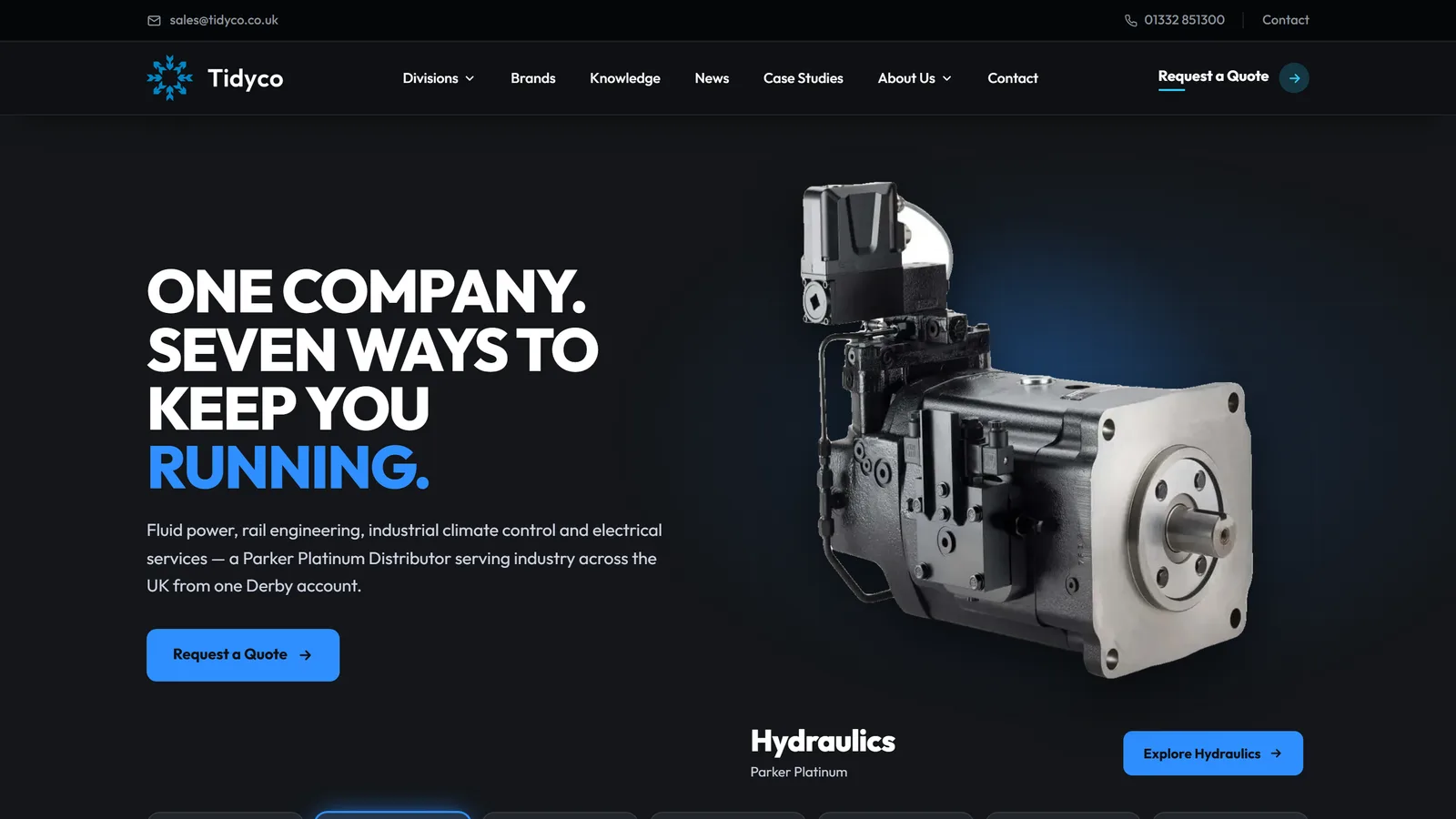
Industrial distribution & engineering services
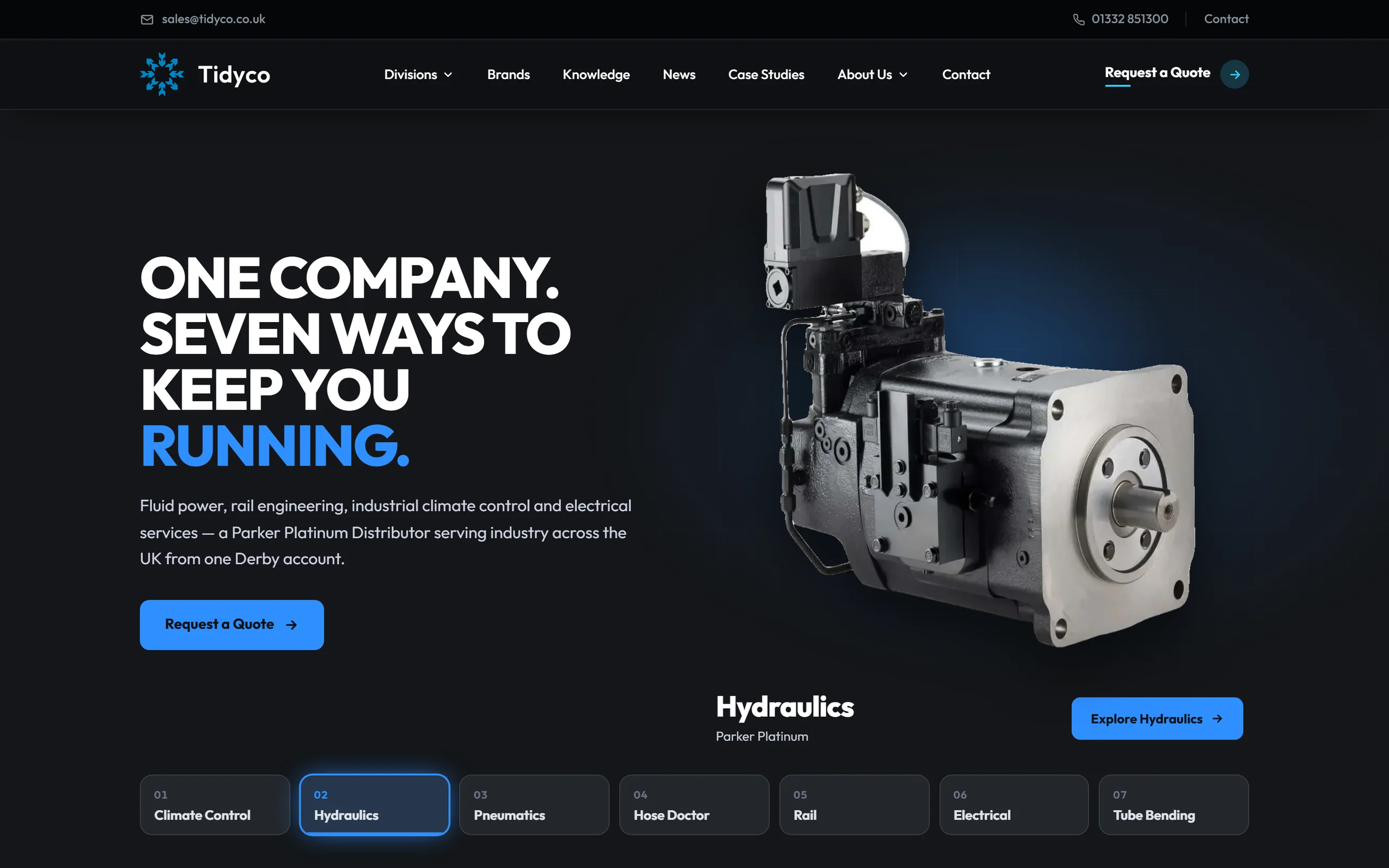
A rebuild for a Derby fluid-power and rail engineering group — seven divisions, one front door, and a 50-guide library that answers buyers before they enquire.
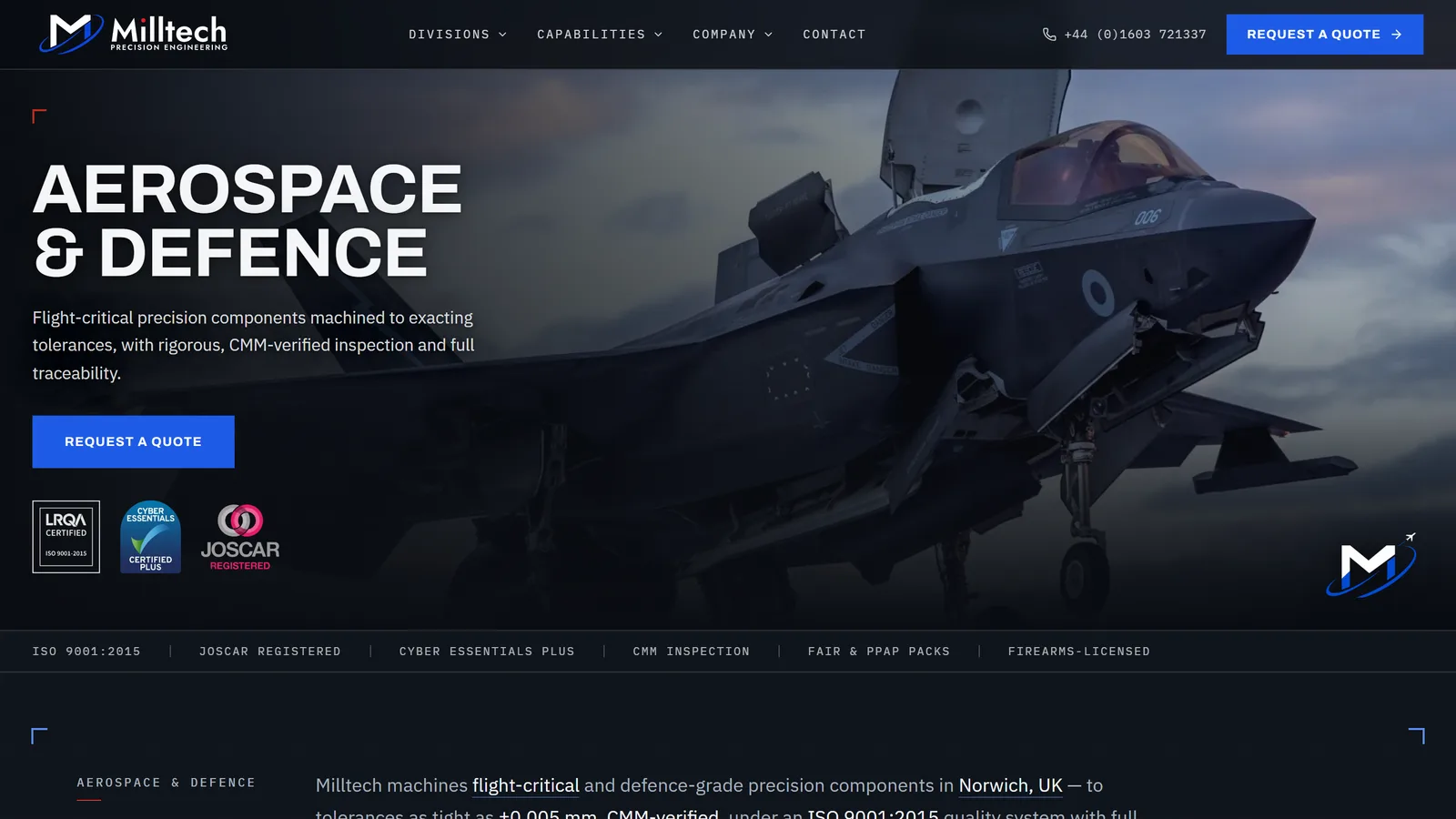
Precision CNC machining
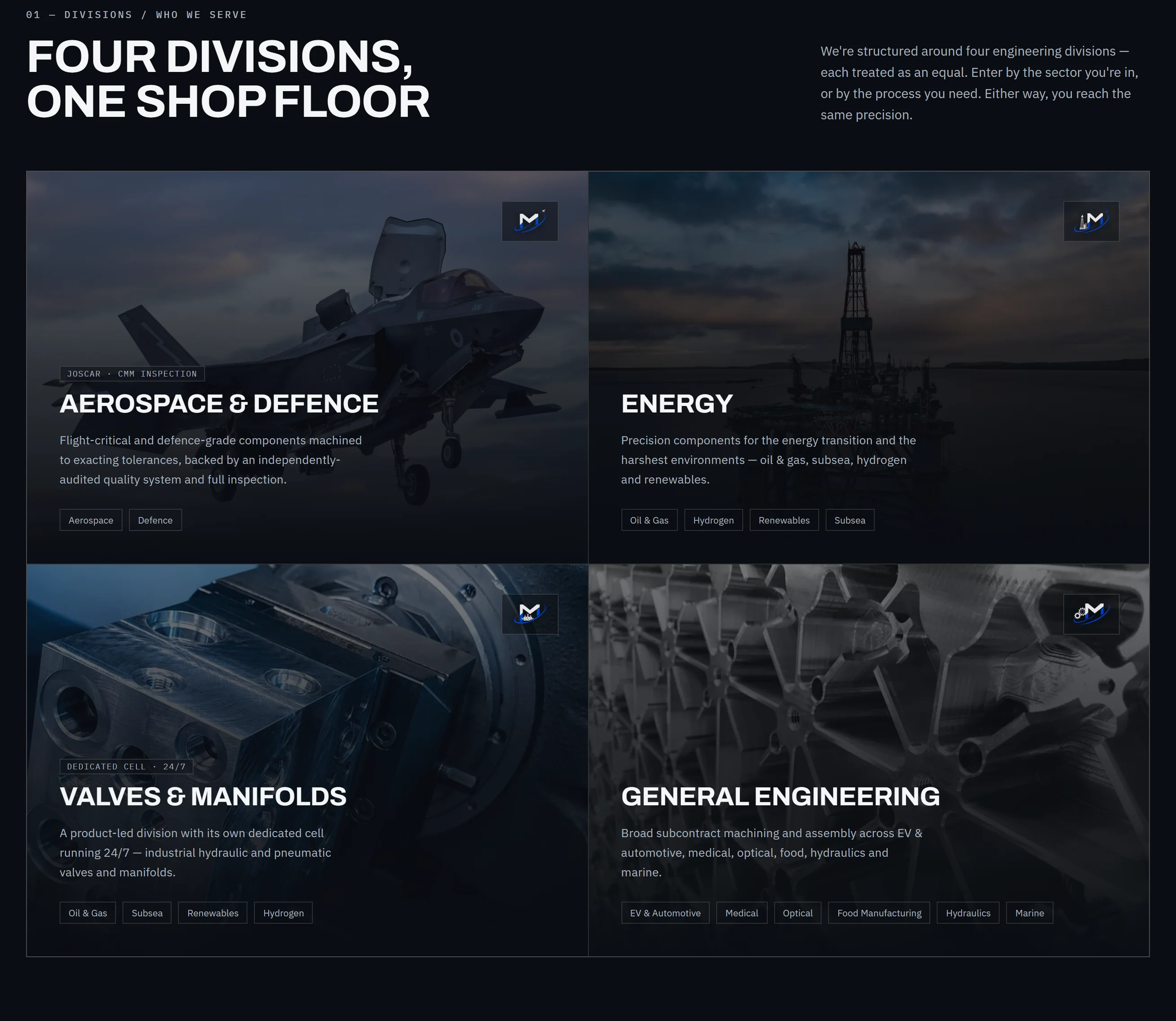
A rebuild for a Norwich CNC subcontractor — four divisions, capability pages that state the tolerance, and a quote path that asks for the drawing.
Related reading
All articlesOpinion
Buyers now run a first-pass supplier filter through ChatGPT before a human ever sees your site. Here's what the AI checks — and why most manufacturers get quietly cut.
How-to
Site speed sounds like a developer's obsession. For a B2B manufacturer it's a commercial signal — one of the few technical things a buyer notices without realising.
Opinion
Most manufacturers who aren't getting enquiries assume the site looks dated. Nearly always the real problem is somewhere else entirely. Here's where to actually look.
Next
The snapshot checks what assistants currently say about a business like yours, and where the answer comes from. It takes about a minute.