The build
A site written for a technical buyer
Specs, materials, tolerances and capacity laid out in the terms a buyer already searches with — so they can qualify you without an enquiry, and enquire already half-scoped.
Building & Construction Products
Technical ceramics is an engineer-to-engineer sale: the buyer has a problem — wear, heat, insulation, corrosion — and needs to know which of alumina, zirconia, silicon carbide or a machinable grade solves it, and whether you can hold the tolerance on a finished part.
The buyer is comparing your material properties against a duty, not browsing a catalogue. Generic "ceramics manufacturer" pages tell them nothing. I build the site around materials, properties and applications so the right engineer reaches you already halfway to a solution.
What I'd build you
The build
Specs, materials, tolerances and capacity laid out in the terms a buyer already searches with — so they can qualify you without an enquiry, and enquire already half-scoped.
Found
A page per process, material and sector instead of one “Services” page — every one its own door into the site, matched to how buyers search rather than how the business is organised.
Asked for
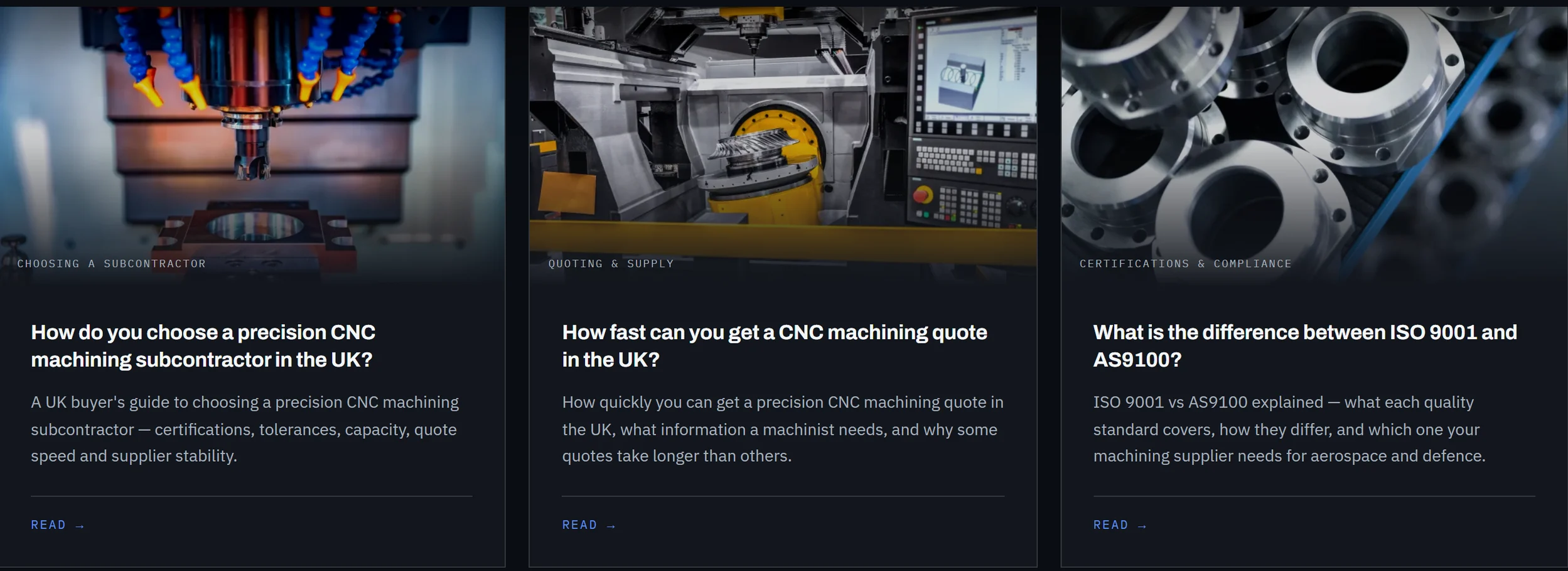
Buyers ask an assistant before they ask a supplier, and it quotes whoever actually answered. Question-led content and structured data put your words in that answer.
Measured, not claimed
2.9s.
Time to main content on a phone, against 6.9s for the median of 5 comparable firms.
Reported
Speed, search visibility and enquiry volume measured on a regular cycle and reported back — so the site is answerable for something rather than just existing.
What I build for technical ceramics
Material pages per grade (alumina, zirconia, silicon carbide, silicon nitride, machinable ceramics) with key property data
Application pages framed by the problem solved (wear, thermal, electrical insulation, corrosion)
Capability content on forming, firing, grinding and tolerancing of finished ceramic parts
A technical enquiry flow capturing application, operating conditions, material preference and quantities
What manufacturers ask before they hire me. If yours is not here, ask it — the answer is usually short.
I build a page per material grade with the properties that decide selection — hardness, thermal conductivity, dielectric strength, temperature limit — so an engineer searching for "zirconia wear component" or "silicon carbide seal" reaches the right grade on your site, not a competitor.
Application pages framed by the problem — wear, heat, insulation, corrosion — guide an engineer from their duty to the grade that solves it, which positions you as the specialist who understood the requirement, not just a supplier of a named material.
Capability content on green-forming, firing and diamond grinding, with the tolerances you hold, tells an engineer you deliver a finished part to drawing — the thing that separates you from a raw-material merchant.
Application pages target those sectors directly, so the buyer working in that world finds a ceramics maker who understands their environment rather than a generalist.
The enquiry flow captures the application, operating conditions, material preference and quantities, so you can give a feasibility read and a quote together instead of trading emails to learn the basics.
No — this is a bespoke, application-driven sale where a fast, well-qualified enquiry beats a price. The site earns enquiries by proving material expertise, not by acting as a shop counter.
More in building & construction products
Proof — recent manufacturer work
All case studies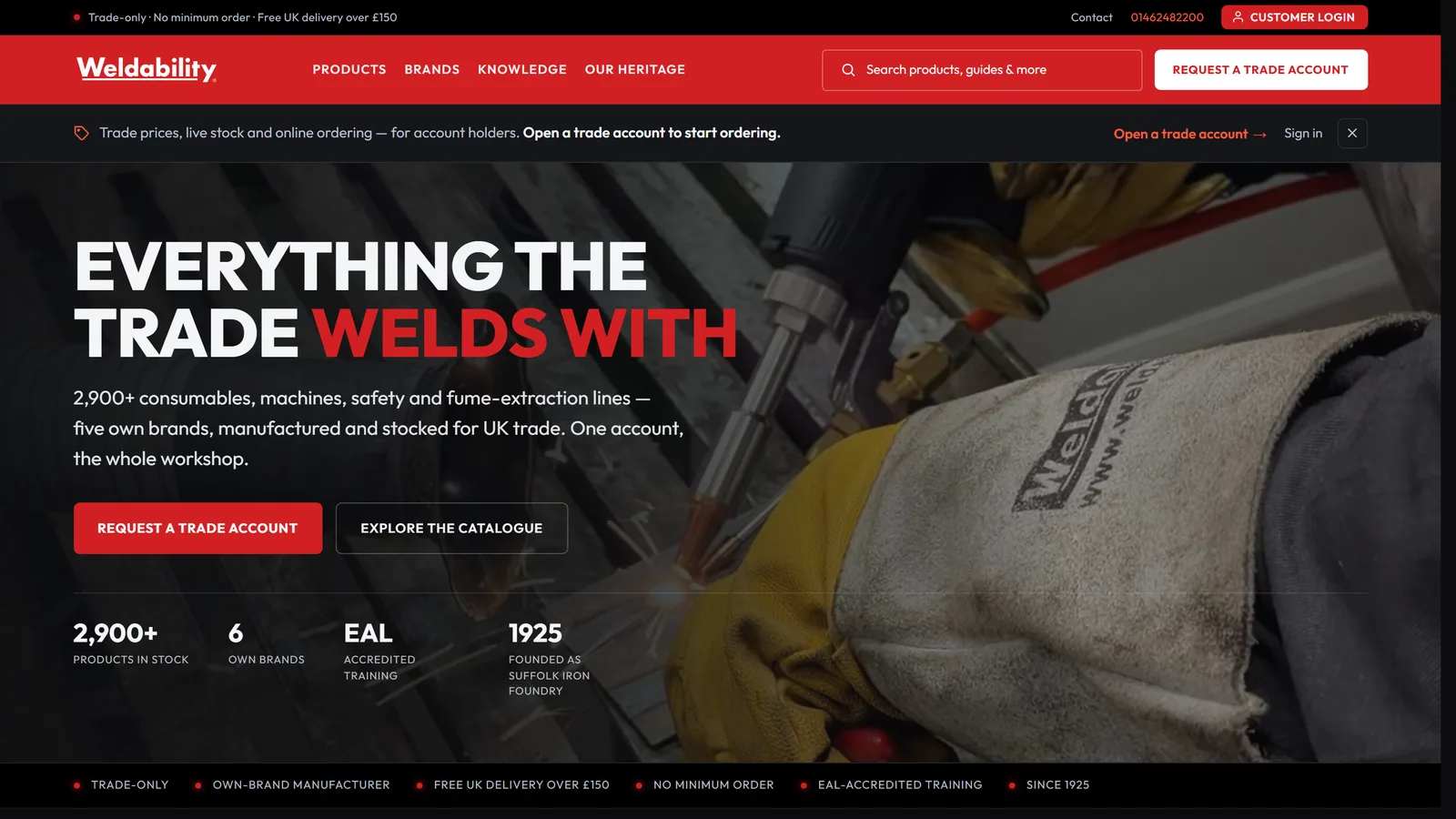
Welding supplies & equipment — trade wholesale
A trade portal for a welding wholesaler founded in 1925 — 3,400 pages, contract pricing, credit and reordering pulled live from the ERP.
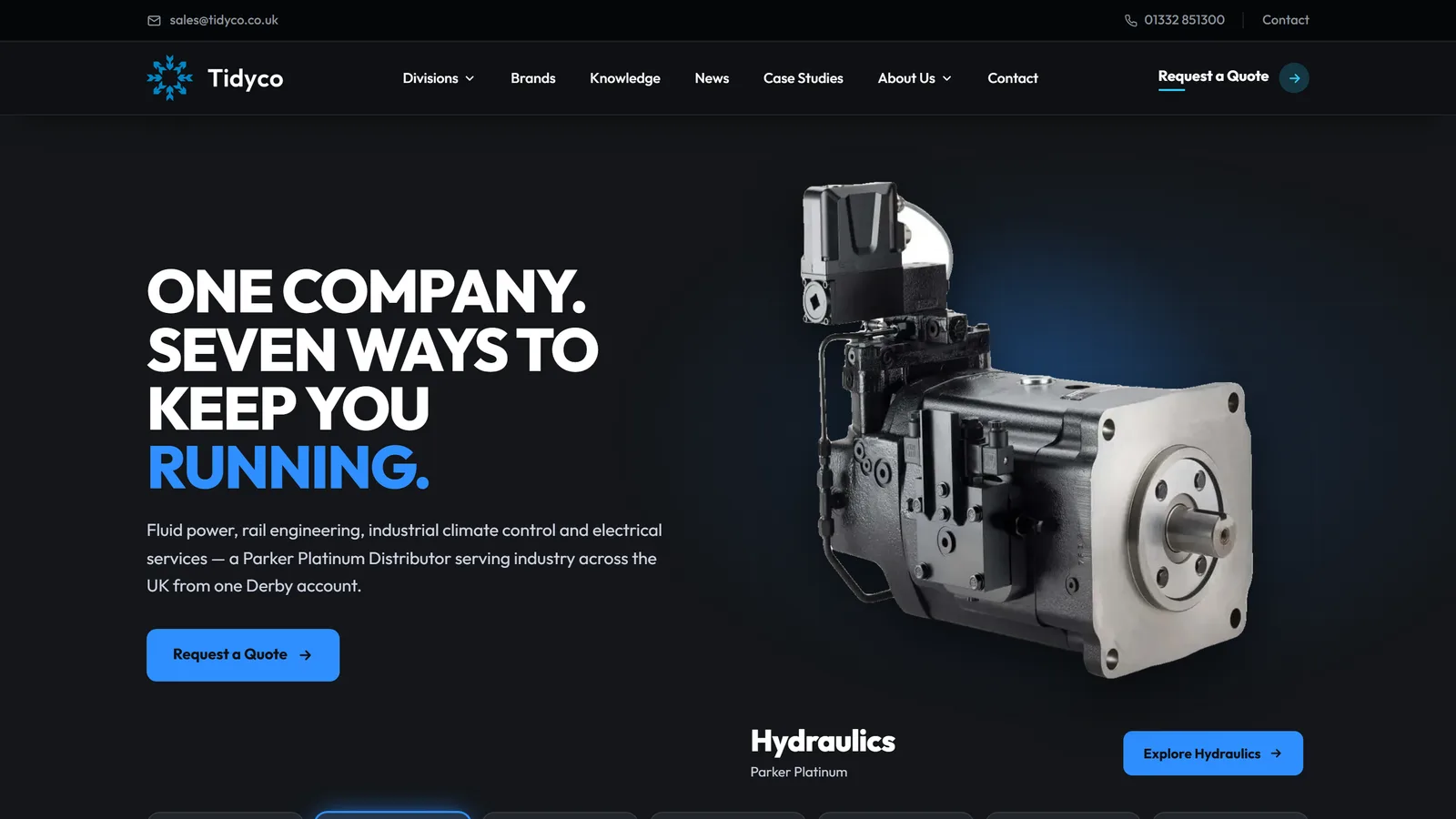
Industrial distribution & engineering services
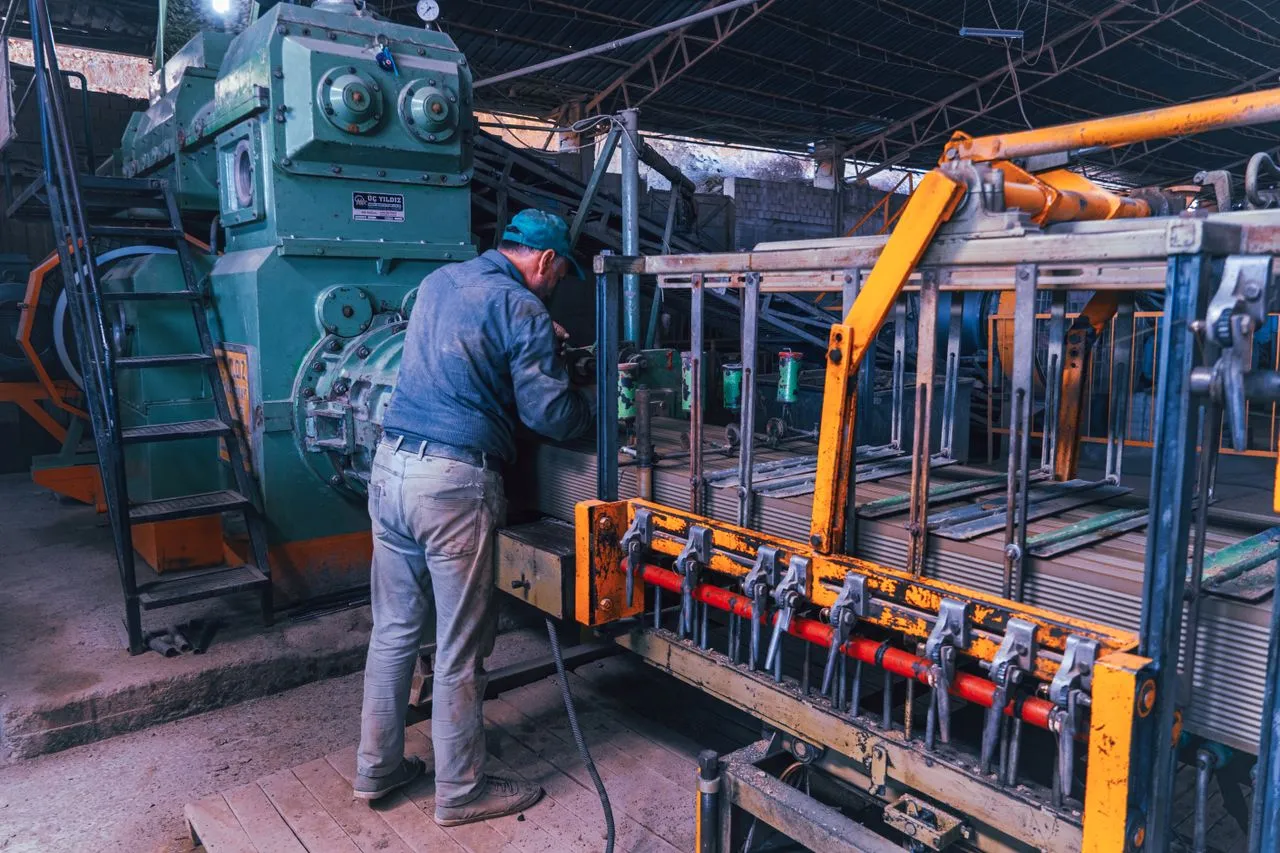
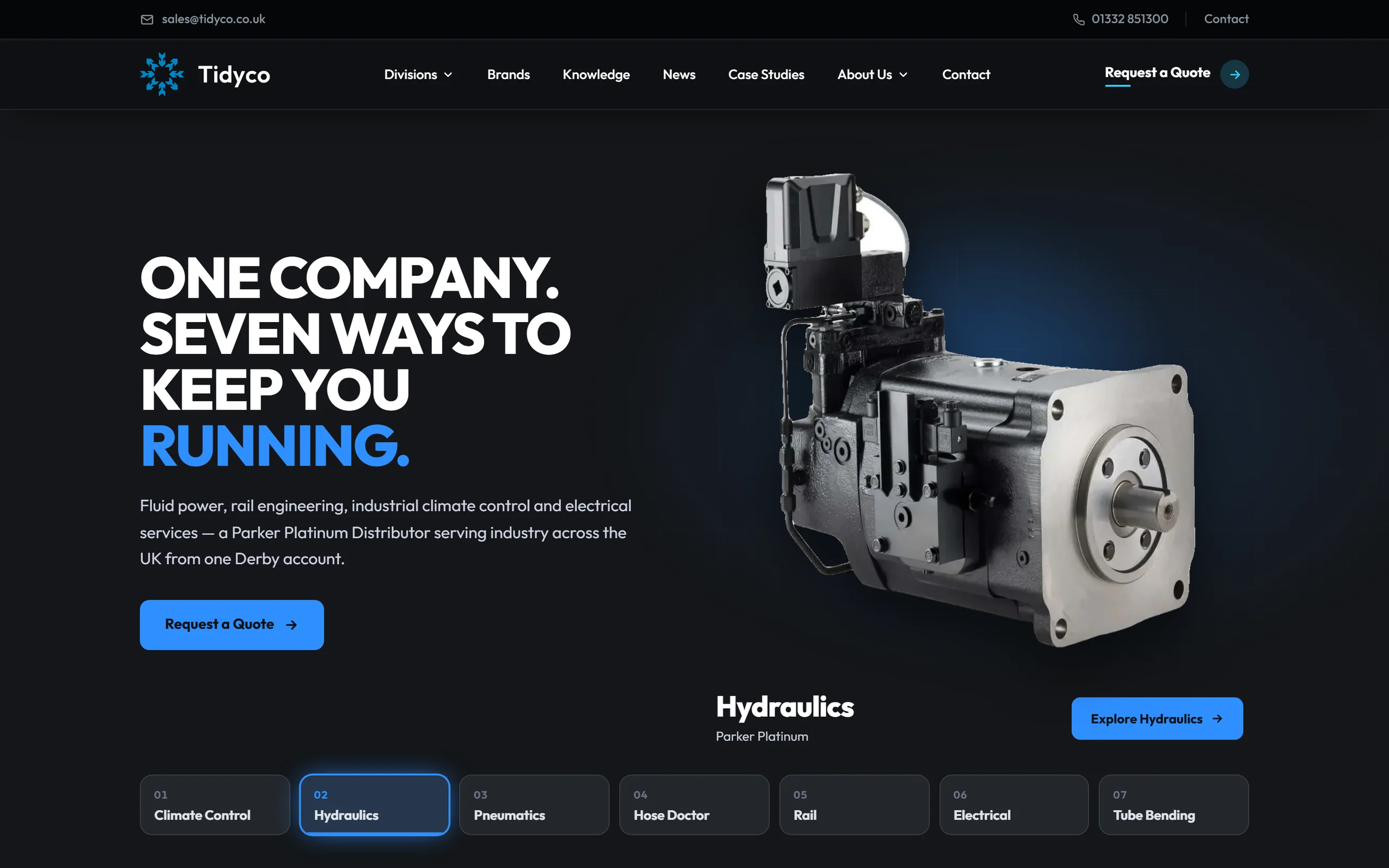
A rebuild for a Derby fluid-power and rail engineering group — seven divisions, one front door, and a 50-guide library that answers buyers before they enquire.

Precision CNC machining
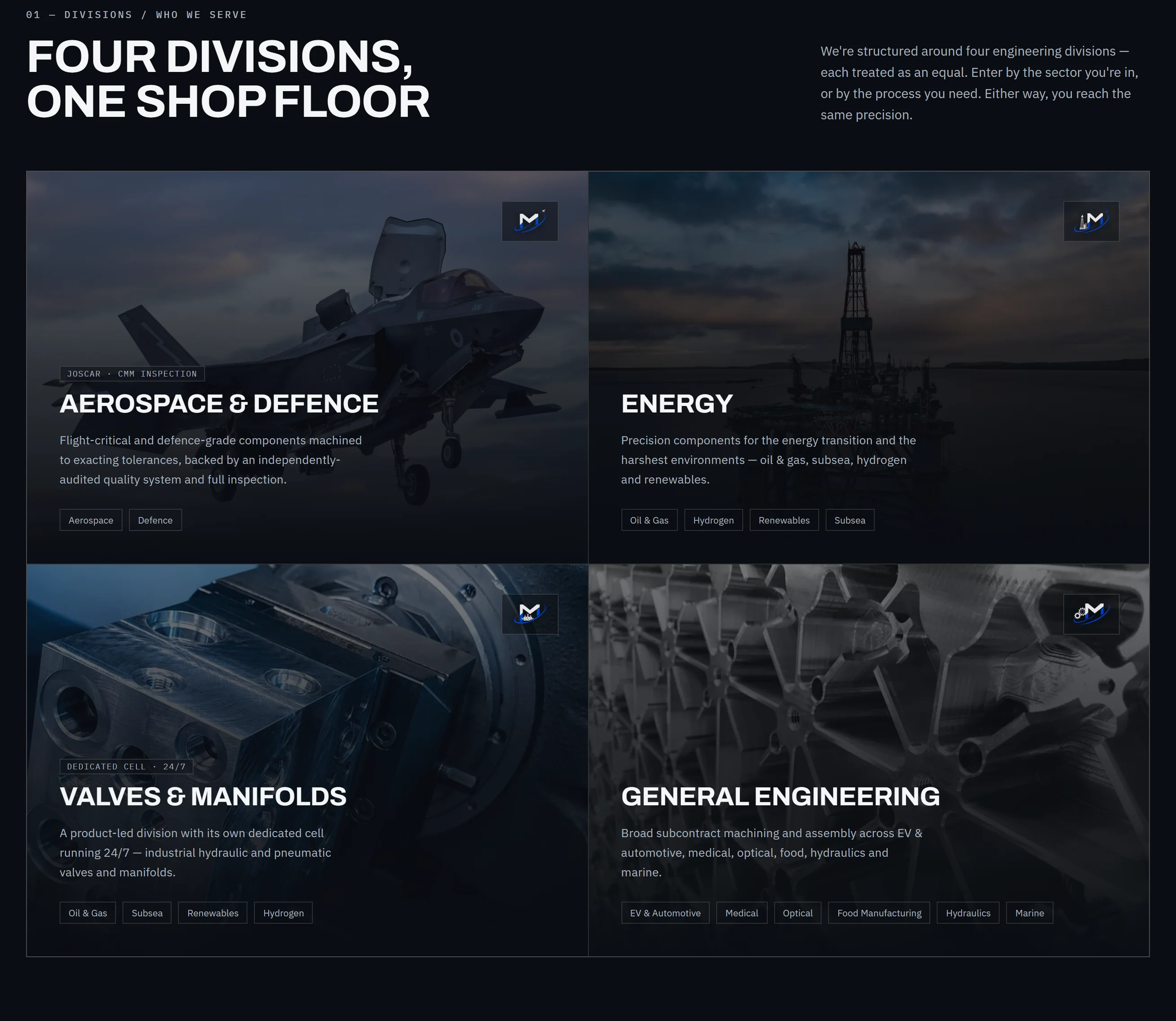
A rebuild for a Norwich CNC subcontractor — four divisions, capability pages that state the tolerance, and a quote path that asks for the drawing.
Related reading
All articlesHow-to
For construction products, the sale is decided months before anyone buys — when a specifier writes you onto a drawing. Most sites are built for the wrong moment.
How-to
For technical products, the datasheet is what a buyer uses to choose. Locking it in an unfindable PDF hands the enquiry to a competitor who published theirs.
Next
The snapshot checks what assistants currently say about a business like yours, and where the answer comes from. It takes about a minute.