The build
A site written for a technical buyer
Specs, materials, tolerances and capacity laid out in the terms a buyer already searches with — so they can qualify you without an enquiry, and enquire already half-scoped.
Materials & Packaging
Additive buyers split hard between two needs — a fast prototype in the cheapest process that works, and low-volume production parts where material and process are load-bearing.
They arrive with a use (a prototype, a jig, an end-use part), a material family (nylon, resin, metal) and a deadline, and want to know which of your processes — FDM, SLA, SLS, MJF, metal DMLS — fits and how fast. Most additive sites lead with the machines and leave the buyer to guess, when the real question is "which process for my part, and when can I have it." I build a site that maps process to application, states materials and build volumes plainly, and makes uploading a model for a quote a two-minute job.
What I'd build you
The build
Specs, materials, tolerances and capacity laid out in the terms a buyer already searches with — so they can qualify you without an enquiry, and enquire already half-scoped.
Found
A page per process, material and sector instead of one “Services” page — every one its own door into the site, matched to how buyers search rather than how the business is organised.
Asked for
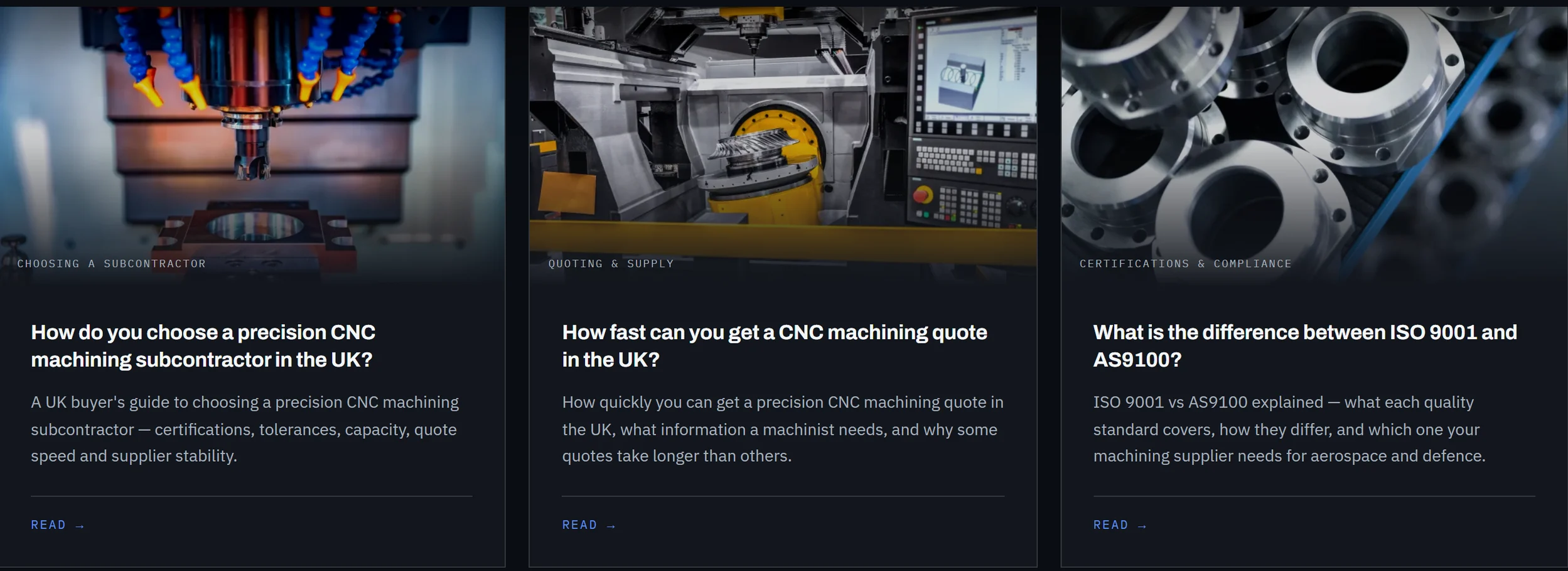
Buyers ask an assistant before they ask a supplier, and it quotes whoever actually answered. Question-led content and structured data put your words in that answer.
Measured, not claimed
2.9s.
Time to main content on a phone, against 6.9s for the median of 5 comparable firms.
Reported
Speed, search visibility and enquiry volume measured on a regular cycle and reported back — so the site is answerable for something rather than just existing.
What I build for additive / 3d printing
A process-selection guide mapping FDM/SLA/SLS/MJF/metal to application, finish and material
Material pages by process (engineering nylons, resins, metals) with the properties buyers search
A model-upload RFQ capturing the STL/STEP, process, material, finish and quantity
Prototype-vs-production positioning, including jigs, fixtures and low-volume end-use parts
What manufacturers ask before they hire me. If yours is not here, ask it — the answer is usually short.
I build a page per process and material, so a buyer searching for MJF nylon or metal DMLS reaches you for that specialism rather than being lumped in with every hobby printer.
A model-upload RFQ takes the STL or STEP plus process, material, finish and quantity, so the job arrives scoped and you quote fast instead of trading clarifying emails.
A process-selection guide maps their part and application to the right process, which both wins the enquiry and means it lands correctly specified rather than as "can you 3D print this?"
I position you explicitly for low-volume production and end-use parts — jigs, fixtures, bridge runs — because that buyer values repeatability and material spec, and is a far better fit than one chasing the cheapest one-off print.
Metal additive gets its own capability and material content, so DMLS or SLM work reaches the buyer looking for exactly that instead of routing them to a plastics-only bureau.
The upload goes straight to you, never to a public URL, and the flow is built to sit comfortably alongside an NDA — which matters when buyers send proprietary geometry for a competitive part.
More in materials & packaging
Proof — recent manufacturer work
All case studies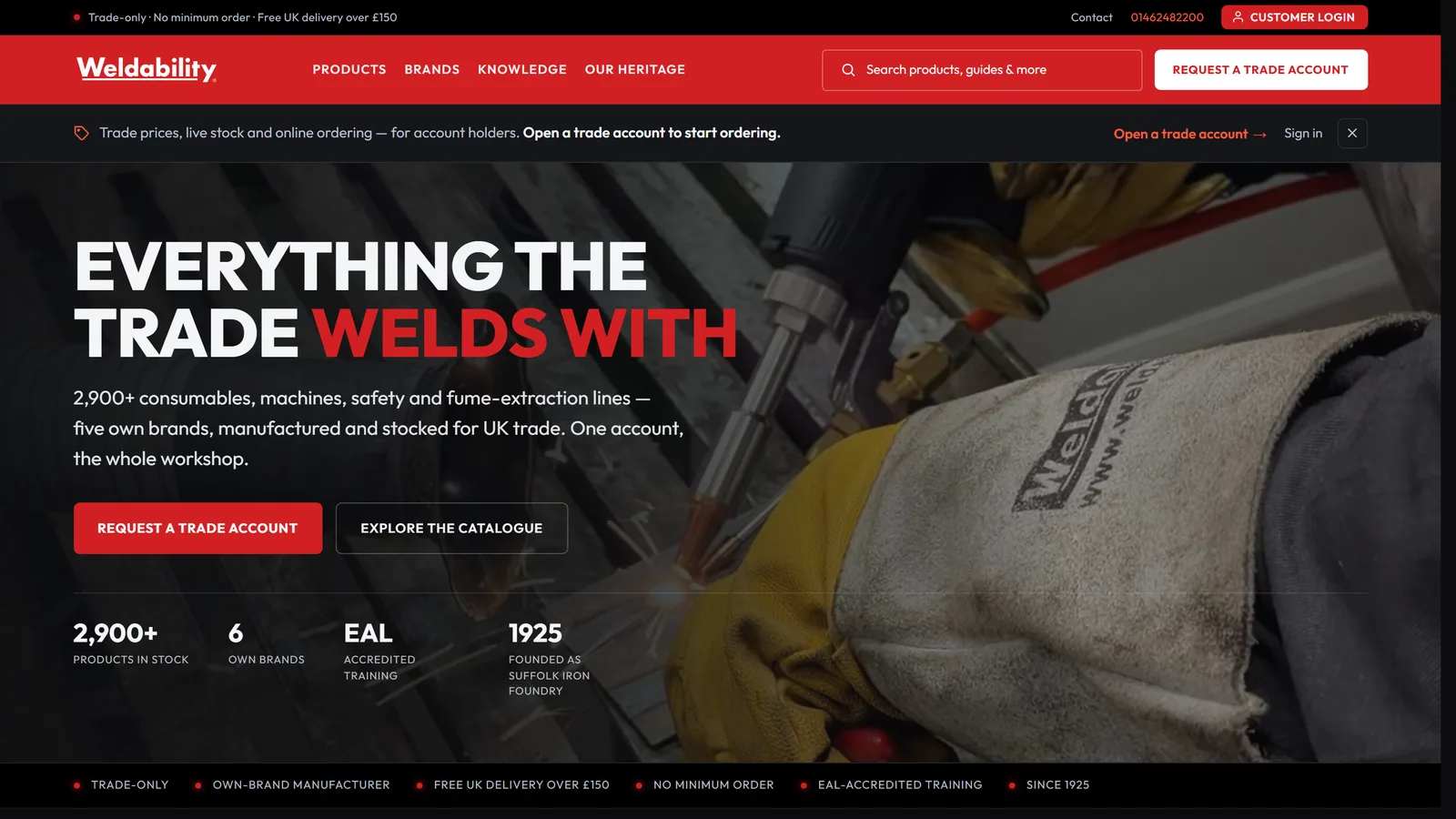
Welding supplies & equipment — trade wholesale
A trade portal for a welding wholesaler founded in 1925 — 3,400 pages, contract pricing, credit and reordering pulled live from the ERP.
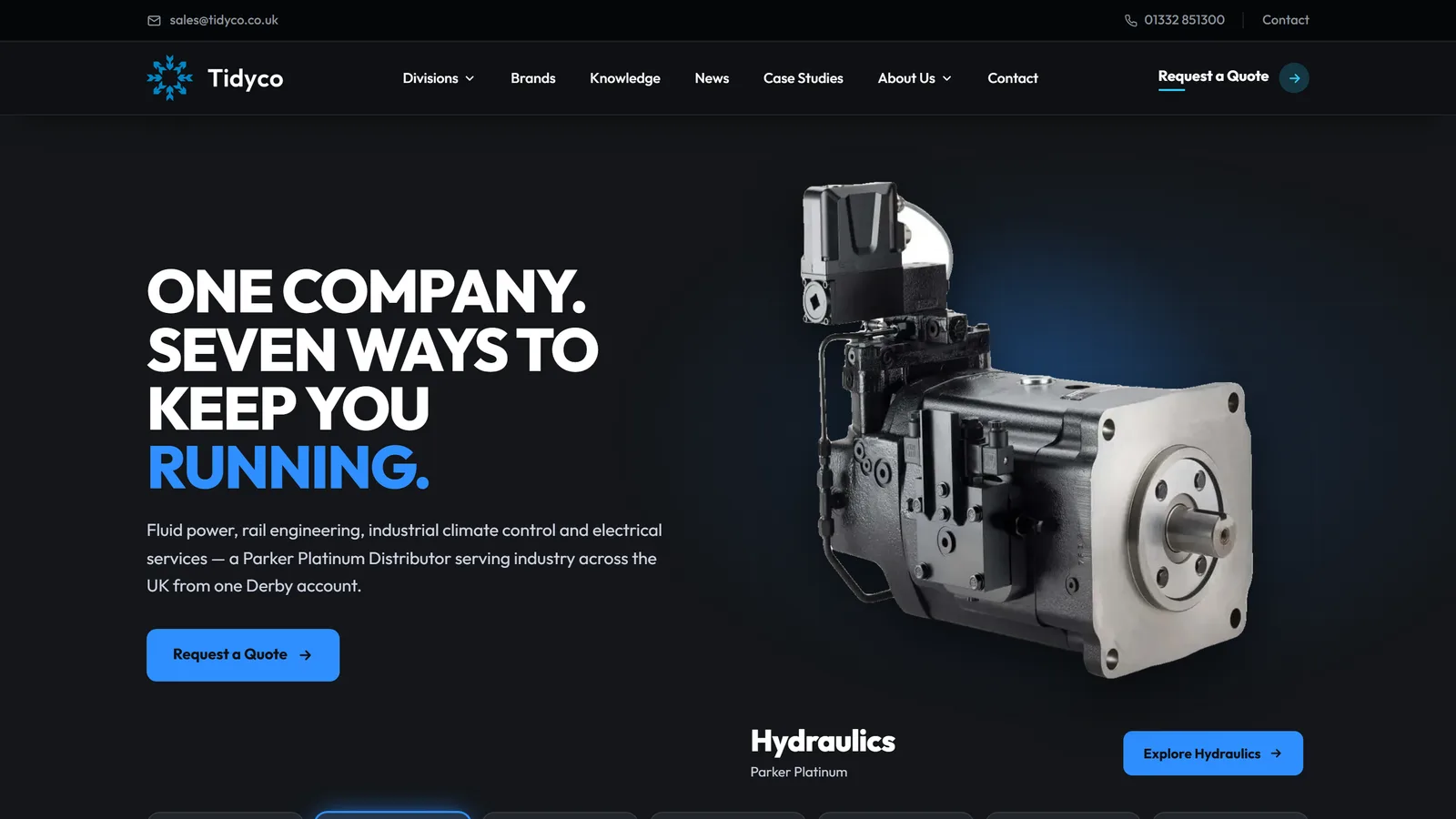
Industrial distribution & engineering services
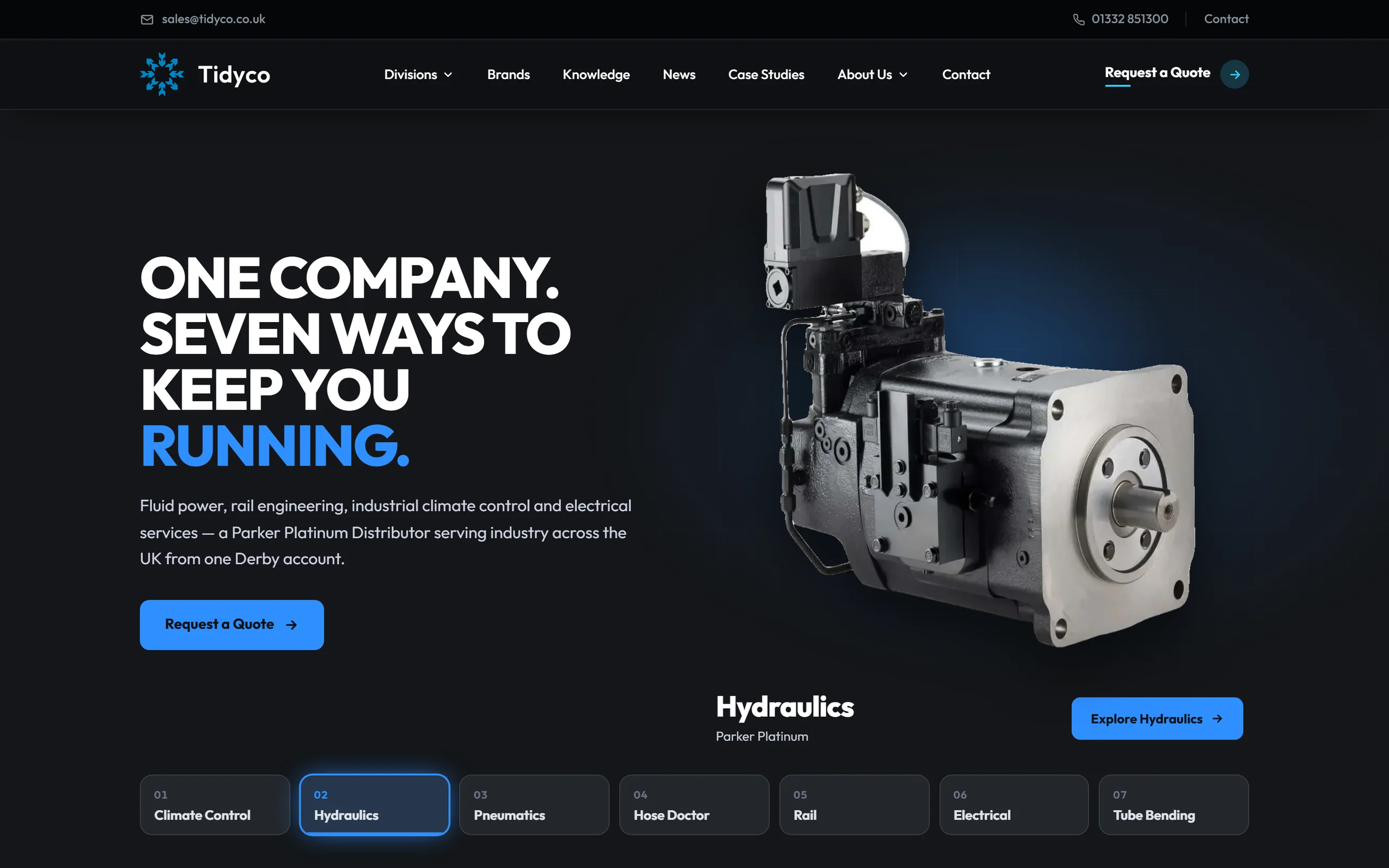
A rebuild for a Derby fluid-power and rail engineering group — seven divisions, one front door, and a 50-guide library that answers buyers before they enquire.

Precision CNC machining
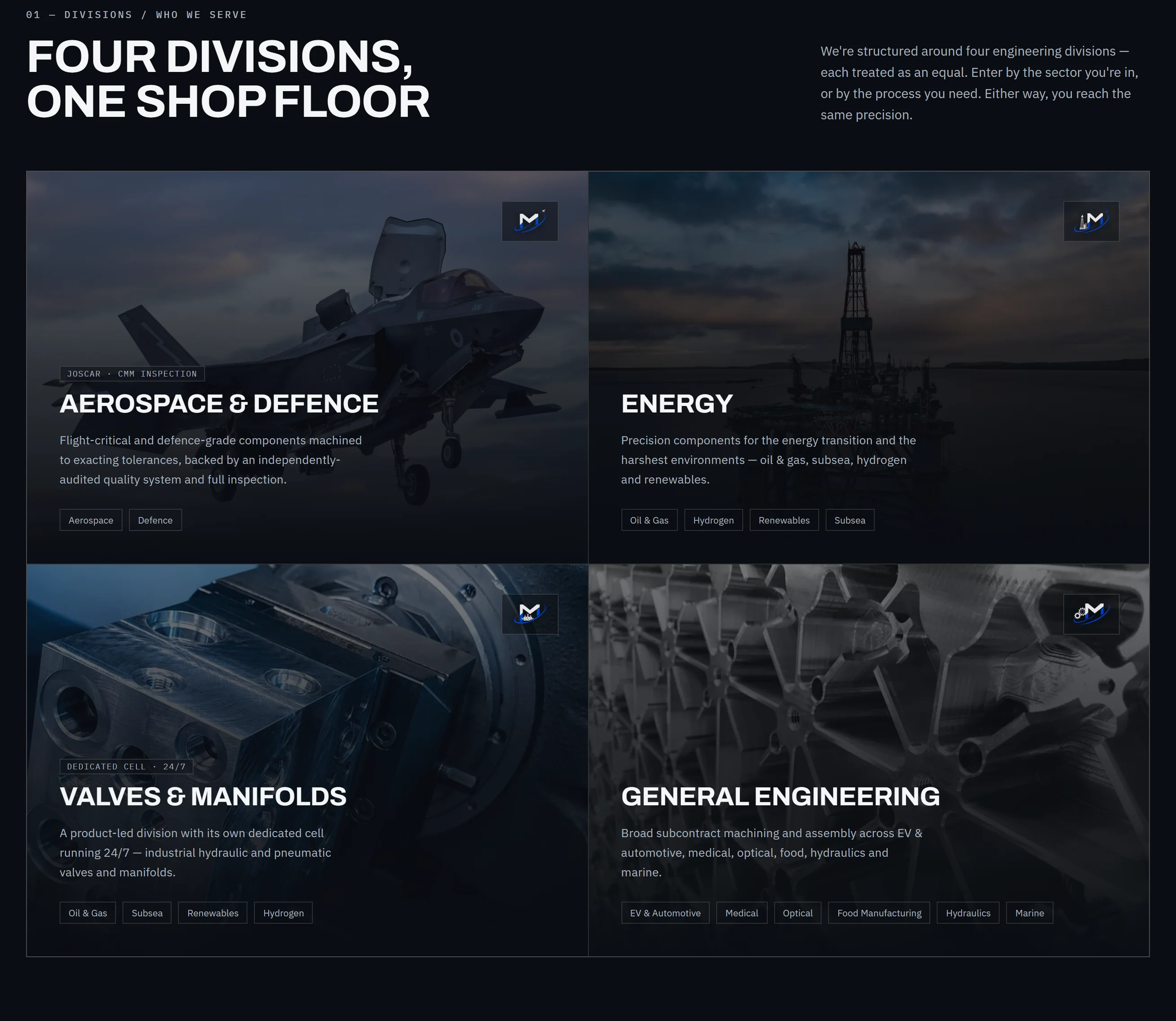
A rebuild for a Norwich CNC subcontractor — four divisions, capability pages that state the tolerance, and a quote path that asks for the drawing.
Related reading
All articlesHow-to
Site speed sounds like a developer's obsession. For a B2B manufacturer it's a commercial signal — one of the few technical things a buyer notices without realising.
Teardown
An anonymised teardown of a typical industrial-components site — a catalogue that looks fine until a buyer tries to use it, and funnels every enquiry into a phone call.
Comparison
When does a manufacturer need a real trade portal instead of a catalogue and an enquiry form? An honest look at what each costs and what actually pays for itself.
Next
The snapshot checks what assistants currently say about a business like yours, and where the answer comes from. It takes about a minute.